


The research in this article is presented in a two-part analysis. The first is a brief investigation into the development of the idea of a “Jewish problem” or “Jewish question,” primarily in Europe. Why and how did this idea develop? A brief treatment of certain social theory leading to an empirically expressed moral relativism from Hegel to 20th century Europe is provided, as well as a discussion of the notion of a Jewish “problem” or “question,” per se. The second part of the research addresses an interesting anomaly. Notably across Europe, both the Pisa region of Italy and the small country of Denmark reflect astonishingly low numbers of Jewish persons killed or moved to concentration camps during the Nazi transports and Holocaust period, even when accounting for population size. That is, the Nazi machine was not an un-assailable force in all places. Why and how the Pisa region and Denmark were able to resist the deaths of local Jewish populations is briefly discussed. In each case, Pisana and Danish cultural attitudes and tendencies regarding their political institutions and relative cultural and political autonomy allowed each effectively to resist, the first through silent noncompliance (on occasion, whilst engaging in performative shows of deference, false compliance, and false ideological agreement not unlike J.C. Scott’s Weapons of the Weak, Scott 1987); and the second through active mobilization efforts as well as individual ad hoc mobilizations.
Numbers of deaths by countries of highest Jewish mortality rates in the Holocaust are presented. A regional gravity emerges that appears to center the Holocaust in Eastern Europe more than in Western Europe with a few exceptions. It is unclear whether that center of gravity is ideological, related to the relative efficiency of the bureaucratic machine, or both. The predominance of Eastern Europe in the actual carrying out of the deaths of the Holocaust raises the (tentative) possibility of culturally-related ritual attitudes as a background factor to pro-final-solution ideations, given the historical context of practices and beliefs regarding human and other sacrifices (or even population thinning) in some parts of the region (see, for example, Wenska 2015, where the issue is discussed in terms of folklore, oral history, and archaeology of periods as recent as the Middle Ages; see also Gardeła and Půlpánová-Reszczyńska 2015). This possibility is not pursued in detail herein but appears as a potential theme given the macabre and highly ritualized nature of the death practices in the Nazi concentration camps of Eastern Europe and Germany, the center of gravity that appears to find its locus in Eastern Europe, and certain cultural and ritual heritages in the region.
The current research is preliminary and is the result of a project that was not able to be completed. The analysis emerges from two summers as a Visiting Scholar at the University of Pisa, Italy, which included on-site study of elementary Italian language (the author has active use of French); and most of an academic year in a Martin Buber workshop hosted by Aarhus University, Denmark. The author was an Alternate for a Fulbright-Schuman award for this project, and, thus, due to funding and language training limitations the research was not completed. A few findings are, nonetheless, worth presenting in hopes that scholars trained in local and regional languages (particularly in Eastern Europe) could pursue some of the questions raised by the research, namely: the center of gravity of Jewish deaths located so strongly in Eastern Europe with statistical documentation; the rare lights of the Pisa region of Italy, and the country of Denmark, in resisting the Nazi death machine against Jewish persons and other persons considered to be undesireable or in opposition; and the preliminary but apparent causal salience of cultural attitudes toward institutions and cultural and political autonomy in both Pisa and Denmark’s effective resistance.
In the concluding remarks, by way of linking social theory with practices on the ground, the question of the moral neutrality of bureaucracy is raised. That is, scholars such as Michael Mann (Mann 1986, 26; Mann 2003, 60) tell us that bureaucracy, itself, is normatively neutral; presumably, it can be used by great leaders for great good and by bad leaders for great evil (Mann calls the latter, despotism). The Holocaust provides an extreme example of such despotism. Hannah Arendt (2006) highlights this point in her own way in emphasizing the mundane nature of the bureaucratic acts that made up the Holocaust, as well as the mediocre quality of the bureaucrats so engaged.
I. The Jewish Problem or Question
The current research posits that secularism was a necessary condition that made the Holocaust possible. Hegel was known for his path-breaking work on hermeneutics; for work leading to the eventual breaking of entrenched notions of a sort of ultimate legitimacy grounded in claims to Objectivity; and for helping to clear a philosophical path to a secular notion of European identity not hindered by tradition, superstition, religion, theology, overbearing religious constituencies, and overly powerful religious officials (Stepelevich 2014). The problems that Hegel’s students and philosophical disciples encountered in framing these initial, and, relative to today, modest works parsing what scholars meant by Objectivity, and the situatedness of any scholar or thinker in his own historical and social context, were real. Heidegger, a later intellectual disciple of Hegel and mentor of Arendt, argued, for example, that subject position or “standpoint” can affect a scholar’s research whether scientist or historian (on standpoint in terms of feminist theory, see Hartsock 2019).
It has long been theorized that a scholar’s (subject) position or “standpoint” as an observer can have a strong impact on his or her (otherwise) analytical work, leading some to problematize the possibility of rigor in historical analyses in general, while in no way giving up on that possibility (Heidegger 2001, p. 194). That is, scholars such as Heidegger place human lived experience in time (Dasein) first in all acts of human interpretation and analysis and suggest that the key to unpacking the problem of objectivity (e.g., exiting a sort of circularity, or tautology, of analysis procured through experience and internalized situational assumptions on the part of the observer) would most likely lie precisely in emphasizing the situatedness (or subject position?) of the person/scientist/scholar doing the observing, and in deriving terms and definitions based upon the objects of analysis rather than “fancies and popular conceptions” as an ideal and to the extent possible (Ibid., 194-95). (Sohn 2023: 4-5)
That is, Heidegger criticizes an entirely objectivist epistemological standpoint whereby scholarship is viewed as a purely rational and objective enterprise. He, nonetheless, maintains a commitment to seek objectivity albeit recognizing the impossibility of it in any absolutist terms. Indeed, it is the responsibility of each scholar to do so precisely through engaging in some degree of hermeneutic enterprise: to identify, read, and thereby to interpret scholarly works through awareness of one’s own and other scholars’ subject positions. Interpretation cannot be avoided; it is part of the acts of thinking and reading. Objectivity is, nonetheless, an end-goal or ideal; it is not to be given up altogether.
If the basic conditions which make [correct] interpretation possible are to be fulfilled, this must rather be done by not failing to recognize beforehand the essential conditions under which it can be performed…. What is decisive is not to get out of the circle but to come into it in the right way. This circle of understanding is not an orbit in which any random kind of knowledge may move; it is the expression of the essential fore-structure of Dasein [Being in Time] itself. (Heidegger 2001: 194-95, emphasis added, as cited in Sohn 2023: 13-14 n24)
I would translate or interpret Dasein as “being in time,” as hinted in the title of his book, Being and Time. Part of the circular orbit of understanding to which he refers is human subjectivity. It relates to the rootedness of the person, ontologically, in time and in place(s); that is, in historical and situational context, again: as a person being or existing in time, in subjective situation and context.
Likewise, 20th century scholar Jacques Derrida holds wider space for interpretation to such an extent that he avers, we are not the sole authors of our own writing; people may, in valid manner, interpret our own writing differently by time, place, use of words, meanings, symbols, and the like. Nonetheless, even for Derrida the act of interpretation, while broad, is not infinite in its possibilities. It is bounded by certain factors, namely: (A) history or temporality; (B) memory; (C) language, symbols, and referents (which may be held in varying uses of words, symbols, and meanings); (D) perception and subjectivity; and, thus, to apply Giddens’ terms to Derrida, (E) structure and agency (Derrida 1978: 225-6, 186, 184, 169-70; see Giddens 1995: 165). In this sense, “writing is a system of relations” (Derrida 1978: 227) whereby author and reader engage. It is not a one-way process from author to reader. It is an embodied dialogue that involves humans and structures (Derrida 1978: 169). The structures (factors A and C) bind or bound the interpretive possibilities available to we, as perceiving subjects with some memories and not those of others (factors B and D) in any time and place.
That is, according to some of the significant, original, late-modern scholars of hermeneutics, while it is important to account for all of the factors informing interpretation mentioned above, not all possibilities within a range of interpretations are valid (Gadamer [1960] 2004, pp. 269–71). Some interpretations may be “arbitrary,” which would inherently affect our ability to understand related phenomena (Ibid., p. 271). That is, even while accepting a relatively “fluid multiplicity of possibilities” in a given context of observation and interpretation, “not everything is possible” (Ibid.) (Sohn 2023: 5).
It is suggested herein that the reading of the early parts of this tradition of concern with subjectivity, objectivity, doing and writing scholarship, and interpretation to suggest that all ends are, in fact, possible, and that interpretation is not bounded in any way – that is, the loss of Truth and Objectivity in any sense at all – created the necessary intellectual conditions to allow supporters of the Nazi movement to perceive of mass murder as a moral possibility, or even amorality as allowable in such political and bureaucratic enactment of violent policy against law-abiding civilians (see discussion of Arendt in the conclusions herein).
On the normatively positive side, thus, Hegel’s work helped to foster an intellectual tradition and environment, over time, of free-thinking European men and women who could be above the misuse of powers of religion and religious authorities. In many ways, his work directly, among others, helped to create our current expectations for freedom—especially academic, epistemological, and intellectual freedoms. Without Hegel, we would know significantly less about how scientific and other intellectual thought works, that is, hermeneutics, subjectivity, objectivity, our limits and our strengths in these contexts, and the like.
On the other hand, in breaking a path for secularism, he, his students, and his later disciples also broke some of the hold that religion had on the peoples of Europe (and later the world) regarding ethics, morality, and notions of a positive and inherent referent to each (e.g., God, or the Divine in some form). Their work contributed to disentangling religion from political and social authority in Europe, although some scholars emphasize that the “death of God” announced by Nietzsche, which emerges in the intellectual aftermath of Hegel, can be read more positively through Christian theological rather than through secularist lenses (Franke 2007). That, in turn, led to a breaking of Truth, or to a sort of moral relativism. It is the position of the current research that this more extreme form of moral relativism, disconnected from any effort at acknowledging certain bounded multi-cultural or multiple cultural valuations, is part of what allowed the Holocaust to happen. Taking away the notion of a normatively positive (or positivist) Truth and replacing it, by the end of the 19th century, with the idea that values and laws are only so because we believe them to be so, and because we agree on them as a community (Durkheim 1984: 39-40), allowed the Nazi regime to develop a set of ideas, both immoral to the moral-ethical frameworks of most world religions and amoral in the sense of lacking any referent to moral ethics in any traditional sense. Those ideas, when implemented in perfect bureaucratic precision, created horrors of a magnitude so great that they would change world institutions.
The world reaction to the horror of the Nazi ideas, once implemented – that is, the Holocaust of approximately six million Jewish persons and another six million, or more, so-called undesirable persons or persons of opposition – would lead to the creation of many of the initial human rights frameworks that are so natural, indeed, foundational, to us today (on the global expansion of judicial power and rights since 1945, see Tate and Vallinder 1995; see also, for example, United Nations 1948, 1949a, 1949b [1925], 1951, and 1998).
The notion of a “Jewish problem” or the “Jewish question” is constructed differently in varying sources, some anti-Semitic, some non-Jewish, and some Jewish. There does not appear to be a correlation between the subject position of the thinker and which term is used (“problem” or “question”), although the study is preliminary and only addresses a few key scholars and thinkers. The current work begins with a query regarding the development of the idea of there being a problem or question in relation to Jewish communities in Europe at all. It is not inherent that such a concept should be in place. Yet, it appears to make its way into European social thought in a grand philosophical debate between humanism and naturalism as against (often both) Judaism and Christianity, qua religions, and particularly Judaism in its rejection of Christianity tied with arguments as to Judaism’s supposed relative materialism; it does so among German thinkers in the mid-19th century who are responding largely to Hegel’s secularist thinking (Stepelevich 2014).
That is, the idea of a Jewish problem or question appears, historically, in a milieu that is in favor of secularization, whether from humanist or naturalist positions, and who are seeking to develop a philosophical path to a secularized European society. The critique of Judaism as a legal tradition and therefore ostensibly materially oriented, coming from outside of the tradition, was bolstered in some cases by Baruch d’Espinoza’s controversial 17th century claims that Judaism was a legal and therefore a political tradition rather than a moral and ethical (or spiritual) one (Stern 2017). His claims were so upsetting to some Jewish communities that he was excommunicated from his own for them, a fact often overlooked by advocates of his ideas. It is possible that he may have presented such a political and material account of Judaism in the face of changing dangers to Jewish communities in parts of Europe – particularly to non-Christian religions that stood on religious rather than political or social grounds – as well as in suggesting a political template that later paved the way for Jewish nationalism (Stern 2017). However, the interpretation of d’Espinoza’s material (as against moral or spiritualist) account as somehow fully representative of Judaism – a tradition founded in notions of moral-ethical behavior and relations, and Divine-rooted spiritualism and Justice (see Mendes-Flohr 2015; Buber 1937; see also, Halberstam 2017) – would not be historically accurate. In some real senses, it appears that Judaism – and, ultimately, Jewish communities, individuals, and non-Jewish persons considered to be in opposition to the Nazi project – became sacrificial lambs in the cause of a certain kind of secularist, progressivist, and modernization project.
Jewish thinkers and non-Jewish thinkers respond to the various critiques in the persons of Marx, Zola, Herzl, Brandeis, and many others. Anti-Semitic movements also take up the concept of Jewish question or problem. In the current research, the idea of a problem or question related to Jewish communities in Europe appears in use as an external critique and recommendation to assimilate (“problem,” Bauer 1958); and as an internal call to secularize in order to gain political freedoms (“question,” Marx 1978 [1844]). Alternatively, the discussions of assimilation at the heart of some discourse about a Jewish problem or question within the Jewish community include responses to German philosophical critiques of the religion, per se, and act as an appeal to return to traditional Judaism qua religion (regarding 20th century thinkers, Brafman 2017). Others have sought to answer the question through demographic and economic changes and to map out its political expressions in several country cases (Baron 1938). At still other times, the notion of problem or question emerges as a political argument for a Jewish state and for Jewish nationalism (Herzl 1989 [1896]); as well as in favor of non-Orthodox streams within Judaism, or religious pluralism (Brandeis 1915).
For some non-Jewish thinkers, it is seen as not a central “problem” for their national community. In other non-Jewish community contexts, however, it appears in use by anti-Semitic movement(s) or ideologues as a call to further anti-Semitism, and later to genocide, against Jewish populations (emphasizing Richard Wagner’s “redemptive antisemitism” as the practical and theoretical origin of the “final solution,” see Kulka 2020; emphasizing Hitler as ideological leader, see Bankier 1988; Friedlander 1998; Gordon 1984). Zola, while not invoking the notion of Jewish question or problem, addresses manifestations of anti-Semitism in the Dreyfus trial in a scathing rebuke against the French state (Zola N.d. [1898]). An answer to the question of why a notion of a Jewish question or problem in the first instance remains ellusive except by reference to the philosophical and social-theoretical materials addressed earlier in this section regarding changing notions of objectivity, subjectivity, the negative sides of secularism, and its development into moral relativism. The next sections address the empirical cases of the Pisa region of Italy, statistics regarding Jewish deaths by country and region of Europe during the Holocaust, and the case of the small country of Denmark.
II. (A) The Pisa Region
Pisa, Italy, was a rare light in resisting the Nazi-influenced Italian Racial Law of 1938; it chose non-compliance and small acts of disobedience rather than enforcement (Bick 1980; regarding means and significance of small acts of resistance in comparative politics, see James Scott 1987, and as relates to authoritarian high modern power, of which the Nazi regime was a clear example, Scott 1998). Indeed, while some Nazi violence did occur in Pisa, few Jewish persons were taken from Pisa to Nazi camps or exiled from Pisa during the Holocaust. That is, while other cities in Europe experienced widespread practice of neighbors turning in neighbors under Nazi pressure, the same did not occur in Pisa.
Without appealing to Nazi sources, some of the best sources available in English regarding numbers of Jewish persons and mortality during the Holocaust are Jewish archival sources. These sources may rely on documents as well as a rather meticulous recording or aggregation of personal accounts. Acording to Jewish archival sources, as few as twelve Jewish persons were sent to Nazi camps from Pisa, eight were deported from Pisa during World War II, and seven killed as part of the war (Jewish Virtual Library 2025c). Regarding the Jewish community of Pisa:
The Jewish community numbered 535, in 1931. During the Holocaust, 12 Jews were sent to extermination camps. Another eight Jews were deported from Pisa. On August 1, 1944, the Nazis murdered Giuseppe Pardo Roques, who was a deputy major of Pisa, a prestigious Jewish philanthropist and president of the community. Eleven others seeking haven in Roque’s house were murdered, as well as, including six Jews.
Today Pisa’s Jewish population numbers only 100-200. (Jewish Virtual Library 2025c). And regarding the city of Livorno, which is part of the Pisa region:
Prior to World War II, Livorno’s Jewish population numbered approximately 2,235. It is estimated that 60 to 90 percent of Livorno was destroyed in World War II, since its port was subject to attack from both sides. Livorno’s famous synagogue was bombed by the Allies and partially destroyed during the war.
During the Holocaust, at least 119 Jews were sent to Auschwitz and other death camps from Livorno; only 11 survived. Others were killed in the surrounding mountains, where the German army was very active…. (Jewish Virtual Library 2025b)
That is, even when compared to the small Jewish population size of Pisa and Livorno at the time, the numbers and rate (approximately 2% of the Jewish population of Pisa, and 5% of the Jewish population of Livorno) of Jewish persons taken to concentration camps (almost all of whom died) pale in comparison with some countries to the East of Germany, as discussed in Table 1. Reports of Jewish rescues in other parts of Italy, such as Campagna, are also present (see Bettina 2011). That is, Italians did not appear to support the Nazi policies in any uniform way. A resistance movement against both Italian fascist and Nazi German forces has been noted elsewhere (Behan 2009; Wilhelm 1988). The role of Jewish communities in the unification period of Italy as well as the community’s relationship with the development of late-modern Italian nationhood are addressed by Ferrara degli Uberti (Ferrara 2017). It is unknown whether their positive contributions in these regards could have contributed to setting the attitudes of silent resolve and noncompliance that resulted in the extraordinarily low rates of enforcement in Pisa of Nazi laws announced at the national level in 1938.
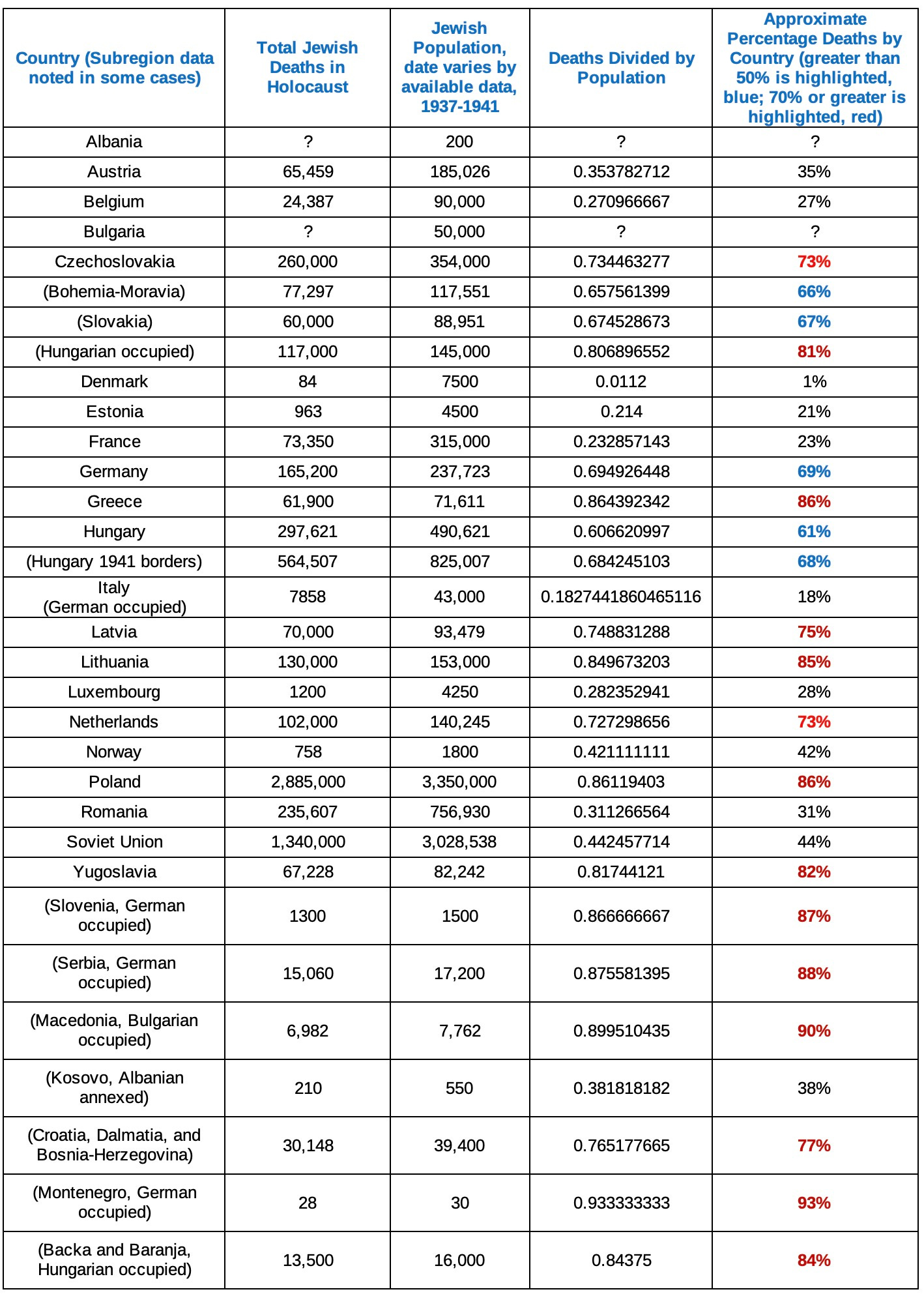
Reliable numbers are difficult to attain and vary somewhat. The most reliable numbers appear to come from Jewish sources, as well as the U.S. Holocaust Memorial Museum. According to Jewish archival sources, approximately 16% of the Jewish community was destroyed during the 1930s in Italy. Related policy decisions at the national level came under the influence of the neighboring Nazi movement across the border with Germany to the North. Some of the loss of Jewish persons was the result of conversions under duress. From the Nazi invasion and until the end of World War II in 1945, approximately 22% of the remaining Jewish population of Italy was sent to concentration camps or otherwise killed across the country. (Jewish Virtual Library 2025a) While terrible, the number is low in comparison with important regions of Eastern Europe, where (at least) 86% of Jews were killed in countries such as Poland. See Table 1 for more. France, on the western border with Germany, reflected numbers more similar to Italy, overall, although slightly higher: approximately 23%. According to the U.S. Holocaust Memorial Museum, approximately 25% of Jewish persons were deported from Italy by Nazi forces and at least 40,000 Italian Jews survived (U.S. Holocaust Memorial Museum, N.d.), meaning between a 16%-20% Italian Jewish mortality rate during the Holocaust depending upon the starting population calculated. The numbers vary by source. Note that some sources begin in the early 1930s and include conversions to Christianity, that is, cases not involving mortality; others after the onset of World War II; and others after the Nazi invasion of Italy. The effectiveness of resistance in the Pisa region by comparison is notable.
Both Jews and Christians were killed by the Nazi army in Pisa by the last years of the war (Arieti 2000). According to the U.S. Holocaust Memorial Museum (see calculation in Table 1), Jewish deaths in the Holocaust by country by Jewish population (e.g., rate at the domestic level) included the following notably high levels: Greece 86%, Poland 86%, Lithuania 85 %, Yugoslavia 82%, Latvia 75%, Czechoslovakia 73%, Germany 69%, and the Soviet Union 44%, where the numbers were among the highest (U.S. Holocaust Memorial Museum 2018; and Rosenberg 2022). Those countries across Europe in which 70% or more of the Jewish population, by country, died during the Holocaust were: Czechoslovakia, Greece, Latvia, Lithuania, Netherlands, Poland, and Yugoslavia, centering the death count of the Holocaust – and perhaps, thereby, its greatest popular ideological support – fairly squarely in Eastern Europe. Greece is not in Eastern Europe; it directly borders Eastern Europe. Netherlands is in Western Europe. Germany, in both Eastern and Western Europe during the Cold War era, was at 69%, and Hungary at its 1941 borders was 68%. Subregions of Yugoslavia had the worst numbers, particularly Montenegro, Macedonia, Serbia, and Slovenia, ranging from 93% to 87%, respectively. Greece, Poland, and Lithuania had numbers just below theirs at 86% to 85%, respectively. See Table 1.
Table 1. Holocaust, approximate Jewish deaths by country. Table created from total deaths and population numbers listed in: U.S. Holocaust Museum 2018. The data is imperfect as dates for total death numbers may not exactly correspond with dates for population estimates.
II. (B) Denmark
The number of Jews killed during the Holocaust in Denmark is similar to that of the Pisa region by comparison with the high numbers mentioned above in other country contexts, although slightly lower in Denmark than in Pisa: approximately 1% of the Jewish population, or an averaged 84 persons out of a population of 7,500 Jewish persons (U.S. Holocaust Memorial Museum 2018; and Rosenberg 2022). Again, in the case of Denmark, the numbers vary slightly by source. Danish experiences of the war and the Holocaust have been recorded by Bak (Bak 2011: 175). The rescue of approximately 90% of Danish Jews by fisher boats to Sweden is recounted regarding a country in which the Jewish population was a fraction of one percent of the overall Danish population, approximately 6,500 Jewish persons (Hæstrup 1987: 19), or 7,800 Jewish persons including people of mixed heritage (Abrahamsen 1987: 5) to a total Danish population in 1940 of approximately 3.8 million (Statistics of Denmark 1941: 147, 149; see also Statista, N.d). That is, the Danish-Jewish population was tiny, not a significant power holder, and, thus, was in no way a veto player to Danish politics. There were not reasons of calculating strategy or power politics that appear to have played a role in the mobilization of a highly effective Danish rescue effort in 1943, which engaged individuals at the micro-level with fishing boats across the coast. Rather, Buckser has argued that the Jewish communities of Denmark became a powerful symbol of Danish independence, as influenced by a Danish theological and ideological movement called Grundtvigianism (Buckser 2001). He argues, indeed, that before the Nazi invasion of Denmark in 1943, the Danish response to Germany was strategic, limited, unmotivated to resist, and in some cases even submissive; after the invasion, however, and under influence of the ideological movement of Grundtvigianism, Jewish Danes – so small in number – became a symbol of Danish independence.
That is, whether tolerant of Jewish minorities or not, individual Danes took umbrage at occupation. Grundtvigianism tied Danish national identity with folk culture, according to Buckser, which, ultimately, connected with Danish conceptions of Jewish communities as folk. Thus, Jewish Danes became symbols of Danish independence in the sense of an emphasis on the autonomy of the people (folk) in Christological terms, by which a foreign occupier had no rights to a Danish minority, whether loved or not at the local level. Buckser suggests that values of tolerance may, indeed, have played a role for many, but not for all, in this widespread and effective popular effort. (Buckser 2001)
In keeping with Buckser’s analysis, but on a political rather than a theological basis, Jegstrup argues that the widespread people’s resistance of the Danes in 1943, evacuating nearly 10,000 Jews from Nazi occupied Denmark to safety, was not conducted on the basis of humanitarian grounds. Rather, it was motivated by political notions of freedom and equality, regardless of any individual’s view of Jews or Judaism, per se. Moreover, she argues, Danes acted “as individuals and in concert” on this political basis, which Jegstrup argues corresponds with Arendt’s notion of political action (Jegstrup 1986: 260). That is, whether in keeping or not with an individual’s views of Jews or Judaism, Danes acted on a political-ideological basis supporting freedom and equality for all. And, on that basis, Jewish-Danish individuals could not be allowed to perish at the hands of a foreign power’s edicts. She also suggests that Jews were largely integrated into Danish society as individuals (Jegstrup 1986: 276); and, while community representatives existed prior to the German occupation, they, too, existed as individuals rather than as community bodies, per se (Jegstrup 1986: 275). Jewish “leadership,” where it existed, was thus not highly effective after the onset of the Holocaust. This fact, perhaps ironically, however, may have contributed positively to Jewish integration and more positive tendencies among Danes to view Jews as part of Danish folk.
Concluding Observations
Following Hannah Arendt and Michael Mann, bureaucracy is normatively neutral (see Mann 1986, 26; Mann 2003, 60). It is a set of mechanisms and tools, usually without other content of its own. For Max Weber, bureaucracy must be non-personalist and merit based in order to be rational and modern (Weber 1978: 956-1005). However, Arendt and Mann remind us that bureaucracy is not always any of those things. For Mann, bureaucracy may be despotic or it may include communication and participation from society to state (the lack of the latter is a measure of the former for Mann). It may serve the peoples, or it may be used to subjugate and destroy them (see Arendt 2006: 172, see also 287). In Arendt’s analysis of the banality of evil, it is the mechanistic-bureaucratic and – for her as philosopher – thoughtless manner in which effective bureaucracy allowed the Holocaust to be conducted that made it noteworthy for political thinkers above and beyond its grotesque inhumanity. Grotesque inhumanity is not new in some ways; it was the indifference and factory-like manner of execution that made it necessary for further analysis for theorists of the state as she discusses it. The infrastructural tools (to follow Mann) available to the state’s bureaucracy and used to great evil (to follow Arendt) prompted Arendt to remind the world of the dangers of allowing such tools in the hands of thoughtless men or women. Such powerful mechanistic tools are wonderfully – or horribly – efficient.
On the other hand, Samuel Huntington reminds us that institutions (including those bureaucratic) are nonetheless necessary. He cautions against expanding public participation into socio-political questions (e.g., the public sphere), or in politics writ large, without first establishing the institutions (often bureaucratic, but not only) that are capable of sufficiently mediating social relations. Without such institutions in place, he raises concerns regarding the sudden interactions of competing (and previously socially separated) social communities in the same public arena (Huntington 2002). For him, the sudden influx of communities into public political participation on all sides (old winners and new participants) without political institutions in place to mediate their relations effectively could lead to civil strife (Huntington 2006: 86, 124-125, 140); crime (Huntington 2006: 283); riots (Huntington 2006: 214, 217, 283); rebellion (Huntington 2006: 155, 170, 264, 391); or even revolution (see, for example, Huntington 2006: 78, 264, 266, 292, 314). He was concerned with building and maintaining rational, systematic political institutions to allow the sort of incorporation of communities into polities called for by Max Weber (Prager 1981; Huntington 1966), and he was also concerned with political or institutional decay (Huntington 1965). The most telling solution to the puzzle raised by the contrast between Arendt and Mann, on the one hand, and Huntington, on the other hand, appears to be: personnel, ideas, and ideology all matter strongly to outcomes with regard to the use of bureaucracy, other state infrastructure, and state institutions more broadly.
The surprising and uplifting examples of the Pisa region in Italy, and the country of Denmark, in resisting the Nazi demands to hand over Jewish populations for incarceration, and, ultimately, transportation to concentration camps support the notion that participation was a choice. A few bright lights in Europe resisted. The Pisa region and Denmark are noteworthy in their refusal to turn over their Jewish populations, and the result was sustained Jewish death rates around 3.5% (averaging the cities of Pisa and Livorno for which there is data) and 1% by contrast to very high numbers in some countries and regions (see Table 1). Political culture, and cultural norms related to both cultural and institutional autonomy from an invading force, appear persuasive as to the key causal factors motivating Pisa and Denmark’s remarkable refusal. Affinity for Jews and Judaism may or may not have been part of the picture for Denmark. However, for Pisa, a notion of Roman Catholics as inheritors of and cousins to the early Rabbinical Jewish traditions may have played a role in addition to political-cultural factors related to institutional and cultural autonomy.
References
Abrahamsen, Samuel. 1987. “The Rescue of Denmark’s Jews” in The Rescue of the Danish Jews: Moral Courage Under Stress, Leo Goldberger, editor. New York: New York University Press.
Arendt, Hannah. 2006. Eichmann in Jerusalem: A Report on the Banality of Evil. New York: Penguin.
Arieti, Silvano. 2000. The Parnas: A Scene from the Holocaust. Philadelphia, PN: Paul Dry Books.
Bak, Sofie Lene. 2011. Nothing to Speak of Wartime Experiences of the Danish Jews 1943-1945. Copenhagen: Danish Jewish Museum.
Bankier, David. 1988. “Hitler and the Policy-Making Process on the Jewish Question” in Holocaust and Genocide Studies 3(1): 1-20.
Baron, Salo W. 1938. “The Jewish Question in the Nineteenth Century” in Journal of Modern History 10(1): 51-65.
Bauer, Bruno. 1958. “The Jewish Problem” in Readings in Modern Jewish History. Ellis Rivkin, editor. Translated by Helen Lederer. Cincinnati, OH: Hebrew Union College.
Behan, Tom. 2009. The Italian Resistance: Fascists, Guerrillas and the Allies. New York: Pluto (Palgrave Macmillan).
Bettina, Elizabeth. 2011. It Happened in Italy: Untold Stories of How the People of Italy Defied the Horrors of the Holocaust. Nashville, TN: Thomas Nelson.
Bick, Isabella. 1980. The Normative and Factual in Pisa under the Fascists: 1938-1945. Ann Arbor, MI: ProQuest Dissertations Publishing. Dissertation, Syracuse University.
Botticini, Maristella. 2000. “A Tale of ‘Benevolent’ Governments: Private Credit Markets, Public Finance, and the Role of Jewish Lenders in Medieval and Renaissance Italy” in Journal of Economic History 60(1): 164-189.
Bourdieu, Pierre. 1987. “The Force of Law: Toward a Sociology of the Juridical Field” in Hastings Law Journal 38: 814-853.
Bourdieu, Pierre. 1991. Language and Symbolic Power. Translated by Gino Rayond and Matthew Adamson. Cambridge, MA: Harvard University Press.
Brafman, Yonatan Y. 2017. “New Developments in Modern Jewish Thought: From Theology to Law and Back Again” in The Cambridge Companion to Judaism and Law, edited by Christine Hayes. New York, NY: Cambridge University Press.
Brandeis, Louis D. 2015. The Jewish Problem: How To Solve It. New York, NY: The Zionist Essays Publication Committee.
Buber, Martin. 1937. I and Thou. New York: T. & T. Clark.
Buckser, Andrew. 2001. “Rescue and Cultural Context During the Holocaust: Gruntvigian Nationalism and the Rescue of the Danish Jews” in Shofar: An Interdisciplinary Journal of Jewish Studies, January 1.
Derrida, Jacques. 1978. Writing and Difference. Chicago, IL: University of Chicago Pres.
Durkheim, Emile. 1984. The Division of Labor in Society. London: Macmillan.
Ferrara degli Uberti, Carlotta. 2017. Making Italian Jews: Family, Gender, Religion and the Nation, 1861–1918. London: Palgrave Macmillan.
Franke, William. 2007. “The Deaths of God in Hegel and Nietzsche and the Crisis of Values in Secular Modernity and Post-secular Postmodernity” in Religion and the Arts 11: 214 - 241.
Friedlander, Saul. 1998. Nazi Germany and the Jews: The Years of Persecution, 1933-1939. New York, NY: HarperCollins.
Gardeła, Leszek, and Agnieszka Půlpánová-Reszczyńska. 2015. “Cult and Ritual in Polish Archaeology: Past Research and New Perspectives” in Analecta Archaeologica Ressoviensia 10: 9-28.
Giddens, Anthony. 1995. Politics, Sociology and Social Theory: Encounters with Classical and Contemporary Social Thought. Stanford: Stanford University Press.
Goldberger, Leo, editor. 1987. The Rescue of the Danish Jews: Moral Courage Under Stress. New York: New York University Press.
Gordon, Sarah Ann. 1984. Hitler, Germans, and the “Jewish Question.” Princeton, NJ: Princeton University Press.
Gramsci, Antonio. 2011. Prison Notebooks. New York: Columbia University Press.
Hæstrup, Jørgen. 1987. “The Danish Jews and the German Occupation” in The Rescue of the Danish Jews: Moral Courage Under Stress, Leo Goldberger, editor. New York: New York University Press.
Halberstam, Chaya. 2017. “Law in Biblical Israel” in The Cambridge Companion to Judaism and Law, edited by Christine Hayes. New York: Cambridge University Press.
Hartsock, Nancy. 2019. The Feminist Standpoint Revisited, and Other Essays. New York: Routledge.
Heidegger, Martin. 2001. Being and Time. Translated by John Macquarrie, and Edward Robinson. Oxford: Blackwell. First published 1962.
Herzl, Theodore. 1989 [1896]. The Jewish State. Mineola, NY: Dover Publications.
Huntington, Samuel P. 1965. “Political Development and Political Decay” in World Politics 17(3): 386-430.
Huntington, Samuel P. 1966. “Political Modernization: America vs. Europe” in World Politics 18(3): 378-414.
Huntington, Samuel P. 2002. “Modernization and Corruption” in Political Corruption: Concepts & Contexts, edited by Heidenheimer and Johnston. New Brunswick, NJ: Transaction Publishers.
Huntington, Samuel P. 2006. Political Order in Changing Societies (New Haven: Yale University Press, first published 1968).
Jegstrup, Elesbet. 1986. “Spontaneous Action: The Rescue of The Danish Jews from Hannah Arendt’s Perspective” in Humboldt Journal of Social Relations 13: 260-284.
Jewish Virtual Library. 2025a. “Virtual Jewish World: Italy.” Chevy Chase, MD. Availalbe online, https://www.jewishvirtuallibrary.org/jsource/vjw/Italy.html (accessed December 31, 2025).
Jewish Virtual Library. 2025b. “Virtual Jewish World: Livorno, Italy.” Chevy Chase, MD. Available online, https://www.jewishvirtuallibrary.org/jsource/vjw/Livorno.html (accessed December 31, 2025).
Jewish Virtual Library. 2025c. “Virtual Jewish World: Pisa, Italy.” Chevy Chase, MD. Available online, https://www.jewishvirtuallibrary.org/pisa-italy-jewish-history-tour (accessed December 31, 2025).
Kulka, Otto Dov. 2020. German Jews in the Era of the “Final Solution”: Essays on Jewish and Universal History. Berlin and Boston: De Gruyter, and Jerusalem: The Hebrew University of Jerusalem, Magness Press.
Landy, Marcia. 1986. “Culture and Politics in the Work of Antonio Gramsci” in Boundary 2 14(3): 49-70.
Mann, Michael. 1986. The Sources of Social Power, Volume I: A History of Power from the Beginning to A.D. 1760. New York: Cambridge University Press.
Mann, Michael. 2003. The Sources of Social Power, Volume II: The Rise of Classes and Nation-States, 1760-1914. New York: Cambridge University Press, first published1993.
Marx, Karl. 1978. “On The Jewish Question” in The Marx-Engels Reader, edited by Robert C. Tucker. New York, NY: Norton, first published 1844.
Mendes-Flohr, Paul, ed. 2015. Dialogue as a Trans-Disciplinary Concept: Martin Buber’s Philosophy of Dialogue and its Contemporary Reception. Berlin: De Gruyter.
Prager, Jeffrey. 1981. “Moral Integration and Political Inclusion: A Comparison of Durkheim’s and Weber’s Theories of Democracy” in Social Forces 59: 918–50.
Rosenberg, Jennifer. 2022. “Jews Killed During the Holocaust by Country” in ThoughtCo / Humanities / History and Culture, February 4.
Scott, James. 1987. Weapons of the Weak: Everyday Forms of Peasant Resistance. New Haven, CT: Yale University Press.
Scott, James. 1998. Seeing Like a State: How Certain Schemes to Improve the Human Condition Have Failed. New Haven, CT: Yale University Press.
Sohn, Patricia J. 2023. “The Neo-Positive Value of Symbolic Representations and Ritual Politics: Reconsidering the South Korean Allegory in Popular Film, Asura: The City of Madness” in Religions 14(11): 1362 (18 pages), https://doi.org/10.3390/rel14111362.
Statista. N.d. “Population of Denmark from 1769 to 2020.” Hamburg: Statista. Available online, https://www.statista.com/statistics/1008531/total-population-denmark-1769-2020/ (accessed December 31, 2025).
Statistics of Denmark. 1941. “Folkemiengden 5. November 1940.” Copenhagen: Statistical Department of Denmark, Bianco Lunos Bogtrykkeri A/S. Available online, “The Population 1940” at “1940 Census,” https://www.dst.dk/da/Statistik/nyheder-analyser-publ/Publikationer/VisPub?cid=19597 (accessed December 31, 2025).
Stepelevich, Lawrence. 2014. “Max Stirner and The Jewish Question” in Modern Judaism 34(1): 42-59.
Stern, Eliyahu. 2017. “Enlightenment Conceptions of Judaism and Law” in The Cambridge Companion to Judaism and Law, edited by Christine Hayes. New Haven, CT: Yale University Press.
Tate, Neal and Torbjorn Vallinder. 1995. The Global Expansion of Judicial Power. New York: New York University Press.
U.S. Holocaust Memorial Museum. 2018. “Jewish Losses During the Holocaust by Country.” Washington, D.C.
U.S. Holocaust Memorial Museum. N.d. “Italy.” Washington, D.C.
Weber, Max. 1978. Economy and Society, Volume II. Edited by Guenther Roth and Claus Wittich. Berkeley, CA: University of California Press, first published 1968.
Wenska, Izabella. 2015. “Sacrifices among the Slavs: Between Archaeological Evidence and 19th Century Folklore.” Analecta Archaeologica Ressoviensia 10: 271-294.
Wilhelm, Maria de Blasio. 1988. The Other Italy: The Italian Resistance in World War II. New York and London: W.W. Norton. Markham, Ontario: Penguin Books.
Zola, Emile. N.d. [1898]. “Letter to the President of the Republic by Emile Zola,” popularly known as, “J’accuse.” Germany, UK, France, and U.S.: Marxists.org. Available online, https://www.marxists.org/archive/zola/1898/jaccuse.htm (accessed December 31, 2025). Originally published in L’Aurore, 13 January. Available online, https://theatrum-belli.com/wp-content/uploads/2024/01/LAurore-Jaccuse-Zola.pdf (accessed December 31, 2025).
International Law Documents or Conventions
Charter of the International Military Tribunal. New York and The Hauge: United Nations, 1951 [1949 signed 1945].
Convention on the Prevention and Punishment of the Crime of Genocide. New York and The Hague: United Nations, 1948.
Geneva Protocol. Geneva: United Nations, 1949b [1925].
Rome Statue. New York and The Hague: United Nations, 1998 (updated 2002).
The Charter and Judgment of the Nurnberg Tribunal: History and Analysis. Lake Success, NY: United Nations, 1949a (charter signed 1945).
Patricia Sohn Ph.D. [aka Woods], is Visiting Faculty, Kathmandu University–Nepal Centre for Contemporary Studies (KU-NCCS), Nepal. She is published in Political Research Quarterly, Droit et Société, Field Methods, other journals, and chapters in top university presses. She received national fellowships, awards, and was Visiting Scholar at Center for Middle Eastern Studies, Harvard University. She served on the Fulbright National Committee and has been proposal reviewer for other national-level foundations. Her research centers on culture and institutions (judiciary, and an interest in bureaucracy); religion and politics; religious freedoms and women’s rights; a phenomenology of politics; and linking qualitative field research with scientific method.
For support of this project at various stages, the author would like to thank Chiara O. Tommasi, University of Pisa, Italy; Claudia Welz, Aarhus University, Denmark; and Norman Goda, University of Florida, for undergraduate coordinator funding used in the conducting of this research.

Jews & other minorities, ie, others “others”, have been persecuted since medieval times. Where was Secularism during the many progroms before the XX century? Scale is about social organisation exploiting technological capability … can’t really see the point … sorry, I got lost mid way of the article.