

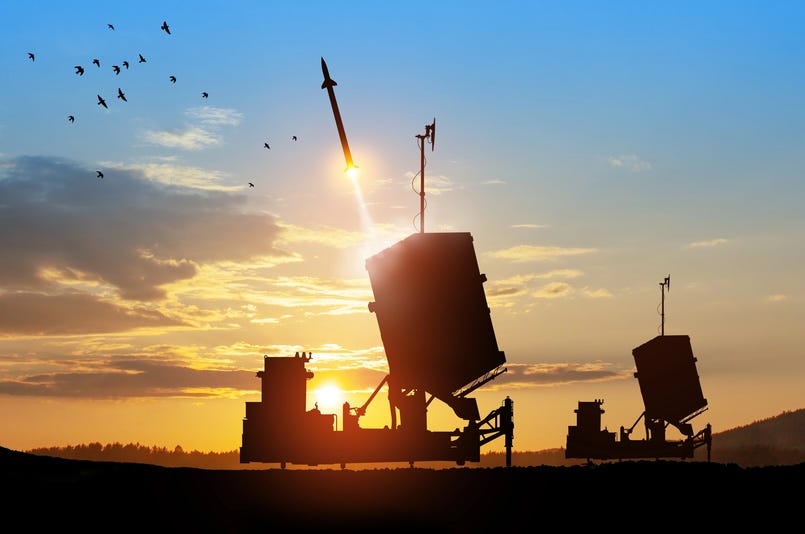
In late April 2026, Axios reported that Israel had deployed an Iron Dome air defense battery to the United Arab Emirates along with Israel Defense Forces (IDF) personnel to operate it during the US-Israel-Iran War, particularly to help the country intercept Iranian missiles. The US Ambassador to Israel, Mike Huckabee, later confirmed the deployment and attributed it to “an extraordinary relationship between the UAE and Israel based on the Abraham Accords.” The UAE acknowledged the gesture, with an Emirati official saying, “We are not going to forget it.”
Get E-International Relations delivered to your inbox, free. As you sign up, consider becoming a paid subscriber, or make a donation, to support our work.
This is the central question raised by the article, which will examine the deployment as an instrument of soft power. However, the problem that arises here is that soft power generally does not include military capabilities as a source of attraction since it is considered a part of a country’s hard power, i.e., achieving a country’s goals though coercion or inducement instead of attraction. However, the Emirati response suggests that the military deployment produced something closer to gratitude and goodwill – characteristics of soft power. This is the primary puzzle of this article – whether defensive military technologies can generate attraction and satisfy diplomatic goals, and if yes, under what circumstances, and what are the limits of such exchanges?
Two arguments are put forward by the article regarding this aspect. Firstly, it argues that, unlike traditional soft power studies dictate, military technologies, primarily defensive, can be utilized as diplomatic instruments when it follows the three conditions of transfer, co-development, and deployment. Such an argument is based on the concepts of defense diplomacy and arms transfers as diplomacy that considers military cooperation and assistance as instruments of foreign policy. It further draws upon Nye’s soft power theory, especially his later works, where he specifically acknowledges military resources having the ability to generate attraction if used for protection and assistance. As such, the article draws upon these concepts and theories to establish defensive systems as a hybrid resource that is hard in form, but capable of producing soft power effects, and in the Israel-UAE case, become instruments of normalization. However, another argument put forth by the article concerns the limitations of soft power being used in such a manner. Nye argues that such resources do not automatically translate to desired outcomes, and in this case, it raises a potent paradox – while defensive systems can generate desired soft power diplomacy, it mainly operates at the level of governments and security organizations, and does not always extend to the wider public, or other states, or eliminates political questions that defines how the region views the provider, which, in this case, is Israel.
Defensive technology as diplomacy
The literature on arms transfers as a diplomatic instrument is well established. However, nowhere is it more pronounced than in the case of Israel, which, facing growing diplomatic isolation ever since its formation, used arms sales to build relationships with governments that were otherwise reluctant to engage with it openly. Using arms sales as means of pursuing its economic and political interests, Israel has transformed itself into a mid-level supplier. However, what distinguishes the country’s arms sales from purely commercial transactions to ones that has helped it to achieve its political interests, is that it follows three primary logics – strategic, economic, and risk-related. Defensive technologies used in diplomacy are not merely about export metrics and commercial gains. They go deeper, creating three levels that justify their diplomatic appeal. The primary functions of these technologies include intercepting incoming threats, such as missiles, rockets, and drones, mainly to protect the territory rather than projecting force. This allows them to build relationships with states with which they previously had no diplomatic ties, reinforcing the provider’s image as a ‘problem solver’ or protector of its allies. Existing classifications of missile-defense cooperation differentiate between sales, cooperative research and development, and hosting a provider’s systems on a partner’s territory. Building on these studies, the article analyses three levels of defensive cooperation, namely, transfer, co-development, and deployment.
Moving to the first layer, i.e., transfer, the provider sells or supplies a defensive system to another state which is then operated by the recipient state. The relationship here is mainly commercial, with limited political signaling. Above this layer is co-development, wherein the provider and the recipient develop the defensive technology jointly, either directly through state organizations or private defense firms, resulting in the creation of long-term industrial and technological ties between the states along with shared stake in the products. The joint Israel-US co-development of defensive systems such as David’s Sling and the Arrow can be cited as examples. The third level is deployment, wherein the provider sends its own systems and personnel to defend the recipient’s territory, especially during an active crisis. As a result, the provider’s forces become directly involved in the recipient’s security. Each level increases three things, namely, the depth of operational integration between states, the visibility of the relationship, and the cost and risk borne by the provider. When the provider is so fully engaged in the relationship, it also strengthens political ties. Each sale signals a willingness to trade; co-development signals a willingness to share technologies; and deployment signals a willingness to bear risk on the partner’s behalf.
Defensive technologies as a source of attraction
Joseph Nye describes soft power as the ability to shape the preferences of others through attraction rather than coercion or payment, locating its sources in a country’s culture, political values, and foreign policies. In his later works, Nye acknowledged that military resources can also generate attraction when used for protection, assistance, or cooperation. Such a definition opens the door to treating defensive technologies as a potential source of soft power. However, military relationships can also create dependency or resentment rather than attraction. Four conditions must be met to ensure defensive technologies generate attraction rather than the previous conditions.
The first condition is benign purpose. Under this condition, unlike offensive technologies, defensive systems can be framed as protective rather than threatening. Let’s take the example of a missile interceptor, like the Israeli Iron Dome System. When this system is deployed over an ally’s city, it is not considered as an act of war or striking anyone since its deployment is framed as protecting the critical infrastructure of the ally from incoming missile threats during active conflict situations. Here, the distinction is primarily based on the intent of the provider. If defensive weapons can be distinguished from the offensive ones, it becomes easier for states to secure themselves without resorting to threatening others, thereby easing the security dilemma issue. Yet, such a framing is not universal. This is because adversaries may consider missile defense systems, irrespective of the intent, as hostile since it weakens their ability to deter or retaliate, particularly in the Gulf where Iran is likely to view Israeli air defense systems as anything but benign. However, irrespective of the threat, for the recipient state, protective or defensive technologies are much easier to accept than offensive ones since it carries less moral and political baggage that are often associated with arms sales, many of which have been prone to criticisms, especially in situations when they are used to commit human rights violations.
Another condition is visible beneficiaries. Air defense outputs are observable, i.e., interceptors can be seen, reported, or counted, and they primarily aim to protect the recipient state’s people and civilian infrastructure. In the case of the UAE, Israeli officials have publicly reported that its systems have intercepted dozens of Iranian missiles, with the US Ambassador crediting the deployment to Israel-UAE’s growing diplomatic relationship made possible via the Abraham Accords. Visibility matters because soft power depends on how audiences perceive and interpret actions, not only on a state’s resources. This gives tangible value to systems that many forms of security cooperation cannot, and it allows the contributions of the provider to be recognized publicly. US’ highly publicized relief efforts following the 2004 tsunami is one such example, leading to favorable views of the US in Indonesia that rose from 15% to 38% by 2005.
A third condition is costliness and credibility. The promise, or credibility of commitment or support, is more believable when the party making it is ready to bear the rising costs. This is known as “sinking costs.” Paying a price up front shows the commitment is genuine, since a state that did not value the relationship would not pay to keep it. This distinction separates the levels of defensive cooperation. If the sale were purely commercial, the recipient would pay, the provider would earn profits, and the sale would reveal little about how much the relationship matters to the provider. However, deployment, especially during a crisis, reverses this dynamic. The provider is willing to give up resources and accept risks on behalf of the partner, as the upcoming section will show how Israel’s 2026 deployment differed from its previous sales. Such a gesture helps create the fourth condition of reciprocity: it is assumed that in international relations, when a state struggling with its security is provided help in critical situations by another state, they tend to remember and often reciprocate the gesture. For instance, during the 1960s-70s, when the US provided military aid and security guarantees to Israel, which was under constant threat from its Arab neighbors; Israel reciprocated the gesture through intelligence sharing, joint defense cooperation, technological innovations, and supporting broader American strategic interests in the Middle East and in international forums.
Once all the conditions are satisfied, defensive technologies can generate attraction, primarily at the political level. As cooperation progresses from transfer to deployment, the provider bears more cost, and the recipient feels more indebted to the provider. As a result, at every level, there is a strengthening of cost and reciprocity, which is why the 2026 deployment matters significantly for this analysis.
Israel-UAE air defensive cooperation (2020-2026)
The relationship shared between the UAE and Israel, especially during the last six years of normalization achieved through the Abraham Accords of 2020, reflects the levels and the conditions discussed in the previous sections. One of the first steps in this regard was the signing of an MoU between Israel Aerospace Industries (IAI) and the UAE’s defense conglomerate EDGE Group in March of 2021, to jointly develop counter-manned aircraft systems for the Emirati market. The venture was described, at that time, as the first publicized defense-industry agreement between two states, and helped satisfy the crucial level of co-development. The primary characteristic of this venture was that it combined the expertise of the IAI in counter-drone systems with that of the EDGE Group’s electronic warfare (EW) capabilities, aimed at detecting, identifying, classifying, and finally, intercepting hostile drones. It would then take “soft kill” measures such as jamming and cyber-attacks, along with “hard kill” options such as guns, missiles, electromagnetic, and laser weapons with a high degree of autonomy. By choosing to co-develop the technology rather than purchase it, the UAE positioned itself as a production partner rather than a simple customer. In 2025, despite regional tensions over the Israel-Hamas War, EDGE acquired a 30% stake in the Israeli firm ThirdEye Systems, which develops AI-enabled electro-optical systems that detect drones, for $110 million, along with a planned $12 million joint venture. Such an early focus on counter-drone systems also proved far-sighted, as drones were a significant part of Houthi attacks on Abu Dhabi in 2022, and dominated Iran’s campaign against the UAE in 2026, when an estimated 2,200 drones were launched at the state.
Another level the relationship achieved was tech transfer. Israel sold Rafael’s SPYDER air defense systems to the UAE in 2022, the first such sale of defensive equipment between the two countries since normalization, after Houthi drone attacks killed three civilians in the UAE in January and February of 2022. The sale also signified wider US and Israeli efforts to strengthen the air defense systems of Arab states against growing Iranian threats. Israel’s defense export data highlights the scale of this channel, with exports reaching a record of $14.7 billion in 2024, with the Abraham Accords states (the UAE, Bahrain, and Morocco) accounting for 12%, and missiles, rockets, and air defense systems making up 48% of the total sales. Coincidentally, 2024 was the height of the Israel-Hamas War, when political relations between Israel and its neighboring states were under severe strain; the Abraham Accords states continued to rank among Israel’s major defense customers, showing the power of technology to foster relationships. In 2025, exports rose to $19.2 billion, with the MENA accounting for 15%, and air defense becoming the largest single category at 29%. As shown, air defense became the primary channel through which normalization translated into material benefits for all the parties.
The most important condition, however, was deployment. When the US-Israel-Iran War started on February 28, 2026, it placed the UAE in the line of fire of Iranian retaliation, with Iran reportedly firing around 550 ballistic and cruise missiles and 2,200 drones at the UAE. This prompted Israeli Prime Minister Benjamin Netanyahu to deploy an Iron Dome battery with IDF operators to the UAE after consulting the UAE President, Mohamed bin Zayed Al Nahyan. Reports also said the deployment may have included a version of the Iron Beam laser system, as well as Elbit’s Spectro electro-optical system for identifying drones. This was the first time the Iron Dome was deployed in combat outside of Israel or the US.
So, what did this deployment achieve? It went beyond a mere sale, creating three effects that strengthened the Israeli-UAE relationship diplomatically and politically for decades. The first achievement was that the deployment transformed a primarily commercial relationship that existed even before normalization into a credible sign of commitment towards protecting Emirati security. Before 2026, Israel’s role in the air defense of the UAE was limited primarily to that of a supplier and a tech partner. That changed drastically during the US-Israel-Iran War that commenced this year and has continued since. When the UAE, along with other Gulf states, was taking heavy fire from Iran, Israel, despite being under attack itself, deployed its own Iron Dome battery and IDF personnel to the UAE, thereby reducing the capacity of its own defense to help a partner in need. Such a gesture demonstrates the costliness and credibility condition – Israel paid an upfront cost, and its value lies in the fact that a less committed partner might not have gone to such an extent. It also affirmed to the UAE that in times of crisis, Israel would risk its own security for them – a signal of camaraderie that a simple transaction or sale can never affirm. When the UAE official stated that it would not forget this gesture, it suggests that the affirmation landed. Therefore, protection in a crisis became a part of the shared memory of the states and will shape what each sides expect from each other in the near future.
Another achievement of the deployment reaffirms the success of the normalization narrative. Proponents of the Abraham Accords have continuously argued about its ability to produce tangible benefits to its signatories, ever since it was signed. It did not take them long to frame the deployment as a product of the same normalization drive. This helped Israel in a particularly crucial moment when it was being accused of genocide by courts and critics alike. It reaffirmed the image it has long cultivated, that of a ‘problem solver,’ i.e., a state that primarily utilizes its technologies to solve the problems of both partner states and states it does not have formal relationship with, alike, at least at the governmental levels. Viewed through soft power lens, this highlights how a military act can generate attraction, especially when the meaning behind the act goes beyond material resources to highlight the values that are attached to any partnerships with the country. Third, the deployment also demonstrated the capability of Israeli systems as ‘battle-tested’ in a way marketing alone could not replicate. When Israeli air-defense systems are successfully deployed to defend against large-scale missile and drone campaigns, they acquire credibility with other states facing similar threats. With air defense already the largest category of Israeli defense exports, using it in combat to defend a foreign state is likely to reinforce demand while also highlighting the dual political and economic logic of arms transfers: defensive cooperation builds partnerships and markets at the same time, and each reinforces the other.
Limits of defensive tech diplomacy
While defensive technologies helped Israel achieve goodwill, at least at the governmental level, it is not without limitations. The most significant limitation is that of the audience problem. Defensive systems as an instrument of soft power diplomacy is a government-to-government level achievement, i.e., the actor who request, operate, and benefit from them directly. It does not automatically translate to the changing perspectives of the audience towards the provider. In the 2025 Arab Opinion Index that surveyed 15 Arab countries, it was discovered that 87% of the people opposed the recognition of Israel, with 6% only accepting it on the condition of the two-state theory, i.e., the creation of a Palestinian state. Even though the UAE was not surveyed, the numbers themselves highlight the growing resentment of the Arab populace towards Israel, and particularly towards its conduct in Gaza post-2023. While this might not directly affect the relationship between Israel and the UAE, it can very well stop other neighboring states from normalizing with Israel, as could be witnessed from Saudi Arabia’s reluctance to join the Abraham Accords.
A second issue is that of hedging. There is no guarantee that the recipients of the defensive systems will not look for other partners or diversify their strategies, particularly if it wants to avoid dependency. The UAE has pursued a diversified defense strategy, building partnerships with France, Italy, and South Korea, and Strategic Defense Partnership Frameworks with Global South countries such as India, to pursue strategic autonomy. Although gratitude for protection is real, it also coexists with a deliberate effort to expand security relationships across different providers. Defensive cooperation makes Israel a crucial ally, but it is not an exclusive one. And thirdly, closer relationships with Israel, especially that of the UAE, also increases
Lastly, such cooperation entails costs for both sides as the relationship climbs each level. For the UAE, visible security cooperation with Israel increases its exposure to criticism in the Arab world and embeds it more closely into Israel’s regional military campaigns. Iran’s targeting of Arab states in the Middle East, particularly the Gulf, due to its closeness with either Israel or its ally, the US, including the presence of military bases, is such a consequence. For Israel, association with the UAE’s policies in conflicts such as Yemen, Libya, and Sudan creates liabilities of its own. It may also complicate Israel’s diplomatic outreach in Africa, particularly in Sudan, where the Emirate’s role in its civil war has drawn widespread criticism and with which Israel’s own normalization remains incomplete. Another risk lies in the deployment itself. If the deployment fails to prevent serious damage to the partner’s civilian or critical infrastructure, it could greatly harm the provider’s reputation and reduce its attractiveness over time. So, the higher the level, the greater both the potential reward and the potential cost.
Conclusion
The Israel-UAE relationship shows how defensive military capabilities can also generate attraction and soft power, given that it fulfills the conditions and levels of analysis described in the article. Such relationships can also have downsides that must be curbed for the partnership to develop further. Three main implications are highlighted by the relationship. First, for the study of soft power, it demonstrates the idea that the boundary between hard and soft power is not a static or fixed one; rather it is quite blurry and flexible. Defensive systems can generate attraction, given that it qualifies certain conditions, primarily satisfied through deployment than a sale, showcasing how the soft power value of such systems depends upon when it is provided rather than what is being transferred. Secondly, Israel’s tech diplomacy illustrates both the strengths and limitations of an approach that relies on capability to generate influence. The air defense systems of Israel generate goodwill amongst governments faced with related threats, but the goodwill is not always converted into political acceptance, as it is depended upon several factors, particularly the Palestinian question in the Middle East. But that has not stopped the region from emerging as a market for providers of security solutions. As the threat of missiles and drones grows and wars continue, the Gulf states are likely to seek protection from several partners, including Israel, along with other Western and Asian partners. When that happens, the diplomatic use of defensive technologies can become competitive, and its political returns can depend on the provider’s willingness to climb the levels during crises.
Noiranjana Kashyap (she/her) is a PhD Research Scholar and Dr. TMA Pai Fellow at Manipal Institute of Social Sciences Humanities and Arts (MISHA), Manipal Academy of Higher Education (MAHE), Manipal, India. She also occasionally teaches postgraduate courses on West Asian geopolitics, Science and Technology Studies, and public diplomacy as a Teaching Assistant. Her research primarily examines Israel’s technopolitics and MENA geopolitics and extends to global conflicts and science diplomacy. She has written for The Diplomat, Geopolitical Monitor, The Geopolitics, Science Technology and Security Forum (STSF), Ramjas Political Review, and Stratechos.