


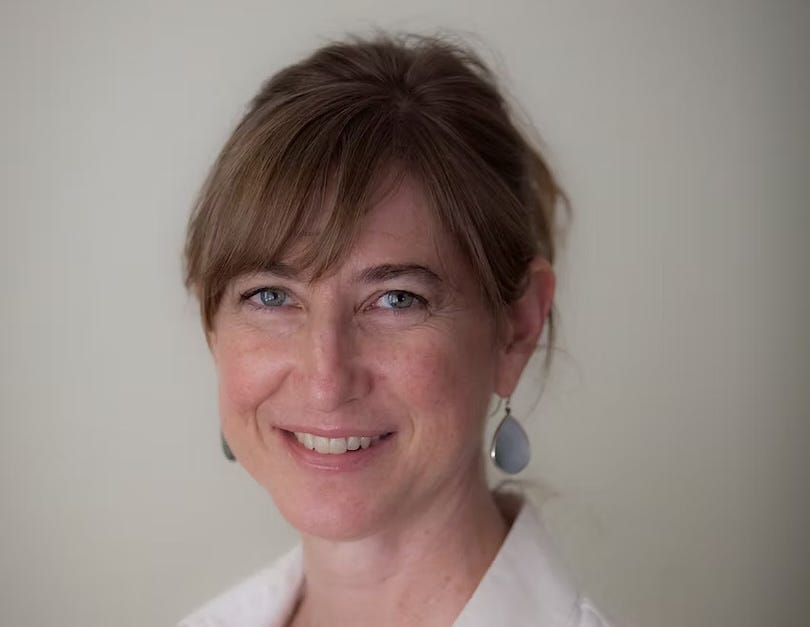
Dr. Dahlia Scheindlin is a political strategist and a public opinion researcher who has advised on nine national campaigns in Israel and worked on elections, referendums, and public affairs campaigns in 15 other countries. She is a Senior Analyst and columnist for Haaretz (English), a board member of A Land for All, and a policy fellow at Century International. Her writings have appeared in the New York Times, The Guardian, The Observer, Foreign Affairs, Foreign Policy, Financial Times, The New York Review of Books, The New Statesman, and The New York Post. Her book, The Crooked Timber of Democracy in Israel: Promise Unfulfilled was listed on Foreign Affairs’ Best Books of 2024. She provides regular commentary for international and Israeli media, appearing regularly on CNN, BBC, NPR, CBC, and is quoted widely in leading print media. She holds a PhD in political science from Tel Aviv University and a master’s degree from Harvard Divinity School, has been an academic fellow in programs at Columbia University, Brandeis University, UCLA, and in the fall of 2025 was the Distinguished Middle East Fellow at University of Pennsylvania. In addition to Israel, she has regional expertise in the Balkans and Eastern Europe, the South Caucasus and Cyprus. She conducts extensive public opinion research for civil society organizations, including joint Israeli-Palestinian surveys.
Get E-International Relations delivered to your inbox, free. As you sign up, consider becoming a paid subscriber, or make a donation, to support our work.
Where do you see the most exciting research or debates happening in your field?
Research into hybrid forms of governance based on power-sharing, which lie between partition and a unitary state for conflict resolution, seems to be the most important research area to me in recent years. I have worked on this issue for over a decade, along with a handful of scholars who have shed the paradigm of partition for Israel and Palestine, in favor of some form of two states with institutional cooperation. This is modeled on a range of examples implemented in recent history to end violent conflicts and anchor the institutions to contain conflict, intended to maintain peace. Examples include the European Union, Bosnia, Northern Ireland, spanning federation and confederation type systems.
How has the way you understand the world changed over time, and what (or who) prompted the most significant shifts in your thinking?
The biggest shift was my understanding over time that human history does not follow a linear path towards social and political progress. Roughly since my undergraduate studies, I generally believe that human society evolved, just as evolutionary biology drove the species to more advanced stages of development. I believed the Enlightenment and the Industrial Revolution clearly represented progress compared to the Middle Ages. Those processes later led to the world organizing around nation-states and democracy, which also felt like normative progress. Despite the backlash of dark forces and unprecedented destruction in the 20th century, I believed that the post-World War II world order based on universal principles of human rights, international law and organizations would spread progress and peace – particularly with the fall of the Soviet Union. In the mid-1990s I also believed the Middle East was on the long arc towards peace.
However, watching the accumulation of wars, conflicts, regression, and populist racist ultranationalist movements has led me to believe that linear progress is elusive. I now see human society more in terms of a struggle between forces of violence and conflict, and inclinations towards peaceful human organization of society. The former is always capable of the worst excesses, and the human capacity for brutality never fades, it only changes form. But neither does the instinct of other factions within humanity to advance peaceful societies, justice, prosperity – even across tribal or national lines. The main question is which force prevails at any given time and which side I want to be on. The most critical such events in my lifetime that led to my current understanding were the wars and atrocities in Rwanda and the former Yugoslavia in the early 1990s, the breakdown of the peace process and the outbreak of ongoing violence in Israel and Palestine in the 2000s, the rise of nationalist populism leading to Brexit and Donald Trump. The war of aggression by Russia against Ukraine cemented my view, then finally the most recent phase of war in Israel-Palestine starting on October 7 and the war on Gaza.
The Crooked Timber of Democracy in Israel, was published just weeks before October 7, 2023, closing with the mass democracy movement of that year. Reading it today, those final pages feel like a snapshot taken at the edge of an abyss. If you were writing the book now, would the argument change — or has everything since simply confirmed the trajectory you traced from early Zionism onward?
I wouldn’t say anything is simple or deterministic, since there were specific policy decisions during that year prior to the attacks and even in the hours beforehand that could have made things turn out differently. However, the basic argument stands: Israel’s democracy was built on partial or missing foundations, involving a robust self-image but violated at all stages by fundamentally undemocratic practice. The self-image blinded Israelis to these flaws for decades – this was demonstrated by the shock Israelis felt in January 2023 when the Justice Ministry sought to eviscerate the judiciary. A clearer understanding of what had gone wrong might have helped Israelis identify and strengthen democratic pillars before getting there.
But the most important thesis of the book, which tragically holds up, is that democracy cannot withstand ongoing military conflict and occupation, which at their core are undemocratic. Israel could not fulfill its democratic promise without committing to equality – at the core of democratic systems – and it could not do that as long as it was unwilling to formally recognize the equality of all non-Jewish citizens, or the national self-determination of Palestinians. I argued that there is no separation between the state of Israel (which claims to be democratic) and the institutions of the occupation. Tragically, it was the gravest threat to democratic institutions under the 37th government in Israel that triggered chaos which in turn unleashed the worst violence in the conflict; the war naturally accelerated the government’s ability to keep undermining democracy. I have never been more sorry to be correct, and I could never have predicted how extreme the situation would become – but the clash of concepts was inevitable and obvious to me.
A central claim of your book is that there is “no separate democracy”: Israel and the occupation are one state, governed by the same institutions. Yet democracy indexes and much of political science still code Israel as a democracy by bracketing the territories. What does this case reveal about how the discipline measures and classifies democracies?
This is a critical question and I do not have hard evidence for why the situation persists. However, it is fair to assume that the authors of democracy indexes and their organizations, whom I greatly respect, have tried to respect internationally recognized entities and institutions, such as the Palestinian Authority. It is also essential to include the PA in such indexes too, to hold that body accountable to its people. But doing so implies territorial sovereignty that the PA absolutely does not hold; while dismissing the reality that Israel holds exclusive de facto over all of the territory and people, though employing different mechanisms and a measure of outsourcing of that control.
Democracy experts are not alone; Israel has worked to perpetuate the image that the occupation is a temporary, reversible military institution, in order to avoid charges of violating international law that come with annexation. That effort lasted for decades until the current government, which removed the illusion of such separation long before October 7, by declaring its intention to complete the annexation of occupied territories and by transferring occupation powers from military to civilian arms of the state. But any close observer of the region should not have allowed him or herself to be deceived for so long anyway.
One of your most striking concepts is Israel as a “tergiversation nation” — a political culture of strategic non-decision, from the missing constitution to the decades-long refusal to name its intentions for the occupied territories. In a recent essay you argued that “conflict management” never collapsed as a paradigm; it was a fiction from the start. Was this a fiction Israel sustained alone, or did international actors share in maintaining it — and if so, how?
Absolutely those actors are implicated in the fiction. As I implied earlier, international actors helped to sustain the status quo itself. I would be cautious about declaring a collusion or conspiracy of all international actors, since this was an evolving situation over time. In the 2000s, after the 2005 Disengagement, one could legitimately have believed that Israel and the Palestinians were managing the conflict in between cycles of negotiations to end it (2001, 2008, 2013). But for a decade after the last negotiations began (ending in 2014) and Oct. 7 – the illusion should have completely dried up. Israel’s yes/no image – we want peace, but we’ll keep expanding the occupation – was not hard to identify just by looking at what it was doing.
I spoke to so many Western diplomats here in the region over that time, year after year, who expressed their concern and alarm at what was very clearly Israel’s creeping annexation in the West Bank (even long before Netanyahu began to announce this as policy in 2020), alongside a compression chamber in Gaza always on the verge of explosion. These diplomats also expressed helplessness, knowing their capitals would not be doing anything. So it’s not so much conspiratorial as convenient – western governments truly did not want the headache of isolating or punishing Israel, despite Israelis’ belief that they are all hostile. Actually, European rhetorical admonitions prove their support, since tepid criticism replaced policy measures to respond to Israel’s actions, measures that foreign governments were unwilling or politically unable to take.
For years you have conducted the joint Israeli–Palestinian survey with PSR, a rare instrument measuring both societies in parallel over time. After October 7 and the war, what has shifted in how Israelis and Palestinians understand the conflict and each other, what has persisted and does a measurable social base for a peace process still exist in either society?
The two sides have reacted somewhat differently at different times. For example, politically, after October 7 Israelis expressed an anti-rally against the government, whose ratings plunged. Palestinians showed a more typical rally effect involving a rise in support for Hamas (which had been low in PSR/ Arab Barometer polling just ahead of Oct. 7). Israeli support for the government slowly recovered during mid-2024 (though still a minority), while Palestinian support for Hamas dropped over time to below even September 2023 levels at present – a sign of anger against the group for the consequences of the wars.
Regarding each other, Israeli Jews have shown declining support for a two-state solution, reaching 20 or 25 percent (pre-Oslo levels), which is limited mostly to left-wingers now and a minority of centrists. However, Arab citizens of Israel and Palestinians have shown a moderate rise in support for this approach, which has become a general barometer of peace – to around 40 or 45 percent. On the other hand, the self-identified left among all Israelis has remained firm, at about 20 percent who call themselves left-wing, the same portion as prior to October 7. Similarly, self-identification as right-wing has not changed much since the last elections in 2022, meaning that many Israelis have come to view October 7 through the same filters they understood the conflict prior to the war. A base for peace remains but very few see it as feasible on the two sides, while old understandings of the two-state solution seem archaic; younger Israelis don’t even think in these terms.
You have examined unrecognized states born of ethnonationalist conflict, such as Kosovo and Nagorno-Karabakh. What did those cases teach us about how recognition works as an international institution — whether it rewards viable statehood or registers great-power preference — and how that lesson might inform our reading of the recent wave of recognitions of Palestine?
In the 13-odd years since I completed my thesis, I’d have to allow for greater influence of great power preferences. At the time I gave more weight to the efficacy of the group or nation itself struggling for recognition. I still believe that reading the political symbolism and material statebuilding activity coming from within those societies tells us quite accurately how committed they are to sovereign statehood or at least to independent national self-determination.
But as for the external power of recognition as an international institution – I think the fate of each case, and some additional controversial recognitions since 2013, has proved that there is no real or rule-governed consistency. Kosovo displayed model national commitment and statebuilding, but it earned widespread recognition mainly because America became convinced that supporting it served US interests in the post-Cold War decade. Nagorno-Karabakh had performed decent institution-building and demonstrated its commitment to independence, but had no international recognition and was routed for good by Azerbaijan in 2023. Based on those cases, it looks like international recognition matters for state viability. But by contrast, Russia recognized parts of the Donbass as independent, in order to justify its invasion of Ukraine. And most tellingly, Palestine has long been the most widely recognized of the disputed entities I included in the category of phantom states, but all those recognitions cannot confer actual meaningful sovereignty or protect Palestine from military destruction, since its independence is not in Israel’s or the US’s interests.
You have argued that a two-state confederation is “the only realistic and pragmatic solution remaining,” drawing on the EU and on Cyprus’s open crossings since 2003. Partition was the twentieth century’s default answer to ethnonationalist conflict, from India to Bosnia. In your view, what makes shared sovereignty viable where hard separation was not?
I actually view Bosnia as a good example of a hybrid solution. We don’t use the term confederation for Bosnia, since it’s a federation – that’s because the partition is partial and Bosnia remains a single sovereign state. All citizens have freedom of movement and residency, although they have largely chosen to remain separate along nominal partition lines, in which each entity has its own government. I don’t want to romanticize or downplay the very complex, troubled and often precarious situation there; but the country has avoided extreme violence, or any resurgence of ethnic conflict, for over 30 years. That saves lives.
I do think hard partition versus power sharing should be a case-by-case decision, but in Israel and Palestine, we’re looking at a tiny geographic entity, with interspersed populations who will never be fully extracted from one another, interdependent economies, security, climate, public health and borders. The best institutional arrangements will accept that these must be jointly managed, while accepting that nationalist and religious connections to the whole land will never go away – building those attachments into the solution by allowing people access, movement and opportunities in the whole territory – is far more realistic than tearing each side away from part of its heartland. There’s a reason why hard partition has failed all these decades.
You have argued that the likeliest opening for peace — perhaps the only one — would be a comprehensive international plan injected into Israeli political life, ideally ahead of the Israeli elections. As those elections approach, do you still hold that view, and what would such an international initiative need to look like today?
It’s almost a lost cause, since it hasn’t happened by now. The main idea was my wishful thinking about a coordinated strategy or plan among the Americans, Arab states and Europeans. Actually, the French-Saudi initiative of September 2025 would have been a good starting point, but it’s been overshadowed by the Trump Gaza ceasefire plan which nodded to that earlier initiative but is turning into a train-wreck.
If I’m feeling more optimistic, maybe it was never the right approach to think this could be an electoral issue, given the reality of how fearful and small-minded Israeli party leaders have become in recent years. But perhaps it’s something that can be injected into Israeli policymaking after a new government is formed – even in the event that Netanyahu and some version of the far-right continue to govern. The time for cowering in fear of Netanyahu should be over – the world has indulged his policies for far too long.
Drawing on your own path — from public opinion research to political consulting to scholarship — what is the most important advice you could give to young scholars and practitioners working on conflict, democracy, and international politics?
Other than my very first campaign where I knew nothing and did anything needed to help the campaign team - I began working on public opinion and political consulting simultaneously. Public opinion research and data-driven analysis were and are the substance I bring to political strategy and advising, whether it was on a campaign or ongoing advising for governments and NGOs, or conflict analysis. It was a lucky break to fall into that field, but it happened because of a “try anything” attitude at a time when I had little clear direction of my own, only generalized passion for the topics.
My advice for young people is to bring something of substance to the table if you want to work in the realm of public affairs, politics, democracy and conflict, not just your opinions. I believe that getting involved in any of those fields is more rewarding if you cultivate an area of expertise, learn it deeply and offer that as a contribution – whether it’s expertise on a specific case or region (Israel-Palestine, the Middle East, Sudan/Horn of Africa, or Russia, Eastern Europe, the Balkans), or a particular skill (such as negotiation in the case of conflict studies, field research – or public opinion); or a cross-case expertise (such as knowledge of international law, arms trafficking, funding networks of non-state militias, electoral processes, etc). These make you a go-to person for specific aspects that are needed, and help you find jobs or be included in relevant forums. Once established, you can always keep branching out. But your brilliance and even your passion will not be enough on their own.
Editorial Credit: Konstantina Oikonomou