


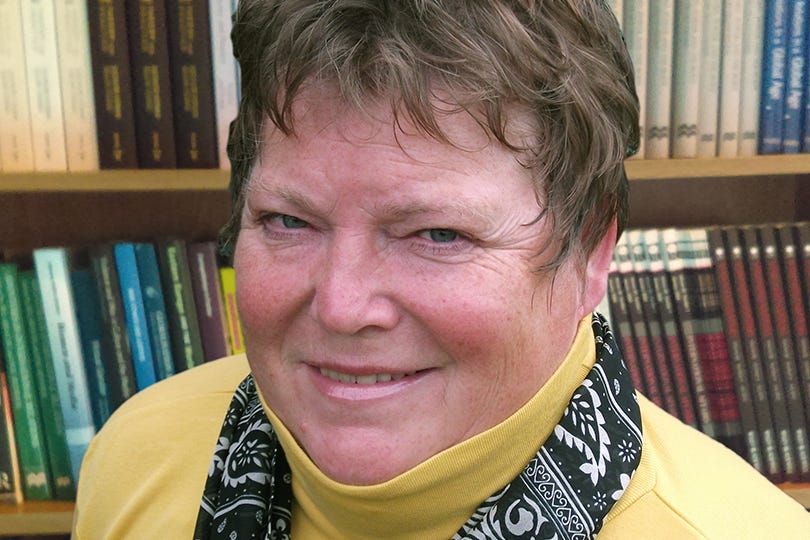
Gillian Youngs has held Professorial and Visiting Scholar positions in the UK, USA and Hong Kong. She is currently a Visiting Professor at University of Greenwich, UK, and an Honorary Professor at University of Lincoln, UK. She co-founded International Feminist Journal of Politics in 1999. Her books are: International Relations in a Global Age (Polity, 1999), Global Political Economy in the Information Age (Routledge, 2007) and Feminist International Relations Through a Technospatial Lens (Routledge, 2025); edited volumes Political Economy, Power and the Body (Macmillan, 2000) and Digital World: Connectivity, Creativity and Rights (Routledge, 2013); three editions of the co-edited volume Globalization: Theory and Practice (3rd ed., Continuum, 2008).
Get E-International Relations delivered to your inbox, free. As you sign up, consider becoming a paid subscriber, or make a donation, to support our work.
Where do you see the most exciting research/debates happening in your field?
Those informed by the core focus and trajectories of the discipline of international relations that advance its interdisciplinary strengths to address patterns of continuity and change in the contemporary world and global economy. Recent examples include: the third edition of Marianne Marchand and Anne Sisson Runyan’s edited collection Gender and Global Restructurings including examination of shifts in the sites of global restructuring and resistances to it, and James Mittelman’s Runaway Capitalism exploring ‘material and ideational’ developments. I have always aimed to position my research, collaborative work and funded projects towards fresh interdisciplinary perspectives as well as my teaching and course development across globalization, digital economy and feminist international relations.
How has the way you understand the world changed over time, and what (or who) prompted the most significant shifts in your thinking?
My academic work has been mainly located in the sub-field of international (global) political economy explicitly because it is centrally oriented towards understanding change. A wide range of scholars in this sub-field, including Susan Strange, have informed my research and thinking from the outset, because they provide the frameworks and perspectives relevant to my focus on the dynamics of power, inequality and empowerment. Importantly, these frameworks connect transformations across political and economic spheres.
The biggest shift in this area related to my work has been towards an increasingly applied agenda linking research and practice, including in different aspects of feminist activism, innovation, and entrepreneurship. An interest in how empowerment happens and can be supported is a common thread across this work. Learning by doing is a feature of these areas of practice as well as knowledge exchange and practice-sharing, and how these can inform different levels of policy.
Can you explain what you mean by ‘technological determinism’ and how it has shaped our understanding of international relations?
My new book Feminist International Relations Through a Technospatial Lens introduces my current research in this area but its sociotechnical approach goes right back to an early essay published in 1997 as part of a collection Technology, Culture and Competitiveness from a funded project on technology and the global political economy. As this research journey started, I began to connect insights from my earlier professional life in media and communications and the high-tech sector with my interests in power and inequality.
I analyse technological determinism from holistic macro and micro perspectives and the ways in which it has steered modernity through the given and unquestioned role of technological innovation as the key driver and definitive force of ‘progress’ in political economy. As a feminist scholar, I assess this as ‘masculinist technological determinism’ because it reflects wider patterns of male domination including through STEM (science, technology, engineering and maths) which sits at the top of the knowledge, policy and practice hierarchy in political economy and international relations. This hierarchy is pervasive in structural power. It is characteristic of all four power structures identified in Susan Strange’s model of states and markets – security, production, finance, and knowledge.
My research sits within the long and extensive history of feminist and gender scholarship detailing the embedded nature of male dominance and influence shaping main areas of power, control and resources in political, economic and cultural realms. STEM is notable in this context as a major masculinist means of defining, through knowledge, practice and policy, how modern industrial and digital societies and environments have evolved.
How are the bounds of international society being redrawn by information and communication technologies (ICTs) and what are its implications for gendered hierarchies?
ICTs have dramatically reshaped elements of international society, not least connectivity between women within and across states. As co-founder of International Feminist Journal of Politics 1999, I am deeply aware of how the collaboration that launched and established it would not have been possible without ICTs and the link these enabled between myself as a UK scholar and other members of the founding editing team, with Jan Jindy Pettman in Australia and Kathleen B. Jones in the USA. A stream of virtual micro-communications across the world and different time zones were essential to developing the journal concept and gathering together the editorial board to make the journal a reality. Since then its global community of editing teams, authors, reviewers and readers has continued to grow, not only in number but also in geographical reach and diversity of content.
Leading up to the journal launch my approach to women’s empowerment and ICTs had been informed by my applied research involvement in the ground-breaking UNESCO-funded Women on the Net project that built a community of scholars, activists, policymakers and innovators across the world through extensive online as well as additional face-to-face collaborative work. This was pre world wide web, so virtual communication across distance and different first languages and cultures was by email. This taught me a great deal about the challenges of effective and meaningful online contact.
My wide-ranging experience on the project empowered me to see in nuanced ways how ICTs could be part of driving individual, community and structural global change for women and their interests. I also deepened my understanding of the converse ways in which ICTs were means by which entrenched masculinist patterns of domination could be further extended by virtual networks in areas such as trafficking, pornography and harassment through enhanced affordances of connectivity, speed and ways of avoiding law enforcement.
You describe the ‘patriarchal prism’ as prioritizing the public sphere – and the power relations that involve its maintenance – over the private sphere. How do masculinist notions of ‘public’ and ‘private’ obscure our understanding of digital spaces?
The online world is in many ways a reflection of power in the offline world, so it echoes the main patterns of masculinist domination in states and markets. It also adds to them through the ‘dark web’ which provides cover for all kinds of criminality and oppression to evade the eyes or reach of law enforcement agencies. If anything, the breadth of masculinist power that we see through the ‘patriarchal prism’ has grown substantially in both global scope and nature thanks to ICTs and continuing technological advances, notably through the uses of Artificial Intelligence (AI).
The masculinist structure of public over private and the social binaries attached to it – male/female, subject/object, active/passive, rational/emotional – locate agency primarily with men in the public spheres of states and markets. Women’s identity and roles are primarily contained within the private spheres of home and nation. While the online environment offers myriad possibilities for cutting across some of that containment depending on different state, cultural and individual circumstances, it does not remove the social conditions women are born into and operate within.
How does the increasing automation of AI redefine identity within and beyond the home?
It is too early to be definite about these kinds of possibilities. AI is one of the big unfolding stories of our time and we are only at the beginning of understanding what its positive, negative and unintended impacts will be. AI is now an intrinsic element of digital economy and will impact on public and private spheres and continue to blur in complex ways the boundaries across them, as mass uses of email and social media have already demonstrated. I am now engaged in new research towards my next monograph expanding analysis of themes I have introduced in my new book, including the importance of automation as a major driver of modernity through the industrial, digital and now AI economy. My approach is as ever sociotechnical and I draw on feminist perspectives to aid our understanding of macro and micro processes of power and empowerment. A strength of sociotechnical approaches is that they focus on how societal and technological change are interconnected. Part of this is understanding that engagement with technologies including on an individual basis is not neutral and can impact, for example, on how we understand ourselves and the communities we are part of and/or identify with, and the social and personal meanings of public and private. We know that virtual connectivity and social media in particular have brought major shifts in these areas and it is reasonable to expect AI innovations to take these kinds of change as well as others even further.
How can we think about digital life in terms of (dis)embodiment?
Embodiment can only be fully addressed through feminist lenses. Masculinist frameworks focus on agency in the public sphere, creating an abstract notion of the individual divorced from holistic understanding across public and private arenas and roles, issues and concerns. Feminist analysis, partly but not solely through its investigation of power, engages with the full embodied individual. This is not an abstract entity as in masculinist theory and practice but one based on the full nature of lived reality and patterns of socialization affecting it. This perspective applies to both online and offline connectivity and experience.
In some complex ways, virtual communication can be considered disembodied because it enables us to connect and have presence beyond physical constraints. This can be part of its virtual power to reach out and experiment, but can also involve risk and danger if we do not keep a clear awareness of the connections to offline embodied reality. This is part of digital literacy, and managing our identities and lives across the contrasting conditions of online and offline existence. Part of this picture is balancing the advantages of being online with what can be risks and disadvantages either online or offline. This ranges across wide areas including the harms of online addictions of different kinds and what can be the dangers of sharing too much private information online.
My current research is aimed in part at sharing how feminist analysis makes major contributions to understanding the development of the new AI economy as it impacts on systems, processes and daily lives. This is particularly important when we look at the way AI is replacing human functions and presence and the negative and unintended consequences this may have – the whole area of AI and ethics.
You expound that although technology is often used as a tool to uphold dominant power structures, it also has the potential to further the agency of ‘digital citizens.’ How does feminist thought address questions of technoagency?
Feminist theory and activism explore questions of agency and links to consciousness-raising about gendered power relations as part of enabling empowerment and action. This applies to both the offline and online environments. Technology and STEM are among the most historically embedded areas of male domination, and their guiding role in shaping the world we live in identifies them as priority areas for feminist investigation. Masculinist domination of technology and STEM obscures paths to engagement, empowerment and leadership for women and girls through the overdetermination of these areas along entrenched male-defined lines. The revisioning of STEM along more inclusive gender lines is not only long overdue but cannot even begin to happen until there is a dramatic increase in the number of girls and women involved, especially at leadership levels across all areas of education, research, policy and industry. The 2024 UNESCO report Closing the Gender Gap in Science pointed out that only 12 per cent of members of national academies of science are women.
I am proud to be a Fellow of the Women’s Engineering Society and contribute to their work towards positive change for women and girls in the STEM arena. I still find inspiring the title of the essay I wrote for the Women@Internet collection from the Women on the Net Project – ‘Virtual Voices: Real Lives’. This essay emphasizes the importance of women’s knowledge, voices, connectivity and shared experience within and across communities locally and globally, as well as their digital empowerment based on their daily lives and their aspirations and activities towards positive change for them and their societies. It signals that the most effective discovery of new paths to agency come from our own lives, concerns and priorities, as well as those of the communities we belong to and identify with. In that respect technoagency is no different from other forms of agency, for example political or cultural.
What is the most important advice you could give to early career scholars?
My advice has always been the same: have your own academic agenda and work with it. This is especially important if you are focused on new, or what might be seen as marginal or methodologically innovative, areas of the discipline. It takes time and struggle to build your own distinctive teaching and research. You will need to find support and communities that understand what you are working towards and, importantly, can collaborate with you to move forwards, and these may be outside as well as inside academia.
The continuous support I have received throughout my academic path from individual scholars and communities of scholarship, activism and practice, and the collaborations that have resulted from them, have been core to what I have achieved. Mentors have played pivotal roles in my path and mentoring has always been a valued part of my academic identity and engagement. I am as passionate now as I ever was about my academic work and future, and that would be my hope for new scholars as they advance in their careers.
Editorial Credit: Yana Sadeghi