


*Originally published in 2021 and preserved as part of our archive project.
E-International Relations is free to read. We rely on reader support to make this possible.
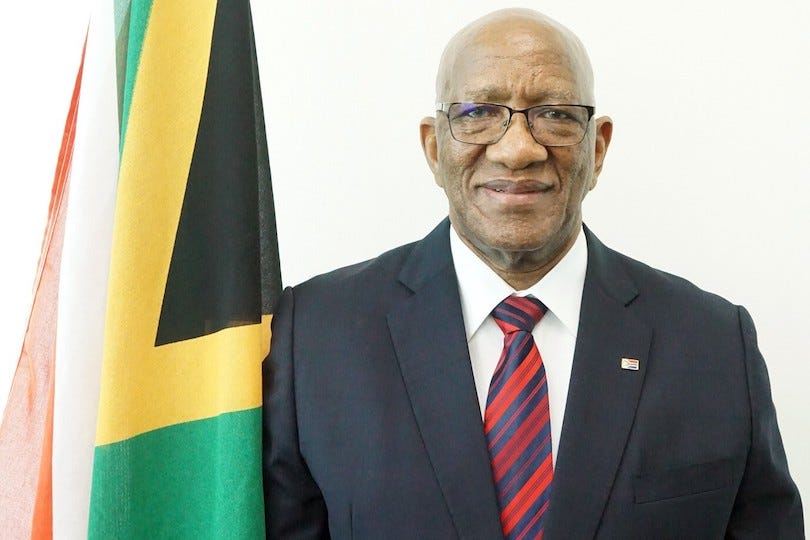
In February 2014, Ambassador Lulama Smuts Ngonyama was appointed as Ambassador of the Republic of South Africa to the Kingdom of Spain and the Principality of Andorra. He played a decisive role in the creation of the South Africa-Spain Chamber of Commerce in June 2016. This initiative provided an important network that has opened up a myriad of opportunities for interaction between Spanish and South African businesses. In 2019, he was appointed as an Ambassador of South Africa to Japan. His political career started as a student activist with many interesting and unpalatable episodes which lead him to be expelled from different tertiary institutions for political activism. After being appointed in different structures of the South African liberation struggle, he landed in the National Executive Committee, the highest structure of the ANC, the governing party of South Africa. During the negotiations process for a free democratic South Africa, he was a participant of negotiations on behalf of the Tripartite Alliance, led by the African National Congress.
Where do you see the most exciting debates happening in your field?
The central feature of major global debates in my view is around developments of the African continent. Across many platforms, there are still narratives of “Afro-pessimism,” while in others the inverse, “Afro optimism,” continues to feature. However, among the younger African generation currently, there is a strong refreshed call for “African solutions to African problems.” In essence, Africans are now ready to take the challenge of Africa’s development upon themselves. As clearly stated in the African Union Agenda 2063 document, one of its aspirations is that by 2063, Africa shall be a prosperous continent, with the means and resources to drive its own development with sustainable and long-term stewardship of its resources.
It is this determination and resolve that gives me confidence like many in the continent of Africa, that the main focus of the big debate within the international relations and diplomatic sphere will be occupied by the analysis of African development as it rekindles itself from the challenges of poverty and underdevelopment and asserts itself as the true cradle of humankind. Africa’s voice is now common in many respects and the recent trend demonstrates that undemocratic regimes, corruption and impunity will soon be a thing of the past. Moreover, the demographic dividend and high speed with which digitisation is adopted by African youth positions Africa to be the home of the next technological frontier. In terms of the World Meter demographic population, the latest 2020 breakdown sees Africa having a population of approximately 1.3 billion and 60% of which are young people. Also, Africa is home to 90% of the world’s young people of under 25 years of age. The African continent leadership is preparing Africa to fully embrace the Fourth Industrial Revolution (4IR) and the challenges which it will encompass.
How has the way you understand the world changed over time, and what (or who) prompted the most significant shifts in your thinking?
Firstly, I am an African born in the 1950s in South Africa. My country was one of the subjects of the scramble for Africa which began even before the nineteenth century and was colonised first by the Dutch in 1652. They introduced the model of slavery and forced labour. South Africa remained under Dutch rule until 1795 before it was taken over by the British, as part of the Napoleonic Wars. It fell back under Dutch control briefly in 1803 and again reverted to the British in 1806 who eventually unified the country in 1910, with joint control with the Afrikaner descendants of the Dutch settlers. Throughout this process of colonisation, black people were subjected to brutal exploitation, oppression and discrimination of various forms. In 1948, South Africa famously fell under the sole rule of the Afrikaners, who introduced a systematic process of overt oppression and discrimination called Apartheid. This was the political climate I was born into and grew up under. Nevertheless, such conditions never destroyed the will of the people who were determined to free themselves from the yoke of oppression; instead, they inculcated strong resilience and commitment to break the chains of oppression. As my family was immersed under such difficult and toxic material conditions like many others, this situation contributed so much in shaping my perception and outlook on the world. Typically, African families did not spare any efforts in educating its children on their responsibilities, history, culture, values and beliefs. The elders made us understand that we exist with other human beings whose existence needs to be respected. It is this context of values and respect that are continuously articulated through the African phrase Umntu ngumntu ngabantu. In the South African language of IsiXhosa, this means a person is a person because of others no person exists without coexistence with others. That is an important African adage that formed an embodiment of the African way of life and is referred to as Ubuntu. It is such lessons that inculcated a strong consciousness of being proud of who I am.
Secondly, as an activist and a diplomat, I have been engaging with many scholars and colleagues that are so steeped in the world of ICT, artificial intelligence, the internet of things, social media, big data and the 4IR in general. Each of these encounters added so much value in igniting curiosity and fear about the role of these ingredients during the process of the ongoing industrial revolution, in particular about the future of the continent that is my permanent home (Africa), and even more intimately South Africa which continues to be defined by inequality. As an omnivorous reader, I have also plunged myself into this sector by ploughing into authors like Klaus Schwab, Bob Iger, Ray Kurzweil, David S. Evans, Richard Schmalensee, Roger Bootie, Eric Siegel, Slavoj Zizek and a few others. Many conference papers by scholars such as South Africa’s own Professor Tshilidzi Marwala have ignited an interest in these complex sectors. Finally, as a diplomat on behalf of South Africa being exposed to the high industrial and technology development of Japan as my host country, this whole scenario raises many questions in me about economic diplomacy and developing countries like South Africa and others.
How do you see the role of economic diplomacy in the development of developing countries?
Economic diplomacy is a means to address the triple challenges of inequality, unemployment and poverty as well as human resource development. It is also through economic diplomacy that strong bilateral and multilateral relations are advocated at the political and cultural level. In the prevailing times, science, technology and innovation have been prioritised, particularly as nations are preparing for the 21st century imperative of rapid technological development. The current low levels of industrialisation in developing countries strongly indicates that these countries are still far behind in terms of science technology and innovation and therefore will have to invest so much more in resources and creativity to be able to catch up. The situation in African countries is worse than in most other developing countries as they were also left behind in the first three industrial revolutions, due to the dastardly colonisation and neo-colonialism processes.
With this background the international diplomatic relations processes of developing countries should be based on economic diplomacy that has been crafted strategically and with determination, to close the gap with the developed countries of the north. I also believe, based on the brutal historical context of colonisation and neo-colonialism programs, a strong case could be made both at the bilateral and multilateral level, for developed countries and multilateral institutions to accept part of the development responsibility of the countries of the Global South as their neoliberal policies continue to impoverish these countries. However, for developing countries to ensure that multitudes of their citizens are not left behind languishing in underdevelopment and poverty, it is not only a moral responsibility but a critical goal to mitigate the risk of instabilities that may erupt in their countries. I believe it is with pragmatic and economic-driven foreign policies, a concept articulated by Professor Chris Landsberg in his book Continuity and Change and numerous articles, that the economic diplomacy of developing countries should be driven.
The 21st century’s 4IR comes at a time when many citizens of developing countries do not have access to basic services like electricity, clean water, sanitation and a range of capital equipment, which is taken for granted in advanced economies. However, the 4IR will, and has started to, impact developing countries as well. There is a school of thought that believes that a continued increase of inequalities will be more exacerbated. According to Credit Suisse’s Global 2015 World Report, half of all the assets of the world are controlled by the richest one percent of the global population, while the lower half of the global population collectively own less than one percent of global wealth. According to Klaus Schwab, inequality in the world is rising even within those countries that were participants during the first three industrial revolutions. In developing countries the situation continues to be more serious. Therefore, the economic diplomacy of contemporary international relations, specifically for the developing world has to be sharpened, adjusted and more focused on upcoming rapid technological developments. The old ways of doing things should be changed to be able to face the future with confidence. Developing countries have to make policy choices to enact the changes that will make 4IR an opportunity for all, especially for developing countries.
Do you see the diplomatic missions of developing countries as being sufficiently equipped to have their developmental agenda inform their economic diplomacy?
As we interrogate the capacities of the missions of developing countries, we have to appreciate the fact that there are also inequalities amongst developing countries themselves, because their economic diplomacy capacities are not monolithic amongst them. We have to separate big economies like Brazil, India, China and others in our analysis. However, in general missions of developing countries are faced with the difficult challenges of insufficient capacity, which manifest in different forms and may lead to the failure to meet the noble objectives of ensuring effective participation in the 4IR.
This is an issue of great concern to many leaders and responsible citizens of the countries of the South. There is also recognition, regarding the severe insufficiency of resources to equip missions in general to have positive engagement with the evolving process of 4IR, the internet of things, together with other ingredients of this revolution. As things stand now developing countries’ government are faced with serious issues of fulfilling basic needs that have to be delivered to the majority of citizens that are still poor, just for them to survive. However, the rapid pace with which new ideas and technologies are spreading around the world is what many experts believe distinguishes this current technological advancement as being unique compared to its predecessors.
I would like to believe that whatever challenges are facing developing countries, critical strategic policy choices should be at the centre of future planning. It should be the resolve of international affairs departments and relevant institutions to seriously mainstream the 4IR in all their strategic planning sessions. There is a great need to introduce a new paradigm during the process of establishing contemporary diplomatic missions by deploying specialised diplomats. The new breed of diplomats could include qualified technologists, scientists, digital specialists, health and medical practitioners, economists and those who have appropriate finance qualifications. Also, to obtain the best of the economic benefits through diplomatic missions, international affairs departments should deploy diplomats that have qualifications that are relevant to the diplomat’ host country. It will also be necessary to train and retrain diplomats to acquire knowledge that is relevant and valuable to local communities so that there is a direct connection between the diplomats and local communities. This will demystify diplomacy in the eyes of the ordinary members of the community.
Is there more continuity or change in South Africa’s pre- and post-1994 economic diplomacy?
Before 1994, South Africa’s economic diplomacy was almost exclusively based on military rather than economic cooperation because the Apartheid nationalist government was more concerned with militarisation and the defence of the pariah state, they presided over in order to enforce the discriminatory Apartheid laws against the African majority. They also did that to ensure their continued survival within the region that was strongly opposed to its system of oppression and discrimination. It was through this militarisation program that they would quite often embark on destabilising neighbouring front-line states like Angola, Lesotho, Botswana, Mozambique, Zambia and others through military attacks. As a result of its nefarious laws, in the 1980s Apartheid South Africa was declared a pariah state by all countries of the world and ultimately became one of the most isolated countries of the world.
When the new democratic government was voted into power in 1994, it became imperative as a matter of priority to integrate the new democratic South African government into the new world order as a responsible global citizen. To paraphrase the late former President Nelson Mandela in his articulation of South Africa’s future foreign policy in 1993: foreign governments recognised the need to assist the nascent democratic South Africa to have its future diplomats trained to ensure they are fully empowered to serve as effective career diplomats. One of the pillars of South Africa’s foreign policy post-1994 was to embrace regional economic social and environmental situation. On this point, the emphasis was made that economic development depends on growing regional and international economic cooperation and an interdependent world order. These positions were the opposite of Apartheid South Africa’s disastrous foreign policies. Unlike the Apartheid government, the new South Africa did not escape its African identity. Therefore, South Africa took a position to have economic cooperation with the countries of the continent and to reshape its trading network and make a significant contribution to strengthening Africa’s economy. As a first step, South Africa’s diplomacy became premised on the economy of southern Africa as it viewed itself as an inextricably important part of the region and that its destiny was that of this region.
As a result of this change, agricultural and industrial producers of the region are currently benefitting from the open channels of trade within the region. South Africa currently benefits through water imports from other countries in the region like Lesotho. The democratic South African government believed that southern Africa would prosper if the principles of equity, mutual benefit and peaceful cooperation were the tenets that informed relations among the countries of the region and the continent. South African foreign and economic policies were focused on the path of rapid economic development with a view to addressing three key challenges: slow growth, severe poverty and extreme inequity in living standards, income and opportunity. All these economic problems were created and left behind by Apartheid government policies. The economy contracted sharply during the recession bound 1990s, and in eleven of the previous twelve years per capita income had declined. Despite all these post-1994 changes, there are still areas that need to be addressed by diplomatic officials of the South African Department of International Relations and Cooperation (DIRCO).
How do you understand the role of scholars in the making of the foreign policy of South Africa generally and in relation to the East in particular?
Scholars of international relations should expect that in addition to their academic tasks, society relies on them to guide public discourse on international development. Scholars also become the voice of the ordinary citizens on occasions when state officials are off track on the nationally adopted policy positions or even disregarding the known national interest guidelines. Scholars of international relations are also expected to shoulder the responsibility of supporting state officials in foreign policy development processes to ensure high quality and strategic output. International diplomatic processes are highly competitive and at times, difficult to discern. The participation of high-level specialists is necessary to close loopholes that may arise. Scholars, being occupied on a fulltime basis by international relations issues through various platforms, have an opportunity to have a broad overview of new developments globally, and this could be to the advantage of their country. Through their deeper understanding and broad bird’s eye view of various global forces at play, they are also better positioned to advise states on strategic cooperation and alliances that could be forged for the benefit of continental development through, for example, agreements with other continental or regional actors. Scholars are needed now more than ever before to assist in the effective participation of South Africa on the bilateral and multilateral platforms. Also, a note should be taken, and appreciation given to South African scholars as they were strongly visible in their participation during the G20 Summit in Osaka and TICAD7 in Yokohama both held in Japan in 2019.
Are there any practical lessons that South Africa ought to, or has, leaned from Japan in terms of economic development?
Japan offers extremely good lessons of economic development for South Africa and for the region in general. One such lesson is the manner in which the Japanese government positioned itself as a catalyst in Asian regional industrialisation in the context of the global economy. Japanese government policy is to encourage the private sector to invest in Asian countries. This is done in order to develop local economies and, at the same time, benefit from the low production costs of these countries.
Incorporation of Asian countries into Japanese production lines and value chains leading to regional industrialisation for the global market, specifically South Africa can note and learn from Japan’s role in ASEAN regional integration and industrialisation. Japan supported gradual policy shifts from import substitution to export promotion in cooperation with the private sector. In the context of the current unfolding regional integration within the African continent and closer to home within the SADC region, the Japanese model is worth emulating after an intense analysis of its relevance.
Another fundamental lesson to ponder about Japan’s economic development is the establishment of the Japan External Trade Organization (JETRO) as an independent administrative institution to consolidate Japan’s efforts in export promotion. Currently, JETRO’s activities focused mainly on promoting exports to other countries. As of now, JETRO’s role has shifted to more varied activities. Some of these activities include furthering mutual understanding with trading partners, import promotion, strategic investment attraction, and liaisons between small businesses in Japan and their overseas counterparts.
How has COVID-19 affected the nature and the role of the diplomatic mission?
COVID-19 imposed a very difficult situation for diplomatic missions, and the South African mission in Japan was no exception. The impact of COVID-19 was felt when the Princess Diamond cruise ship was docked in Yokohama in February 2020. Amongst the passengers on the ship, 12 were crew members from South Africa. The flow of information started to create panic when it was reported that two of the South Africans tested positive for Coronavirus and had to be quarantined. The management of information so that it does not create panic with their families had to be mastered. But fortunately, later, the two crew members tested negative. Therefore, the next step was to prepare for their flight back to South Africa and their reception, as they were expected to be quarantined when they arrived. That process was also managed very well. This educated us as to how to manage a COVID-19 situation. The management of information, the security of the crew members and preparing the necessary documentation for them to reach home safely were identified as the most important steps.
As the COVID-19 pandemic was starting to escalate, it necessitated the diplomatic mission to take precautionary measures in managing the office on a day-to-day basis as we deal with many people who come for consultation for consular matters (visas and passports, etc.). The experience of the management of the diplomatic mission office became important so that clients and staff members can feel safe and be assured of being free from contamination. We then started to have constant briefings with the Japanese Ministry of Foreign Affairs (MOFA) on the state of the COVID-19 pandemic in Japan in general and Tokyo in particular, as the host city of all diplomatic missions. Immediately, we started to see a decrease in figures of Japanese tourists to South Africa, and this meant a negative economic impact on South Africa.
On April 16th, Prime Minister Shinzo Abe announced the state of emergency, which meant scaling down, postponing or cancelling activities, such as marketing or celebrations. The most prominent was the 2020 Tokyo Olympic and Paralympic Games. After the state of emergency, crises arose for many South African citizens who were in Japan for various purposes, such as sport, training, education or holidays. This created a situation of congestion as they got stuck because at this time flights were cancelled by various airlines and charter flights had to be organised, which was a challenging process. The South African diplomatic mission started to introduce precautionary measures by having minimal staff to manage the activities of the office so as to ensure all necessary requirements of clients are serviced. Also, diplomats’ meetings were all called off, for example, ADC (the African Diplomatic Corps) and SADC (Southern African Diplomatic Corps) and others. The situation still requires us to continuously monitor this pandemic and to make the necessary adjustments.
What is the most important advice that you would give to aspiring diplomats and young scholars of international relations?
Different routes can be followed by those that aspire to be diplomats. However, my advice would be first to cultivate a passion and interest in diplomacy as a career by following diplomatic activities through news channels. Where possible, identify someone to be your mentor who is already a diplomat, then one could hopefully gradually develop a passion that will sustain one’s desire to be a diplomat. The mentor should be transparent in the sharing of the diplomatic experience. The mentor should explain or share with the young candidate the most difficult and exciting moments. It should be said explicitly: every diplomat has at least one story of failure, and most have several such stories.
To be an embodiment of a kaleidoscopic mix of personal qualities expected of a good diplomat is not easy but some of these qualities may develop in the process of your occupation, driven by your deep passion for diplomacy as a career. In my opinion to be a good diplomat, one needs an ability to negotiate. It is through such skill of negotiation that one can share good stories about one’s country and by so doing, develop interest and understanding for the country one represents. Diplomats, as salespersons on behalf of their countries, are expected to break tensions that could have arisen out of different situations. They are expected to meander through tough fixed positions with courage and patience to finally broker agreements among and between hostile actors with optimism. Diplomats are expected to be highly motivated to find a compromise. This also entails the use of good language expressed with brevity, respect, and understanding so that one does not bore people away from the negotiating table by only listening to your voice. Listening is a virtue in diplomacy. As a diplomat, one is required to continuously keep one’s self-informed about contemporary global developments, then one will always be ready to engage with confidence. I would therefore humbly present these points among many others that would be expressed by other diplomats and scholars.
What makes this interview particularly valuable is that it connects economic diplomacy with a much larger question: how can states of the Global South move from dependency toward strategic autonomy without confusing autonomy with isolation?
The discussion of South Africa’s transition from a militarised and internationally isolated state to one seeking regional economic cooperation offers an important lesson for other developing countries. Foreign policy is not only about diplomatic representation; it is also about building the economic, technological, institutional and human capacities that allow a state to negotiate with greater freedom.
This question is especially relevant to Afghanistan.
My experience inside Afghanistan’s security institutions taught me that institutional capacity cannot be separated from external dependency. A state may possess trained personnel, formal institutions and considerable material resources, yet remain strategically vulnerable if critical functions depend heavily on external financing, intelligence, logistics, air support, maintenance, training or political guarantees.
This is where I find the interview’s discussion of economic diplomacy particularly important. Strategic autonomy is ultimately a question of capacity. Without domestic institutional capacity, regional economic integration, technological competence and diversified external relationships, political sovereignty can exist formally while strategic dependence remains deeply embedded.
There is also an important connection between Africa and Asia here. Countries such as South Africa, Japan and others demonstrate different ways in which regional integration, industrial policy, economic diplomacy and technological partnerships can reshape a state’s position in the international system. But these models cannot simply be copied. They have to be adapted to each country’s geography, institutions, history and security environment.
For Afghanistan, this means thinking beyond the traditional question of who provides security assistance. The deeper question is how Afghanistan can build institutions and regional relationships that reduce structural dependency while preserving the ability to cooperate with external partners.
Perhaps this is one of the central challenges for the Global South in the twenty-first century: not choosing between isolation and dependence, but developing the capacity to engage the international system on more equal terms.
That requires diplomacy, certainly—but it also requires institutions capable of sustaining national strategy after external support changes.
Wahidullah Noorzai
Former Senior ANP/ANCOP Officer | Strategic & Security Analyst