


*Originally published in 2021 and preserved as part of our archive project.
E-International Relations is free to read. We rely on reader support to make this possible.
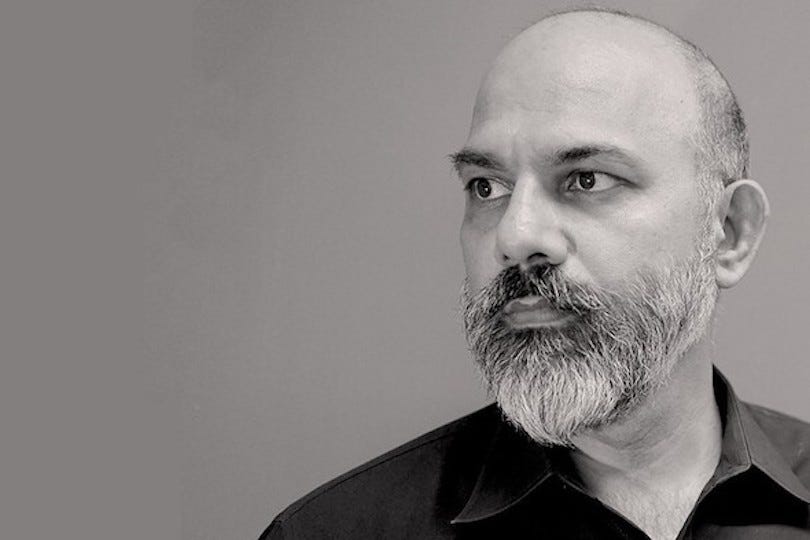
Manan Ahmed is an Associate Professor of History at Columbia University. He is a historian of South Asia and the littoral western Indian Ocean world from 1000-1800 CE. His areas of specialization include intellectual history in South and Southeast Asia, and critical philosophy of history, colonial and anti-colonial thought. He is interested in how modern and pre-modern historical narratives create understandings of places, communities, and intellectual genealogies for their readers. His first monograph, A Book of Conquest: Chachnama and Muslim Origins in South Asia (Harvard University Press, 2016), is on the intellectual life of an early thirteenth-century Persian history Chachnama also known as Fathnama-i Sind (Book of the Conquest of Sindh). The book delves into how Muslim polities in Sindh addressed sacral differences, created new ethics of rule, and articulated a political theory of power in the thirteenth century Indian Ocean World. His second monograph, The Loss of Hindustan: The Invention of India (Harvard University Press, 2020), tells a history of the historians of the subcontinent from the tenth to the early twentieth century. The book is a concept-history of “Hindustan,” focusing specifically on the work of the seventeenth century Deccan historian Firishta (fl. 1570-1620). In it, he argues for a decolonized philosophy of history for the subcontinent.
Where do you see the most exciting debates/ research happening in your field?
The early modern period is seeing some critical new scholarship. Innovative work is happening in Women, Gender & Sexuality studies, Decolonization and Indian Ocean World. Nationalism, jingoism, xenophobia and majoritarianism are political challenges across the globe. Within a nationalist paradigm, there is often limited space for a truly critical historiography. Thus, in the face of nationalist majoritarianism, it remains a challenge for contemporary historians to think of history outside of the paradigm of nationalism—either in a global or a transnational framework. Going outside nationalist paradigms requires more extensive training, often more languages and wider theoretical frameworks. Yet, it is important for us to recognize mutual and global problems such as migration, displaced populations, climate crisis, and human rights.
How has the way you understand the world changed over time, and what (or who) prompted the most significant shifts in your thinking?
Personally, 9/11 and the Iraq War, the subsequent rise of drone warfare, especially in regions in Pakistan, Yemen and Somalia, were pivotal moments to think against and through. I grew up, politically speaking, during Zia ul Haq’s dictatorship so I already had a healthy distaste for nationalism. However, the so-called international order prompted by the “Global War on Terror” also laid bare for me the histories of imperial and colonial policies in self-proclaimed democracies. Over the years, I have educated myself on indigenous and Black struggles and come to believe in decolonization, anti-carceral and abolitionist politics—especially the right for self-determination for all.
In your book The Loss of Hindustan, you write about the prevalence of "colonial epistemes". Could you explain what you mean by this, and how this has impacted the writing of South Asian history?
By “colonial episteme” I mean a domain of knowledge constituted beginning in the sixteenth century by the Portuguese, French, Dutch, German, and British about the subcontinent. It is a way of knowing Hindustan, as a project of ‘discovery,’ ‘unveiling,’ quantification, and explanation. I group these texts (and practices such as traveling, surveying, mapping, drawing, etc.) because they circulated across Europe and North America in translations, edited collections, and literary compilations. Together, this episteme fixed “Hindustan” in rigid categories as I explore in the book, such as the idea of a 5000-year-old Indian civilization or Muslim despotic rule. A direct consequence of this colonial episteme was the actual colonial domination of the subcontinent by Europe, but it also shaped how the discipline of History would study and describe the subcontinent by setting up the fundamental assumptions, theories and models for it.
One of your key arguments in the book is that pre-colonial historians such as Firishta had a geographic, temporal and historical sense of Hindustan that united parts of contemporary South Asia — an understanding that was lost with the onset of colonialism which emphasised geographic differences. What impact has this had on India-Pakistan relations?
The colonial paradigm of difference—between Hindus and Muslim—certainly provided the logic for Partition and continues into the postcolonial period. Certainly, over the last 70 plus years, this argument has been fortified manyfold on geo-political, religious, and cultural grounds. We are far from the period when then the Indian Prime Minister Atal Bihari Vajpayee could visit Lahore in 1999 with mutual peace-building measures. The generation that can remember the pre-Partition subcontinent has left us. It is thus imperative to create new understandings of geographies, certainly not through the lens of divisions along religious lines.
The population of South Asia in 1950 was roughly 500 million and it is estimated to be 2200 million by 2040. How can a politics of colonial techniques of “Divide and Rule” or of 1947, continue in the face of glacial melting, soil erosion, sea-level rise, and mass displacement of over 300 million people by 2030? There is no solution to the climate apocalypse that fits only India or only Pakistan or only Bangladesh. There is no nuclear armament nor any primordial claim to origin that can provide water and safety to the people of the subcontinent. The global pandemic has shown how small and helpless are nation-states against a virus. How will we deal with a 3-5% rise in global temperature by 2040? We not only share a common past in Hindustan, we also share rivers, mountains, clouds and seas. It is time to stop living a colonial fantasy and build a better future for all inhabitants of the subcontinent.
What role does memory play in influencing contemporary politics in South Asia, particularly in light of the Partition of British India?
As I mentioned, the generation that went through Partition is largely gone. The politics of our contemporary animosities rely more on 1971, 1992, 2002 or 2020 than on 1947. Memory does play a role in shaping politics, in the sense, that contemporary politics can link imagined atrocities from 800 or 1000 years ago to current events, peoples and communities. This is not cultural or social memory as theorized for Europe by Maurice Halbwachs, Pierre Nora, Jan Assmann and others. It is something that I feel has yet to be properly theorized for the subcontinent, though exemplary work exists, such as by Shahid Amin, Cynthia Talbot, Sumit Guha. My next book is an attempt to tackle the question of social memory from the perspective of Hindustan and I hope to make a contribution towards answering how and why the actions of say the eleventh century Sultan Mahmud Ghaznavi or the twelfth century Raja Prithviraj Chauhan matter more to us than of our contemporary elected officials.
You are one of the leads on the project Decolonization, the Disciplines and the University. Could you share what the aim of this project is, and how you plan to go about it?
This is a multi-institutional project between Kampala, Accra, Kolkata and Beirut connecting institutes and centers where MA and PhD training occurs. It is a pedagogical and resource-building effort intended primarily for MA and PhD students who are interested in decolonization. Over a five-year period, the students participate in a series of pedagogical and training workshops, and institutes which will result in publication of exciting new research on decolonisation within a South-South framework. Decolonial theory is most often associated with Latin American studies. However, it has much to offer the scholars of the subcontinent. I am very excited and honored to be part of this project and believe it to be a model for other South-South collaborations.
How can we understand the aims of decolonisation in consonance with contemporary issues of climate change and migration?
As Frantz Fanon put it, the colonized knows that decolonization comes only when they get to possess their land. In some form, the postcolonial South Asia remains colonized by mega-billionaires and global financial and manufacturing protocols. The climate crisis is an extinction level event and it forces us to take seriously the question of decolonization as a strategy for survival. It also harkens us to the spirit of decolonization in the 1950s and 60s when solidarity among Afro-Asian nations was a political and social rallying cry. We need to work together, across borders, to find collective solutions to our boiling planet.
What is the most important advice you could give to young scholars of International Relations?
I am not a scholar of IR so I can only say that I would advise all young scholars (irrespective of their disciplines) to be cognizant and learn from the collective struggles against colonial and imperial forces from the early 20th centuries and to apply those ethical principles to the challenges we face in the 21st. All of our disciplines, be it History, Anthropology, or International Relations, have played their role in colonization and similarly ought to play a role in decolonizing our future. I also recommend W.E.B DuBois writings on early IR as well as Robert Vitalis’s White World Order, Black Power Politics: The Birth of American International Relations.
This is a deeply important conversation because it moves the discussion beyond the question of how South Asia was divided and toward a more fundamental question: who has had the power to define the region, its history, its borders, and even the categories through which its people understand themselves?
What particularly resonates with me is the connection between colonial knowledge, political borders, collective memory, and contemporary security. From the perspective of Afghanistan, these questions are not merely historical. Afghanistan sits at the intersection of several political and civilizational spaces that have repeatedly been described, divided, securitized, and governed through external frameworks.
My own experience inside Afghanistan’s security institutions has taught me that institutions and borders can be politically constructed much faster than human relationships, historical memory, geography, and regional interdependence can be erased. People continue to move across borders, rivers continue to flow across them, communities continue to share economic and cultural spaces, while political narratives often attempt to turn these continuities into permanent divisions.
The most powerful point here, in my view, is that decolonisation cannot simply mean rewriting the past. It also means questioning the inherited frameworks through which we interpret the present.
Climate change, migration, water insecurity and regional connectivity are already demonstrating the limits of purely national solutions. The rivers, mountains, migration routes and security problems of South Asia do not stop at the borders drawn by modern states.
For Afghanistan, this raises an even larger question: can we understand the region without understanding Afghanistan as part of its interconnected historical and strategic system?
This is where history becomes more than memory. It becomes a framework for rethinking the future.
Wahidullah Noorzai
Former Senior ANP/ANCOP Officer | Strategic & Security Analyst