


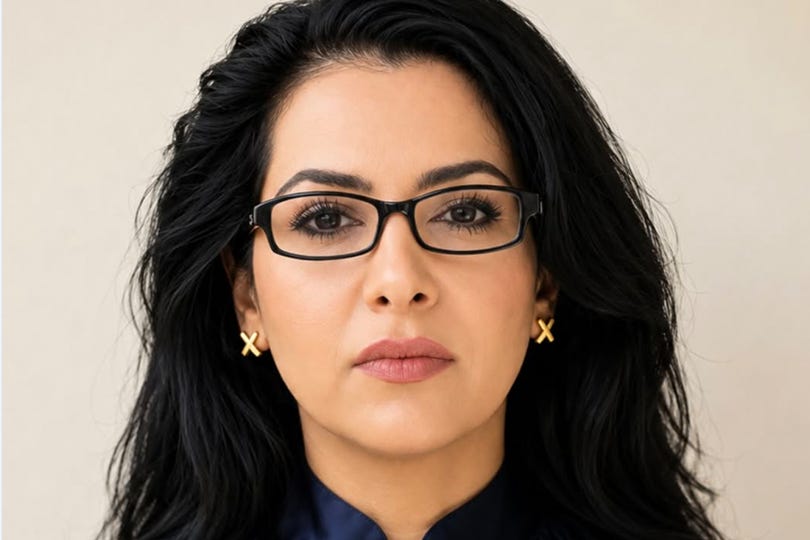
Dr. Satgin Hamrah is a Visiting Assistant Professor of Instruction at the University of South Florida, holding appointments in the Department of History and the School of Interdisciplinary Global Studies. She holds a Ph.D. in History from Tufts University, where she authored her doctoral dissertation, Fatal Reckoning: Identity, Human Cost and the Legacy of the Iran-Iraq War. Her scholarship operates at the intersection of history, security studies, conflict dynamics, area studies, and political risk analysis, translating academic inquiry into actionable intelligence for policy, security, and strategic decision-making.
Using an interdisciplinary and transnational lens, she investigates the human impact of conflict, the strategic instrumentalization of identity by political entrepreneurs, and examines how state and non-state actors weaponize cultural, religious, and ethnic identity to achieve strategic goals. Her research bridges historical analysis with current conflicts to evaluate how past dynamics, strategic partnerships, and evolving strategic approaches shape short-term and long-term security, political, socio-cultural and economic landscapes. Additionally, through interdisciplinary collaboration on memory and trauma issues, her work reveals how trauma and memory dynamics impact individuals on tangible and intangible levels, impact individual behavior, influence social fragmentation and cohesion, as well as conflict dynamics and trajectories across local, regional and global environments.
Get E-International Relations delivered to your inbox, free. As you sign up, consider becoming a paid subscriber, or make a donation, to support our work.
Where do you see the most exciting research/debates happening in your field?
I think one of the most exciting aspects of research in my field is the increasing understanding that siloed research and analysis provide only a unidimensional lens through which to examine topics of interest. There is growing interest in interdisciplinary, transnational, and highly nuanced approaches, which are immensely important in examining pressing issues both past and present. These approaches not only help researchers develop a more comprehensive understanding of issues such as state and non-state conflict, security, geoeconomics, memory, identity, and geopolitics, but also contribute to better predictive models and, subsequently, more accurate forecasting.
How has the way you understand the world changed over time, and what (or who) prompted the most significant shifts in your thinking?
As my work progressed, I became increasingly interested in how aspects of what, on the surface, seem to be entirely different and separate disciplines actually influence one another and are connected on tangible and intangible levels, both directly and indirectly. The next step was to break out of siloed approaches and ask: How are they connected? Why is this important, and what are the impacts in the short and long term? Equally important, how have these connections shaped the past? This helped, and continues to help, me better examine the root causes of complex issues. A key step is to move beyond our own biases and preconceived ideas and examine our topic of interest in a more interdisciplinary manner. For example, whether conducting a detailed analysis of a war to better understand an adversary or examining a competitor in the private sector, it is important to step into their shoes to better understand their world, constraints, red lines, perspectives, culture, and approaches.
You currently work on the human consequences of the Iran-Iraq War in memory, trauma, identity, and strategy. What drew you to work on this intersection?
I was drawn to this research by my own personal connection with the Iran-Iraq War and a desire to contribute to a more comprehensive understanding of its human consequences and transnational effects. Drawing on multi-lingual and multi-archival research, my work connects an interdisciplinary approach with critical historical analysis. Central to this inquiry are the profound experiences of Iranians and Iraqis, including the extensive loss of life and the psychological and physical injuries that continue to affect many survivors. I examine the immediate and enduring consequences for individuals, families, communities, and societies within the broader historical and international context of the conflict. A central focus is how state and non-state political entrepreneurs strategically deconstructed, reconstructed, and instrumentalized identity to mobilize support for the war and pursue political and security objectives. I also explore how wartime trauma was mobilized during the conflict and how its memories and associated identities were subsequently interpreted and incorporated into political narratives and strategic approaches. This involves examining the interaction between identities cultivated through deliberate political efforts and those that emerged organically from experiences of loss, survival, and remembrance, alongside their lasting societal, political, geopolitical, and security implications.
What role does memory play in contemporary warfare in the Middle East?
My focus is the strategic use of memory by state and non-state political entrepreneurs in the Greater Middle East within the contexts of war, domestic politics, and foreign policies and strategies. Individual and collective identities are shaped by past experiences, making the strategic use of identity an extension of the strategic use of memory. Political entrepreneurs strategically weaponize, manipulate, and curate collective memory to legitimize violence, mobilize fighters, and solidify authority during wartime. By reframing historical grievances, religious narratives, and past conflicts, both state actors and non-state political entrepreneurs turn memory into an effective psychological tool of warfare. They deploy collective memory through distinct tactical mechanisms that connect past experiences with wartime mobilization, domestic politics, and foreign policy strategies. You often find this in cognitive and psychological warfare approaches as well.
What do the human consequences of the Iran-Iraq War tell us about the facts that conventional strategic understandings of wars often ignore? And what gaps are you trying to fill?
The human consequences of the Iran-Iraq War highlight how people across Iran and Iraq both suffered as a result of this brutal eight-year war. To better understand the complexities of this and other wars, it is essential to move beyond conventional approaches to the examinations of conflicts that often primarily focus on military policies, strategies and tactics, as well as related geopolitical and domestic landscapes. While these are indeed immensely important to understanding wars and other conflicts, to have a more holistic understanding it is essential to broaden our research framework. This includes enhancing understanding regarding the human impact of wars and what the realities of the brutalities of conflict actually means on individual, community, socio-political and even regional levels. This highlights a major gap in understanding the intangible facets of not only warfare, but also individuals and other factors that are impacted in one form or another by conflict. By failing to take this into consideration the highly consequential development and relationship between trauma and memory and their wider impact on individual, socio-cultural, political and security levels are often overlooked. This has wide-scale ramifications. Modern warfare places civilians directly in the position of being strategic targets, as occurred during the Iran-Iraq War. Nonetheless, there is still more often than not, a blind spot in traditional examination of wars in general, including within the context of the Iran-Iraq War. Additionally, conventional strategic approaches to this and other wars, have often ignored the strategic use of identity, intergenerational memory/trauma, societal restructuring, and the subversion of rational state-actor behavior that results from wars. War has consequences beyond the battlefield and the bottom line. Understanding these consequences requires a more holistic examination of their effects on individuals and communities in the short and long term, as well as how war experiences, memories/traumas, and associated identities are strategically developed and used during and after conflicts to advance the interests of political entrepreneurs.
How do these findings associated with your project help us to understand the current human consequences of the U.S./Israeli War against Iran?
My research contributes to a holistic understanding of the current Iran war by examining its human impact and long-term consequences alongside the strategic instrumentalization of identity and what this means on top-down levels as well as within a more granular societal framework. Drawing on my interdisciplinary research on the Iran–Iraq War, I examine how wartime violence affects civilians, disrupts families and communities, and produces enduring physical, psychological, and socio-cultural, political and security contexts consequences. By centering personal experiences and local histories, I explore how individuals and societies experience, interpret, and carry the effects of conflict across generations. This perspective helps explain how earlier wartime experiences shape responses to renewed insecurity and why the consequences of war extend well beyond the cessation of hostilities.
I also investigate how state and non-state political actors mobilize sectarian, religious, and national and other types of identities to advance political and security objectives. By tracing the evolution of armed networks and militias, as well as state strategies, I examine how mobilization strategies developed during the Iran–Iraq War contributed to contemporary transnational proxy warfare and regional security challenges. I also examine how the experiences of the Iran-Iraq War influence current war strategies and approaches on tangible and intangible levels, which includes cognitive and psychological warfare strategies. Moreover, my work considers how collective memory and trauma become resources through which political actors frame threats, legitimize strategies, and mobilize support, while recognizing that people interpret and respond to these narratives in different ways. Bringing these dimensions together allows me to examine the current Iran war as an interaction between strategic decisions and lived experiences, with lasting implications on socio-cultural, political, economic and security landscapes.
How did the Iran-Iraq War shape the foundations of China-Iran relations that we see today?
This is something I have been examining for a few years. The period of the Iran–Iraq War was foundational for both the Islamic Republic of Iran and the modern relationship between Iran and China. Iran’s international isolation and wartime challenges and needs strategically intersected with China’s pursuit of greater political and economic influence. In essence, the seeds of the current relationship were planted during the war. While China maintained relationships with both Iraq and Iran, its primary focus was on Iran. This ultimately helped develop an enduring relationship, which has evolved into a stronger strategic relationship between the two countries today. Historical narratives emphasizing sovereignty, resistance to foreign intervention, and common grievances concerning external domination also provide a language through which the two governments frame their cooperation and legitimize shared objectives, despite differences in their historical experiences and interests. Overall, this continuity from the war period helped establish the modern relationship between Iran and China, encompassing a comprehensive strategic partnership across security, economic, and political spheres.
How should scholars understand the difference between sectarian identity with political and strategic rivalries?
I think it is important to note that the strategic use of sect-identity by political entrepreneurs is not based on spirituality or doctrinal differences. In this context, I am referring specifically to the instrumentalization of identity to advance political and security agendas, while recognizing that religious beliefs and communal attachments have meaning in people’s lives. Scholars should therefore distinguish between sectarian identity as a form of belonging and the processes through which state and non-state actors make that identity politically salient. Political, security, economic, and strategic rivalries involve struggles over authority, resources, territory, and influence, making it essential to examine how and why these rivalries are framed in sectarian terms and contexts. Understanding these processes requires identifying the actors involved, including political entrepreneurs and the populations they target as both in-groups and out-groups, and examining their interests, relationships, and circumstances.
Based on their strategic interests, political entrepreneurs deconstruct, and reconstruct identity-based boundaries, often drawing on real or imagined historical narratives, collective memories, and trauma to advance their interests across local, national, and transnational settings. The Iran War provides one example. Through political rhetoric, institutional practices, armed networks, and digital communication (e.g.; social media) , they construct “us versus them” and “in-group/out-group” frameworks that can legitimize authority, recruit supporters, enhance mobilization efforts, frame threats in a highly effective manner, and undermine real or perceived opponents. This also serves as a foundational framework for many cognitive and psychological warfare strategies and tactics. Therefore, it is beneficial for scholars to examine the aforementioned, as well as specific strategies and tactics used, the channels through which they operate, and how and why populations are influenced by these strategies, if at all.
What is the most important advice you could give to early career scholars?
One of the most important pieces of advice that I can provide early career scholars is to approach your career as a marathon rather than a sprint. Additionally, extensive hours of research and analysis is more fun if you approach your work with a sense of adventure. It is also important to cultivate resilience as a tool and to keep moving forward despite challenges and bumps in the road, which will surely arise. It is also essential to not only build a strong foundation within your field, but to also create bridges between yourself and disciplines, ideas and people who you may not necessarily agree with. This allows for your assumptions to be challenged, for very interesting conversations to occur and the examination of topics in diverse manners and lenses that you may not have otherwise considered.
Editorial Credit: Zeinab Nikookar