

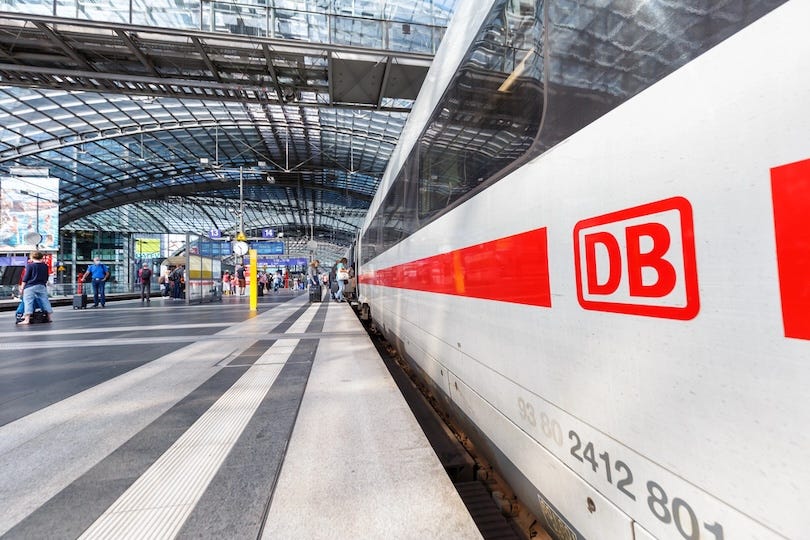
In March 2026, German Federal Minister of Transport Patrick Schnieder (CDU) warned that the poor state of Deutsche Bahn “is moving in a democracy-threatening direction.” But what exactly did he mean by that dramatic statement? That voter turnout declines when people cannot reach polling stations because trains are not running? Of course not. Schnieder’s statement may seem far-fetched at first glance, since an effective railway system has little to do with elections, political rights, legitimacy, etc. However, it reflects the inherent interdependence between state capacity and democratic quality, a relationship that empirical political science (with particular regard to Latin America) has increasingly focused on. What Schnieder merely hinted at, I wish to elaborate on in this short article from the perspective of research on regime performance, public policy, and political attitudes. For Schnieder is ultimately right, albeit his claim requires further elaboration: a failing Deutsche Bahn can indeed be corrosive to liberal democracy, for three core reasons.
E-International Relations is free to read. We rely on reader support to make this possible.
First, and perhaps most obviously, the state is responsible for transport infrastructure, and Deutsche Bahn is a state-owned enterprise. Thus, when Deutsche Bahn underperforms, so does the state, leading to public dissatisfaction. Conceptually, however, we need to be careful here, as four actors are involved: citizens, the company, the government, and the state – although the latter may not constitute a genuine actor. In Germany, citizens elect the government indirectly, which then structures the state according to its political agenda. The government thus also shapes enterprises such as Deutsche Bahn or formerly Deutsche Bundespost by formulating their strategic objectives, allocating tax revenue, influencing personnel decisions, and so forth. When Deutsche Bahn is dysfunctional, the Federal Ministry of Transport, and thus the government, loses public support. But where does Schnieder’s “threat to democracy” come into play? Is it not at the very heart of representative democracy that dissatisfied citizens can simply replace their political leaders? Provocatively put, is the malaise of Deutsche Bahn not a continuous opportunity for German democracy (in the classical Schumpeterian sense of failing governments being voted out) to prove its competitive vitality?
What undermines this minimalist democratic theory logic are the political realities of accountability and governance related to political trust, which Easton linked to diffuse support for democratic regimes. In fact, many argue that political trust is the glue that keeps democracy grounded in popular sovereignty, with a democracy losing trust ultimately facing a serious lack of legitimacy. And in the functionalist tradition of Easton, political support is not confined solely to current officeholders, as declining support may also reflect skepticism toward an entire system that apparently produces ineffective outcomes. So when citizens lose trust in executive institutions as a consequence of political mismanagement, this may negatively affect not only perceptions of the government, but also of democratic governance as such. In the case of Deutsche Bahn, this dynamic is reinforced by two factors. On the one hand, Deutsche Bahn has been subject to heavy criticism since its fundamental reform in 1994, making its struggles appear persistent across government cycles. On the other hand, with 6.6 million passengers per day (2024), railway transport is a widespread and, for many citizens, highly salient policy field in Germany. This makes it a particularly visible domain of popular evaluation. In short, the chronic problems of Deutsche Bahn may undermine democratic stability by virtue of the inherent system dimension of political support – particularly political trust.
Second, and as a direct consequence of the first argument, long-term democratic insufficiency may cause citizens to grow dissatisfied with the often demanding democratic principles of deliberation and compromise. Many may instead prefer forms of decision-making that appear more straightforward, giving rise to populist and authoritarian tendencies. And as Argentina currently demonstrates, the path from ideological authoritarianism to substantial democratic erosion can be alarmingly short. Although the quality of democracy evidently correlates with economic wellbeing, long-term state deficiency can lead people to elect a strongman leader “to finally get the job done” – and the more radical this promise, the more compelling it seems.
Notably, modern economies can indeed improve in certain facets when democracy is curtailed. Under Javier Milei, annual inflation in Argentina fell from over 211% in December 2023 to around 32% by April 2026, following the implementation of much of his radical deregulation program through emergency decrees rather than legislation passed by Congress. In Germany, the prospects of ultra-libertarianism have been debated since former Minister of Finance Christian Lindner (FDP) proposed “to dare a little more Milei or Musk.” To be clear, I do not want to charge the German Milei base with harboring autocratic attitudes. But we must recognize that when deliberately choosing a potentially “delegative leader” who tends to undermine horizontal accountability, substantial democratic recession is not far away. In short, the chronic problems of Deutsche Bahn may undermine democratic stability, as citizens grow critical of democratic processes and drift toward authoritarian figures and policies. This can ultimately result in genuine autocratization.
Third, setting aside citizens’ political attitudes, we have long moved beyond a narrow understanding of democracy such as the one proposed by Schumpeter or, perhaps more prominently, Robert Dahl, who identified participation and contestation as the core dimensions of polyarchy. By now, democracy is defined more broadly, and the link between democratic quality and economic (and human) development has led established democracy indices to incorporate state effectiveness and stability into the measurement of political regimes. This aligns with a general opening of the democratic quality perspective toward “good governance,” encompassing public administration, corruption, and related dimensions. In this sense, the Economist Democracy Index explicitly incorporates – alongside classical democratic indicators such as pluralism – the functioning of government. Samuel Huntington’s famous dictum may thus remain remarkably fitting: “The most important political distinction among countries concerns not their form of government but their degree of government.”
Although Huntington, with his focus on (post-)democratization, certainly did not have Deutsche Bahn in mind, the prevailing conflation of regime quality and state capacity has given rise to numerous frameworks for evaluating the political performance of contemporary democracies. My aim here is not to criticize this conceptual blurring – measurement, on the contrary, has become far more reliable – but to note that regime quality, governance, and public policy (a concept better captured in German by Staatstätigkeit) are increasingly thought together. In short, the chronic problems of Deutsche Bahn may undermine democratic stability, as a dysfunctional state apparatus is no longer merely a technocratic problem, but a democratic one.
Of course, I do not argue that unpunctual trains and an aging railway infrastructure alone will lead to significant autocratization in Germany. However, a continuously underperforming state-owned enterprise such as Deutsche Bahn – one so crucial to Germany’s everyday pulse that it literally keeps the country moving – can represent a crack in the wall of democratic governance. And taken together with the already polarized political situation in the country, a struggling Deutsche Bahn can indeed pose a risk to liberal democracy. In light of the three arguments outlined in this short article, I am convinced that structurally improving Deutsche Bahn can help ensure that German democracy stays on the rails.
Tim Pires Alves (he/him) is Research Associate at the Department of Political Science at Justus Liebig University Giessen. In his PhD research, he quantitatively examines the political performance of patterns of democratization from a political engineering perspective and with a regional focus on democratic transformations in Latin America and Southern Europe.