

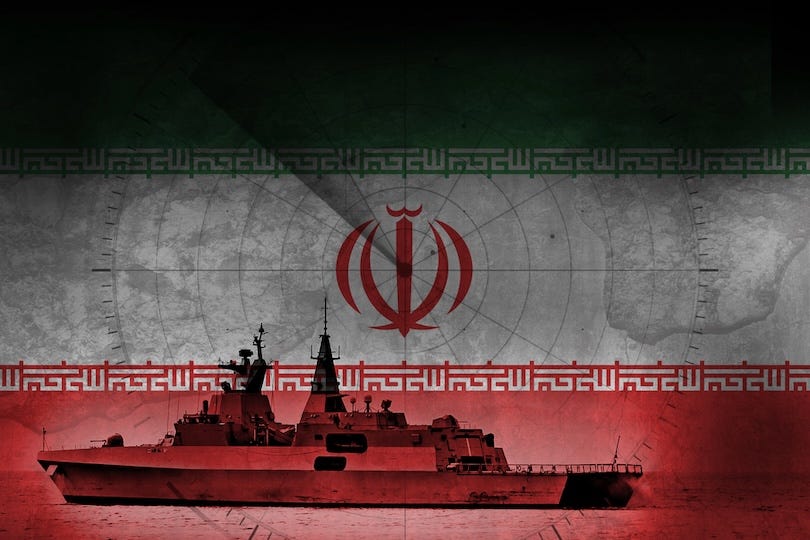
The U.S.-Israeli war against Iran is on the verge of superseding the limits of the liminal conflict. What is liminal conflict? Liminal conflict is a way in which states deploy bounded violence to shape the international order and to reproduce that order over time (Lacey 2024). Liminal conflict is oriented toward system maintenance rather than disruption. But in the case of the Persian Gulf, the regional order is now experiencing systemic disruption, which may escalate into systemic collapse. Both Israel's geopolitical ambitions and Iran's capacity to engage in horizontal escalation exceed the limits of liminal conflict. There are diplomatic responses to this conflict that can be characterized as entropic diplomacy. The goal is not to establish order but to minimize the disorder toward which the system tends.
E-International Relations will always be free to read on our website and on substack. We rely on reader support to make this possible. Please consider subscribing to support our mission.
The historical aspiration of the United States has been to order the international system rather than to permit the system to order itself (Bacevich 2010). This is because if the world orders itself, the U.S. position of the primacy within it will become eroded. But, of course, this primacy is already badly eroded from the point of view of technology and production, as Time Sahay and Kate Mackenzie (2026) emphasize with regard to energy production. The U.S. is still a financial and military power that exercises some degree of the structural power over the physical infrastructures of the global economy - financial networks, geopolitical and geoeconomic choke points. The Strait of Hormuz is significant with respect to the type of power the U.S. has - in particular, its long-term policies of power projection into the Persian Gulf to supply the world market with cheap energy.
The Carter Doctrine underscored the strategic interests of the U.S. in the Persian Gulf in the wake of the Iranian Revolution. U.S. military interventions into the region put the Carter Doctrine into practice. Moreover, the Strait of Hormuz is a central site for the reproduction of U.S. centered carbon capitalism (Stokes and Rafael 2010). It is the thermostatic valve of carbon capitalism and central to the ordering vocation of the U.S. - namely, that the international system must be ordered and that the U.S. is the only country capable of doing this and thus U.S. hegemony maintains the resource flows that are indispensable to carbon capitalism.
Historically, the U.S. engaged in liminal war as a way of implementing the Carter Doctrine and sustaining the U.S. centered petro-economy. This was true even before Carter Doctrine. Liminal conflict informed Roosevelt's oil for protection relation with Saudi Arabia and the imposition of the Shah in Iran in 1953. It was the policy of dual containment that operated through Iran and Saudi Arabia - and, when this broke down, the Carter Doctrine. Then it became tanker wars, proxy conflicts, sanctions regimes, and the U.S. wars on Iraq - all of them techniques of order through the use of bounded violence (Klare 2004).
But this capacity is now in question. Iranian responses to U.S. and Israeli attacks have wrecked U.S. military bases in the region. Iran has developed new military capabilities with missile and drone technology - a development that is also evident in Ukraine's resistance to Russia's invasion. The key here is the development of drones capable of hitting targets at a distance. Ukraine is able to attack targets in Russia. Iran has the capacity to destroy key infrastructure in the Gulf monarchies and render the entire Persian oil economy inoperable. In both instances, the development of these capabilities by subaltern states undermines the logic of liminal conflict. If such states can strike back against system-critical infrastructure, the asymmetry that made bounded violence effective is eroded, and the efficacy of liminal war is fundamentally compromised. If the U.S. brings its military power to bear on Iran - destroying its energy infrastructure and crippling its oil economy - it also triggers retaliations that will provoke a global economic crisis - the very thing that the Carter Doctrine was intended to avoid.
Making the dilemma worse is the fact that the U.S. is in what Robert Pape calls an escalation trap where U.S. objectives are unobtainable without military escalation but military escalation carries with it the likelihood of regional destruction. The conflict has now been ongoing for 4 weeks. During the first part of the war, the U.S. and Israeli strategy was to hit Iran hard and degrade its military capabilities so that it could not threaten U.S. or Israeli interests. This has not happened. Trump might have declared victory and withdrawn its forces, but that risks political costs because Iran will continue to block the strait of Hormuz. To resolve the conflict, the U.S. would need to make concessions to Iran - removal of sanctions, withdrawal of military forces from the Persian Gulf, and guarantees that neither Israel or Iran would initiate any future aggression.
All of this would amount to a strategic defeat for the U.S. Can the U.S. accept defeat as the price of averting an even more disastrous outcome? Up to this point, escalation is a way of deferring these costs but now that strategy threatens a massive regional crisis while retreat amounts to a strategic defeat of the first order for the U.S. - failure to uphold the Carter Doctrine - a key modality through which the U.S. has ordered the world. Worse yet, though, would be regional destruction that a wider conflagration would provoke. The situation bears similarity to how the U.S. deferred eventual defeat in Vietnam through continuous escalation. U.S. decision makers may wager that escalation can reverse a weak position, creating, in the process, an even greater regional catastrophe.
The U.S. is, in effect, caught between strategic setback and systemic collapse - a structural dilemma of declining hegemony. Consider the symmetry between the defeat of Great Britain in the Suez crisis and the current situation in the Strait of Hormuz: both moments of imperial decline centered in the Middle East. In the case of Suez, American power renewed Western imperialism. The case of Hormuz may well serve to accelerate the collapse of the oil economy that had served as the engine of capitalism since the end of World War Two. The U.S. under Trump has conspicuously reconstituted itself as a petro-power and now it is being driven - by its own initial volition - toward a war that will destabilize the fossil fuel energy regime itself. This will accelerate the transition from fossil fuel dependence to renewable energy dependence, of which China is now undisputed global leader. This is the sense in which the Trump war in Iran is the self-destruction of American power through an oil supply shock, which increases the economic attractiveness of China’s renewable energy corporations. Consider the following observation from Juan Cole:
William Sandlund and Edward White report at the Financial Times that since the Iran War began on February 28, the stock valuations of BYD, CATL and Sungrow have surged by $70 billion. BYD is the largest electric car maker in the world, CATL is one of the foremost producers of batteries and mega-batteries (energy storage systems or ESS), and Sungrow makes solar PV inverters and ESS. Investors are voting with their feet. The FT article notes that this growth in valuation is outpacing that of the oil companies, even though their profits will be healthy this year because shortages will drive up prices.
Domestically, strategic failure is unlikely to produce straightforward policy reassessment. Rather, it may be reinterpreted through familiar patterns of nationalist resentment, in which external constraint is re-coded as internal betrayal. American political culture provides well-established pathways for such reinterpretations, including conspiratorial narratives that attribute systemic failure to hidden networks of influence or disloyal elites. These dynamics do not emerge ex nihilo; they draw on long-standing traditions in U.S. political life, from the America First movement associated with Charles Lindbergh to more recent claims about shadowy financial or political actors. In this sense, geopolitical decline does not simply weaken nationalist projects—it can also radicalize them by intensifying the search for internal enemies.
But before these end points are reached, there remains the possibility of a diplomatic solution to the crisis. Here is where we can situate the practice of entropic diplomacy. This is different from classical diplomacy, which had the capacity to establish a new system of international order. Entropic diplomacy signals system entropy as the context of the diplomacy. In this context, the goal of diplomacy and foreign policy more generally is not system maintenance but the avoidance of system collapse. Entropic diplomacy is not doomed to failure. Whereas the U.S. cannot impose its will on the Persian Gulf without destroying it, there may be some multilateral resolution to the crisis through the intercession of other countries that depend heavily on resource flows from the Gulf. But even this would be a resounding defeat for the premise that the United States orders the world.
One positive development that might emerge either from entropic diplomacy or the escalation of the military conflict is the weakening of corporate controlled, fossil fuel driven global food and energy systems. These are systems that developed under the auspices of a U.S. liberal international order after World War Two. They acted as a powerful centripetal force pulling regions into an extractive petrol-driven global economy. The failure of these systems opens the possibility for regions to establish their autonomy from the world system through policies of food and energy sovereignty. They would make themselves less vulnerable to the ways in which states around the world are weaponizing interdependence in pursuit of their interests. The international political economy will inevitably become volatile to the extent that it exists on the terrain of great power conflict. Renewable energy and agroecology provide possible exits from these systems. The reduction of energy and food dependence may ultimately strengthen human security. In this sense, the crisis in the Persian Gulf is not only a geopolitical rupture but a potential inflection point in the organization of the global political economy.
Dr. Richard W. Coughlin received his Ph.D. from Syracuse University in 1993 and is currently a Professor of Political Science at Florida Gulf Coast University. His writings have appeared in E-IR, Latin American Perspectives, NACLA, and Coyuntura y Intervencion. He is also the author of Fragile Democracy: A Critical Introduction to American Government.
Beyond Threshold Conflict: When Military Power Loses Strategic Conversion
Richard Coughlin’s discussion of threshold conflict and “entropic diplomacy” raises an important question: what happens when the limited use of force, once intended to preserve an existing order, begins to generate the conditions for systemic disorder?
From a field perspective, I would add another dimension to this argument: the distinction between military capability and strategic conversion.
A state may possess overwhelming military superiority and still face strategic failure if it cannot convert battlefield effects into a sustainable political outcome. Military operations can destroy infrastructure, degrade capabilities, or impose immediate costs. But these effects do not automatically produce political compliance, durable deterrence, regional stability, or a favorable strategic order.
This distinction becomes particularly important in environments such as the Persian Gulf, where geography, energy infrastructure, maritime chokepoints, economic interdependence, technological diffusion, and regional actors interact as one system. The Strait of Hormuz is not merely a geographical chokepoint. It is a strategic node connecting military power to energy markets, global trade, financial stability, and political legitimacy. Once these domains become interconnected, escalation can produce effects far beyond the original military objective.
The article’s concept of an “escalation trap” is therefore particularly significant. Escalation may appear rational at the operational level while becoming strategically counterproductive at the systemic level. Each additional use of force can narrow the political space available for de-escalation while simultaneously increasing the costs of the eventual settlement.
There is also a broader lesson from recent conflicts: technological diffusion has reduced the exclusivity of strategic capabilities. Long-range missiles, drones, precision strike systems, surveillance technologies, and asymmetric methods allow actors with considerably smaller conventional forces to impose costs on critical infrastructure and strategic networks. This does not eliminate conventional military superiority, but it changes the conditions under which that superiority can be translated into political outcomes.
For me, the deeper issue is therefore not simply whether American hegemony is declining or whether another power is replacing it. Hegemonic systems become vulnerable when their mechanisms of power no longer produce the outcomes they were designed to produce.
That is where diplomacy becomes essential. But diplomacy under conditions of systemic instability cannot simply seek to restore the previous equilibrium. It must reduce the probability of uncontrolled escalation while creating a new balance that regional actors can actually sustain.
The central strategic lesson is simple: winning engagements is not the same as winning the strategic contest. Sustainable power depends not only on the capacity to use force, but on the capacity to learn, adapt, negotiate, and convert power into durable political outcomes.
— Wahidullah Noorzai
Former Senior ANCOP/ANP Officer | Military & Security Analyst