


Here’s your digest of all the published pieces on E-International Relations over the last two weeks. We will be taking a summer break from the newsletter over the month of August, and we’ll be back with the next roundup in early September.
This newsletter, and all of our content, will always be free – and everything we publish is facilitated by our all-volunteer team. If you are able to support our work you can sign up for the paid tier if you have not yet done so.

Interview – Oleksandra Matviichuk
Opinion – The Deepest Fault Line of the Venezuela Earthquake Is Political
– Mukesh Kapila
An Introduction to Critical Terrorism Studies
– Lee Jarvis and Alice Martini
Postcolonial Theory and China-Africa Relations: Toward Sinicizing Mazrui
– Seifudein Adem
Review – Resilient Statehood
– Chokri Kooli
Interview – Mutasim Ali
Opinion – The Human Cost of Migration Deterrence in Egypt
– Elena Habersky
The Falklands, FIFA and the Future of the British Overseas Territories
– Peter Clegg
The Tragedy of Capital and the Re-Opening of Futurity
– Richard W. Coughlin
Review – Rock Paper Scissors
– Martin Duffy
Critical Terrorism Studies: Hamas and 7 October 2023
– Lee Jarvis and Alice Martini
Opinion – The Most Personal Propaganda Tool Ever Built
– Jude Althagafi
Opinion – What Does the US’ Anti-Bribery Retreat Mean for the Global Struggle Against Corruption?
– Rachel A. Schwartz and Lauren Cargal
Sri Lanka’s Brief Window to Stop Displaced Cyber-Scam Networks
– Bruno S. Sergi and Fabian M. Teichmann
We have a new open access book to share. Critical Terrorism Studies: A Dictionary, by Lee Jarvis and Alice Martini.
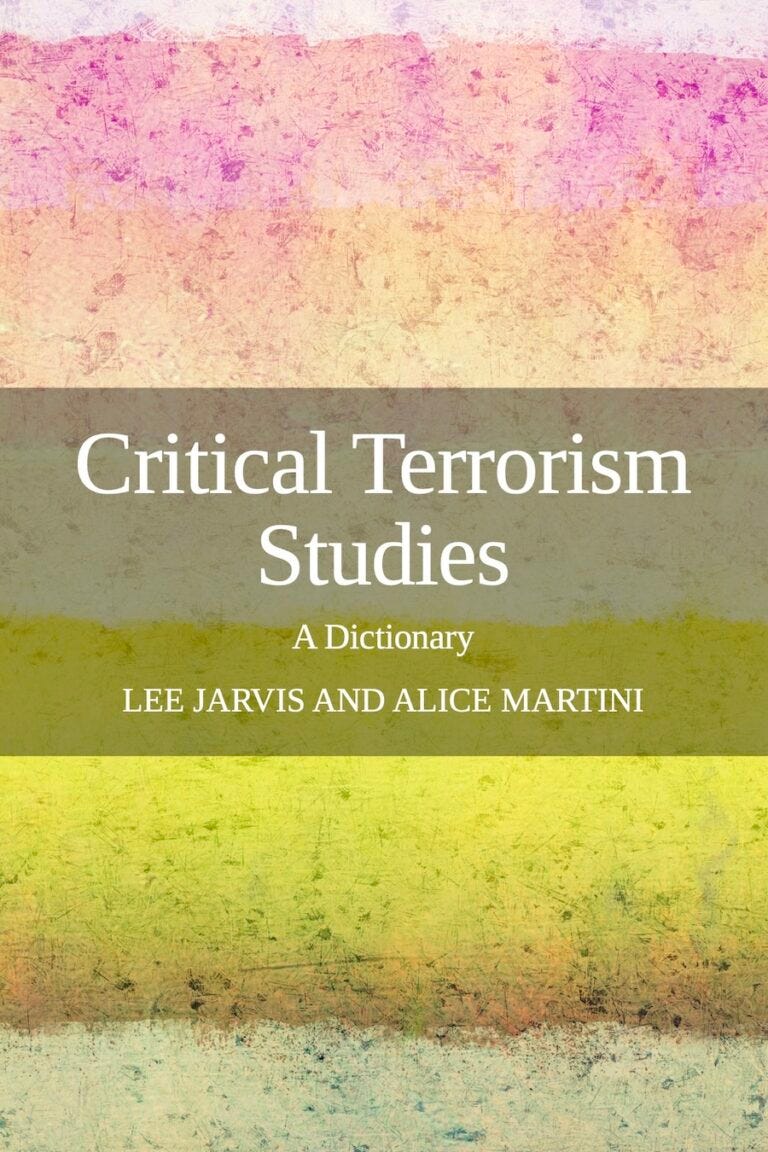
Free to download from E-International Relations and available to buy in all good bookstores, the book offers an unrivalled introduction to key concepts and debates within the field of Critical Terrorism Studies. Comprising 160 original entries, it introduces readers to important events such as 9/11, organisations such as Al-Qaeda, theories such as feminism, methods such as discourse analysis, and debates such as new terrorism, and the impact these have had on research in this area. Each entry is accompanied by suggestions for further reading, helping readers to develop their understanding. The book includes a new full-length introduction to Critical Terrorism Studies, setting out how the field has evolved. The dictionary’s accessible and engaging style makes it an essential resource for anyone interested in thinking critically around terrorism, counterterrorism and political violence.
Finally, on this week’s episode of Thinking Global, Prof. Sumantra Bose chats with Dr. Tusharika Deka (@Tusharika24) in this second episode of two about his future projects, his grasp of where technology and global history meet, his understanding of how conflict and identity come together, and much more. Thinking Global is available wherever you get your podcasts.
