

Get E-International Relations delivered to your inbox, free of charge. As you sign up, consider becoming a paid subscriber, or make a donation, to support our work.
This is an excerpt from International Relations Theory. Free to download from E-International Relations.
With the emergence of the so-called ‘Asian Century’, which sees rising powers like China and India assume a more prominent role in shaping world affairs, Asia has become an important region of study. These global trends have been matched by new directions in scholarship, whereupon Asia has become a conceptual anchor for the development of non-Western approaches to the study of world politics. It is, therefore, within the Asian IR context that some of the most exciting theoretical challenges to, and innovations in, IR scholarship are being mounted and produced. Given the vast socio-cultural and political diversity found across the continent, Asian IR is made up of an array of different perspectives. Some originate in countries in the Global South while others, such as Japanese perspectives, do not. Asian IR therefore feeds into Global South IR perspectives, but remains distinct from them, just as it speaks to mainstream IR theories but is founded on unique political traditions and practices.
The basics of Asian perspectives
IR theory is primarily based on assumptions derived from Western modes of thinking and viewing the world. This, in turn, renders it ‘too narrow in its sources and too dominant in its influence’ (Acharya and Buzan 2010, 2). The result of this is that non-Western perspectives and theoretical insights have been systematically neglected or ignored altogether by the discipline. For many scholars, this silence of non-Western IR voices constitutes a profound cause of concern, and one that casts a doubtful light on the utility of mainstream theories as a lens to make sense of a complex and culturally diverse world. Consider the English school of IR. The key concepts under- pinning the English school and its conception of ‘international society’ – for example, the principles of national sovereignty and sovereign equality – are founded upon the historical European experience. China, for one, only learnt these concepts through its encounter with the colonial-era European powers, as was also the case for other Asian countries. The Chinese empire had, until then, conducted its dealings with other nations on the basis of a Sinocentric worldview, where it acted as the political and cultural centre of the world, with the Chinese emperor seen to rule over Tianxia or ‘All-under-Heaven’ (basically, the rest of the world). Sovereign equality never existed as a concept to the Chinese mind until the nineteenth century. Given the distinctive histories, cultures and interstate dynamics seen in Asia, we clearly cannot take for granted the universality of the assumptions and concepts prevalent in IR scholarship.
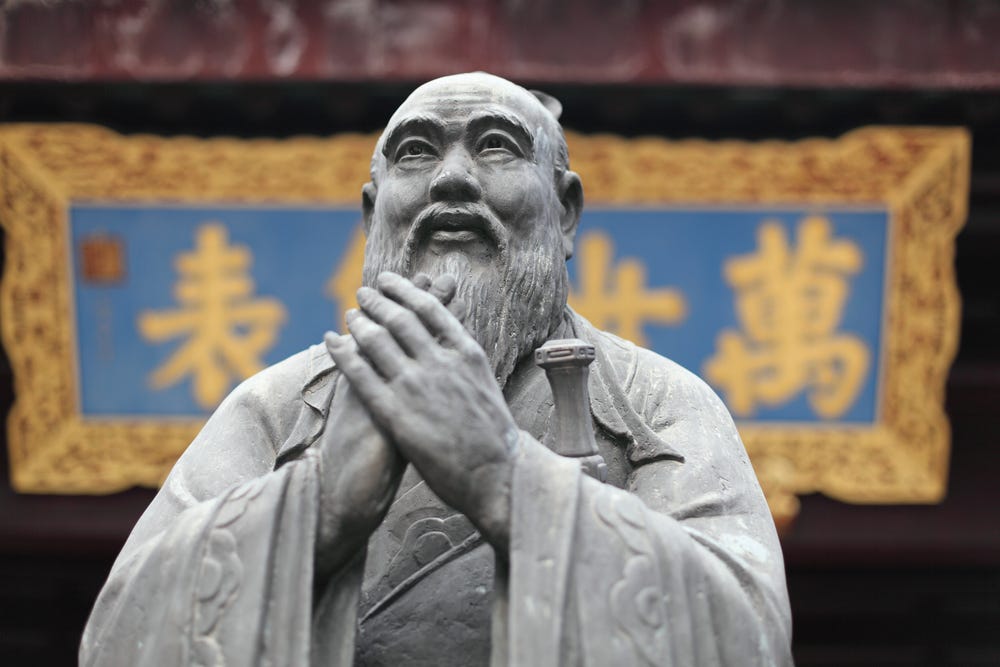
Asian perspectives on interstate politics exist – and have existed – for millennia. Ancient Indian and Chinese political theorists like Kautilya (circa 300 BCE) and Confucius (551–479 BCE) have provided some salient observations on foreign policy. It would only be in the mid-1990s, when efforts began to make IR scholarship more representative, that the contributions of these thinkers started to be taken seriously by the discipline. In the years since, we are seeing language barriers being broken down along with growing theoretical innovation challenging old thinking in IR. Discussions have converged on the feasibility of constructing various schools and theories of Chinese, Japanese, Korean and Southeast Asian IR – among other possibilities. As such, though still mired in debate and a degree of uncertainty, the ultimate outcome of these discussions will prove central to the future of IR as a global discipline.
At present, there is no single, unifying, pan-Asian school or theory of International Relations. Various reasons can be given for why this is the case. For example, the ‘hidden’ nature of non-Western IR theories, referring to the difficulty of recognising non-Western perspectives even when we see them (Acharya and Buzan 2010, 18) – or the failure to challenge the theoretical ‘imports’ and acknowledge the value of non-Western theory-building (Puchala 1997, 132; Chun 2010, 83). There is, of course, nothing inherently ‘Western’ about IR theorising. But whether we can rightly speak about an Asian IR theory depends in large part on how we define ‘theory’ and understand ‘Asian’.
In this light, Asian IR should not be viewed as a self-contained, monolithic discourse, nor as an intellectual enterprise aimed purely at the production of grand theories. Although having garnered plenty of attention in non-Western IR scholarship, the Chinese and Japanese schools of IR represent but two strands of Asian thought among several others. Rather than ‘theory’ in the sense of advancing testable observations about how the international system operates, it may be better to describe the bulk of Asian IR approaches as perspectives for making sense of the world. This, in turn, raises the important
question of whether a unified Asian IR theory is in fact desirable. Siddharth Mallavarapu (2014), for one, is less interested in putting forward monolithic theories, being more ‘curious about how the world is viewed from this particular location’. Navnita Chadha Behera (2010, 92) likewise rejects the notion of creating an Indian school of IR out of concern that such an undertaking would result in a ‘self-other binary’ that simply pits Indian IR (self) against Western IR (other). This speaks to a broader concern that the construction of unified schools of thought risks creating grossly simplified and polarising categories that end up supplanting one dominant body of knowledge with another. Similar sentiments also pervade debates on the Chinese school, with some scholars remaining sceptical about the feasibility of a single school representing the diversity of Chinese perspectives.
Conceptual pluralism better serves the original intention of non-Western IR theorists – that is, to bring diversity back into the study of world politics. Following from this, it is also important that we don’t overstate the differences between Western and Asian IR approaches. Indeed, a common attribute of Asian and Western approaches lies with their normative qualities – that is, their interest in how the world ought to be. Kautilya, for example, noted the necessity of waging a just war (for example, for a king not to take the land of an ally), whereas Confucian scholars were concerned with how to sustain ‘harmony’ (peace and stability) in the world through able statecraft.
Much like Western IR theories, Asian perspectives have deep roots in political thought. In many cases, it is a matter of transposing theories of statecraft, society and human nature to the global realm. Just as Enlightenment-era philosophers like Thomas Hobbes and John Locke were central to the development of IR theory, ancient and modern philosophers from Confucius and Sun Tzu (544–496 BCE) to Shiratori Kurakichi (1865–1942) and Nishida Kitarō (1870–1945) are important sources of inspiration for Asian scholars.
According to Benoy Kumar Sarkar (1919), early Hindu political theorists already had an indigenous conception of sovereignty that recognised the importance of ‘self-rule’ and national independence to the exercise of state authority. The Indian statesman and philosopher Kautilya, who is often lauded as one of the world’s earliest realists, is a critical figure in this regard. In setting out the principles of conduct central to the task of empire-building, his mandala (spheres of influence) theory advanced ideas as to how a king should manage alliances and relations of enmity with surrounding countries. It acknowledged, for instance, the utility of non-intervention as a means for building confidence between kings and avoiding unnecessary foreign entanglements, having also proposed an early conceptualisation of ‘strength’ as a tool for attaining ‘happiness’ (Vivekanandan 2014, 80).
Similarly, elements of Confucian thinking on power, order and statecraft can be distilled from how China conducts its foreign policy today. The importance of maintaining harmony to safeguarding the global order is a Confucian concept that remains a popular refrain in China. Similarly, the notion that to wield power a state must shoulder commensurate domestic and international responsibilities is one that defines China’s contemporary identity as a responsible stakeholder. It has also served as the basis for the corresponding ‘responsibility thesis’, which advances the notion that China has certain unavoidable duties and obligations as a rising power, particularly with respect to managing and securing global order and stability (Yeophantong 2013).
In seeking to identify its own unique contributions to the field, Japanese IR has also drawn extensively upon the works of celebrated philosophers, including Nishida Kitarō, who was the pioneer of the Kyoto School. Often labelled as a ‘proto-constructivist’ due to the prominence he gave to cultural factors and identity construction, Nishida advanced a philosophy of identity for addressing a fundamental Japanese conundrum of whether Japan belongs to the East or the West. Here, he adopted a dialectic approach, arguing that Japanese identity exists within a ‘coexistence of opposites, Eastern and Western’, which consequently allows it to cultivate a universal appeal (Inoguchi 2007, 379). In other words, Japan is accorded a special role in the world, as it is positioned to encourage both Eastern and global awareness. This argument fits with Nishida’s broader vision of a multicultural world, where a ‘true world culture’ was to be achieved through the recognition of cultural difference and the union of these differences (Krummel 2015, 218).
Despite criticism against their hegemonic position in the discipline, it warrants note how mainstream IR theories have helped to provide fertile ground for new ideas and approaches to germinate among Asian IR scholars. South Korean IR scholars, for example, have been heavily influenced by main- stream IR – specifically, its theories that are focused on addressing real-world issues. The rationale behind efforts to build a Chinese IR School also stems from the desire to better represent Chinese ideas and interests within an American-dominated discipline. It is possible, however, to divide Chinese IR scholars working in the pre-1949 period and during the 1980s-90s into two camps (Lu 2014): those who sought to learn from and emulate Western theories and those who used Western IR as the basis for critique and the development of alternative perspectives.
It is interesting to recall how Samuel Huntington’s 1993 ‘Clash of Civilizations’ article, which argued that culturally driven conflicts will invariably define the post-Cold War world, had sparked heated discussion within China during the mid-1990s due to its controversial speculation of a coming conflict between the West and ‘Confucian-Islamic’ states. Not only did this lead to a deepening of Chinese dissatisfaction with Western theories and their misrepresentations of Eastern cultures, it also gave Chinese scholars renewed impetus to establish a Chinese school of IR.
You are probably wondering, if there is no Asian IR theory, then can Asian perspectives really provide a (more) compelling account of interstate dynamics than mainstream IR theories?
Certainly, we can view the lack of a unifying set of core theoretical assumptions as a sizeable limitation of current Asian IR approaches. While we can easily identify the major tenets of realism or constructivism, Asian perspectives tend to exhibit a greater degree of conceptual fluidity and context-specificity. In practical terms, however, there are instances where Asian IR has made noteworthy contributions to ‘middle-range theorising’ (the formulation of fact-driven theories to explain a specific real-world phenomenon) and ‘soft IR theory’, which refers to the policy-driven theories informed by the ‘thinking and foreign policy approaches of Asian leaders’ (Acharya and Buzan 2010, 11). These are normally relied upon to generate policy prescriptions, as well as insights into the factors that motivate the foreign-policy behaviour of Asian states.
An influential middle-range theory is Akamatsu Kaname’s ‘flying geese model’ of regional development. Not only has the theory been used to justify Japan’s economic leadership within Asia (Korhonen 1994), but it also serves as the rationale behind the country’s economic assistance to developing countries. Kaname posited the theory in the 1930s to explain how a developing country can catch up with industrialised countries through their interactions. With Japan’s rapid industrialisation from the late nineteenth century onwards and the remarkable economic development of East Asian countries in the post- Second World War period, Japan came to be depicted within this theory as the ‘lead goose’ in a V-shaped formation comprised of emerging Asian economies. Here, Japan helped to stimulate regional industrialisation and economic growth by passing down its older technology and know-how (through economic assistance programmes, for instance) to other developing countries.
An example of a soft theoretical contribution is the concept of ‘non-alignment’ (not taking sides). Developed by India’s Jawaharlal Nehru against the backdrop of divisive Cold War politics, non-alignment became an influential policy framework adopted by Asian and African countries that had sought to occupy the middle ground between the rival powers during the 1950s and 1960s.
Asian perspectives on developing a Chinese school of IR
In China, the construction of a Chinese school of IR theory has become a national preoccupation that resonates strongly with China’s global aspirations. At a time when the Chinese government is emphasising the country’s rich cultural – namely, Confucian – heritage in official rhetoric, Chinese IR scholars are increasingly turning to ancient Chinese political thought for insights that transcend both time and geography.
Although having been in development since the late 1920s, early attempts to build a Chinese school can be traced back to the late 1950s, when the focus of academic debates began to earnestly shift from learning from the West to rejecting Western IR and developing a distinct Chinese IR approach. This shift crystallised with the rift in Sino-Soviet relations during the 1960s, 1970s and 1980s, whereupon the Soviet Union’s approach to IR was officially denounced within China. The late 1980s saw a clearer division emerge between Chinese scholars who favoured Western IR approaches and those who pushed for IR theory with Chinese characteristics. Maoist scholars like Liang Shoude argued for the rejection of Western theories and the development of a Chinese model instead. Subsequent debates in the early 2000s largely centred on the hegemonic status of Western IR. Here, the notion of establishing a Chinese school replaced the more ideologically driven objective of theorising with Chinese characteristics.
The Chinese school project thus came to be defined not only in opposition to a ‘prejudiced’ IR discipline, but also in light of the challenges faced by China as a rising power within an American-dominated, globalising world (Wang and Han 2016, 54). It is in this way that Chinese IR perspectives draw upon Western IR theories, while being equally coloured by Maoist-socialist ideas, ancient Chinese political thought and China’s own experiences in navigating the international terrain.
According to Qin Yaqing (2016), a theory of ‘relationality’ postulates that states as social actors base their actions on the nature of the relations they have with others. The logic of relationality thus dictates that ‘an actor tends to make decisions according to the degrees of intimacy and/or importance of her relationships to specific others’ (Qin 2016, 37). This logic is founded upon ancient Chinese philosophy that emphasises the importance of respecting, and behaving in line with, the hierarchy of relationships (e.g. between the emperor and heaven, king and subject, father and son) to social and even cosmological stability. But of particular significance here is the relationship between the two opposite forces, yin and yang, which is seen to govern all other relationships. The existence of yin is seen as dependent on yang, which effectively makes them two complementary halves of a whole. This notion of inclusivity – that ‘each of a pair is inclusive of the other’ (Qin 2016, 40) – is central to the concept of Zhongyong (‘the Middle Course’), which suggests how opposites give rise to positive interactions, rendering harmony, not conflict, as the state of nature. The theory of relationality is one that seeks to explain how contradictions can coexist and also how their coexistence is necessary to functioning relationships. Considering how world politics operates on the basis of ambivalent relationships, where a state can be perceived as an ally one moment and a threat the next, relationality becomes a useful theory.
Take, for example, the relationship between China and the Philippines. Political ties between these two countries, while longstanding, have been frayed due to their competing territorial claims over a chain of islands and atolls in the South China Sea, which are believed to hold valuable gas deposits and strategic importance. As both countries have become ever bolder in their attempts to assert ownership over the islands, tensions have flared. In 2016, the Philippines won an arbitration case that concluded that China has no legal basis to claim historic rights to the South China Sea. The Chinese government strongly rejected the Permanent Court of Arbitration’s ruling. Speculations soon emerged of a coming military conflict between the two countries. Yet, no military conflict occurred. Despite animosity on both sides over this issue, economic relations between China and the Philippines continue to grow.
From the perspective of relationality, both political tension and economic cooperation constitute the Sino-Philippine relationship. Applying the Zhongyong concept, one can assume that conflict is not unavoidable within this relationship. If anything, military conflict would constitute an aberration to the status quo – something that is costly to both sides. Such a prospect could thus serve to compel China and the Philippines to seek out new avenues for conflict resolution and cooperation as a means to restore balance between the oppositional forces within the relationship. Shortly after the arbitration ruling, Philippine president Rodrigo Duterte articulated his desire to negotiate directly with China on the South China Sea issue, even proposing joint resource development in the contested waters and urging the Chinese government to assist the Philippines with infrastructure development. A Chinese white paper (2017) published after the ruling, while reaffirming China’s claims in the South China Sea, reiterated Beijing’s commitment to settling the dispute via negotiation and consultation.
Via a relationality perspective, we can expect that harmonious contradictions will continue to characterise the Sino-Philippine relationship, as cooperation between the two countries persists despite tensions. This is an important demonstration of the value of the Chinese school as it runs contrary to what mainstream IR theorists, who ground their analyses of interstate interactions in a conflictual state of international anarchy, would lead us to expect.
Conclusion
As International Relations is an increasingly popular subject, particularly in Asia where IR courses have become a staple at many universities, there is a need for it to become a truly global discipline that appreciates political and cultural difference but also reflects a shared history and humanity. In light of the uncertainties and anxieties accompanying the rise of non-Western powers like China and India, IR scholarship must act not only as a lens for analysing real-world phenomena but also as a useful and practical guide for how we should act within a changing global environment. That said, ‘Asia’ is as much a social construct as ‘the West’ and one that could potentially become as monolithic and hegemonic. As such, we need to be wary of creating simplistic categories that give rise to an unhelpful ‘self–other’ binary. For the sake of initiating meaningful dialogue, it is vital that scholars continue to work towards an inclusive outlook that reconciles East and West, capturing both the diversity and unity of insights to be gained from mainstream as well as Asian IR perspectives.
This is an important and timely contribution to the long-standing debate over whether International Relations can genuinely become a global discipline rather than remaining intellectually concentrated around Western historical experiences.
What I find particularly valuable here is the distinction between an “Asian theory of International Relations” and “Asian perspectives on International Relations.” That distinction matters. The objective should not be to replace Western theoretical dominance with an equally rigid Asian orthodoxy. The more productive task is to expand the analytical vocabulary of IR by allowing different historical experiences, political traditions, strategic cultures, and forms of lived knowledge to contribute to theory-building.
From a field-informed perspective, I would add another dimension to this discussion: the relationship between theory and operational reality. Much of International Relations has been constructed from state-level abstractions—sovereignty, power, polarity, institutions, alliances, norms, and strategic competition. These concepts remain indispensable, but they do not always explain what happens when international strategy reaches the ground.
Afghanistan provides a particularly revealing case. For decades, the country has been treated simultaneously as a subject of security studies, counterinsurgency, state-building, regional competition, great-power rivalry, and international intervention. Yet many of the most consequential dynamics were shaped not only by formal institutions or grand strategic doctrines, but by local political relationships, institutional weaknesses, historical memory, social legitimacy, geography, operational culture, and the interaction between international decisions and realities on the ground.
This is where the idea of “middle-range theory” becomes especially important. A theory does not necessarily become more universal simply because it becomes more abstract. Sometimes a carefully constructed explanation derived from concrete historical and operational experience can reveal mechanisms that grand theories overlook. Field experience, when systematically documented, critically examined, compared across cases, and translated into concepts, can become a legitimate source of theoretical innovation rather than merely anecdotal evidence.
This also suggests that the future of non-Western IR should not be framed simply as “Asia versus the West.” Such a binary would reproduce the very intellectual limitation that the Asian perspectives project seeks to overcome. The more interesting possibility is a genuinely pluralistic International Relations in which Western realism, liberalism, constructivism, English School approaches, Chinese relational theory, Indian strategic thought, Japanese intellectual traditions, Islamic political thought, and field-derived knowledge from places such as Afghanistan can interact, challenge one another, and generate new analytical frameworks.
In this sense, the most important question may no longer be: “Can Asia develop its own school of International Relations?” A deeper question is: “Can International Relations develop a sufficiently plural intellectual architecture to recognize knowledge wherever history and experience have produced it?”
That shift is particularly important for countries such as Afghanistan, which are frequently analyzed by external powers but comparatively less frequently allowed to become sources of theory themselves. Afghanistan should not be understood only as a case to which existing theories are applied. Its wars, institutions, security structures, political transitions, regional interactions, and operational experiences can also provide empirical foundations for developing new concepts about state resilience, fragmented sovereignty, security governance, alliance dependence, institutional adaptation, strategic endurance, and the gap between international policy design and field-level reality.
The strongest future contribution of Asian and non-Western scholarship, therefore, may not be the creation of one new “Asian school.” It may be the creation of a more open intellectual ecosystem in which multiple traditions—and especially knowledge grounded in lived and operational experience—can contribute to theory without being forced into a pre-existing Western conceptual framework.
That would transform International Relations from a discipline that primarily explains the world from a limited set of historical experiences into a discipline capable of learning from the full diversity of the international system.
This is where the real intellectual opportunity lies: not replacing one center of knowledge with another, but expanding the map of where knowledge can come from.
— Wahidullah Noorzai
Former Senior ANCOP/ANP Officer | Field Strategist & Regional Security Analyst
NOPGC — Noorzai Operational Police Generation Center