

This is an excerpt from Critical Terrorism Studies: A Dictionary by Lee Jarvis and Alice Martini. Available in all good book stores, and via free download from E-International Relations.
Get E-International Relations delivered to your inbox, free. As you sign up, consider becoming a paid subscriber, or make a donation, to support our work.
The State
The state is the most common unit of analysis in academic disciplines like political science that have been very influential in the formation of terrorism studies. Unfortunately – like so many other concepts – it is a deeply contested one, with little agreement over what ‘the state’ encompasses, how it works, or whose interests it serves (Hay et al 2022). A helpful shorthand, for our purposes, might be to think of the state as a bounded territory (a country) that is governed by an internal political entity (the executive) which discharges functions like security, border control, and welfare. States can be large or small; democratic or authoritarian; rich or poor; coherent or deeply divided; peaceful or violent.
First, is the way in which ‘the state’ is often taken for granted as the referent in discussions of terrorism. That is: why is it that we privilege the state – and national security – as the thing that is to be made safe from terrorism, rather than, say, human lives, communities, or peace? Second, is in how states respond to political violence in ways that are often harmful, counterproductive and far from emancipatory. The lives lost in the post-9/11 war on terror is one obvious example here. As is Israel’s response to the 7 October 2023 attack, as well as colonial era violences against nationalist movements of self-determination. Third, critical terrorism studies is also concerned with the violences done by states for foreign policy or other objectives that might not be labelled ‘terrorist’ but perhaps fit this label (see state terrorism). Together, these concerns encourage us to question and perhaps move away from state-centric approaches to (counter-)terrorism.
State terrorism
Terrorism is typically associated – today at least – with acts of violence by non-state organisations such as the IRA, Boko Haram, or Al-Qaeda. The concept of ‘state terrorism’ helps to challenge this association by highlighting the ways in which states themselves commit actions we might think of as ‘terrorist’. Some of the earliest authors to pull attention to state terrorism include Noam Chomsky, Michael Stohl, and Nobel prize winner Thomas Schelling (1982, 66) who argued that it was ‘hard to think of any exploitation of nuclear weapons by a national government, other than one with a sufficient arsenal for battlefield use, that would not be terrorist’ given the emphasis of such weapons on intimidating and deterring opponents through fear.
Work on state terrorism has offered significant insight into the ways in which states and their representatives might use or threaten violence to communicate to relevant audiences. Stohl (1998) distinguishes five forms of ‘state terrorism as foreign policy behaviour’: coercive terrorist diplomacy; clandestine state terrorism; state sponsored terrorism; surrogate state terrorism; state acquiescence to terrorism. This typology is useful because it extends beyond very overt and direct involvement in violence to much more passive and indirect engagements (see also Byman 2005b). Work within critical terrorism studies has explored historical and contemporary case studies including drone programmes (e.g. Espinoza 2018); assassinations (Holden 2011); repression and human rights abuses (e.g. Murphy 2013); and racketeering (Berger 2023).
The wider importance of work such as this is its broadening of dominant conceptions of ‘terrorism’ to include historical and contemporary acts of violence that are not frequently understood thus (Jarvis and Lister 2014). This has the benefit of encouraging consistency in the use of the language of terrorism, not least given the many millions of fatalities for which states have been responsible through programmes of murder, starvation and beyond (Blakeley 2009, 1). Noam Chomsky (2002, vii) pulls attention to the inconsistency here nicely by invoking St Augustine’s account of Alexander the Great’s encounter with a pirate. In the words of the pirate: “Because I do it with a little ship only, I am called a thief; you, doing it with a great navy, are called an Emperor”.
The significance of this for academic researchers is made clear by Jackson et al (2013: 3) who argue:
To suggest that when state agents engage in the very same strategies as non-state terrorists, such as when they blow up civilian airliners (the Lockerbie bombing) or a protest ship (the Rainbow Warrior bombing) or plant a series of bombs in public places (the Lavon affair), it ceases to be terrorism is effectively the abandonment of scholarly research principles.
Although much critical terrorism scholarship tends to be sympathetic toward the concept of state terrorism, some authors have raised questions about the concept. These include challenges of defining who or what ‘the state’ actually is: for instance, should the term cover all acts of ‘terrorism’ by state employees, or only those acts that are sanctioned by political or military elites? This has methodological implications for identifying responsibility and intent behind acts of state violence, given that the terror caused to individuals and groups by some state violences may be incidental or secondary to other ambitions. Other critical scholarship asks whether use of the term ‘state terrorism’ risks essentializing some types of ‘terrorism’, and therefore whether it sits in tension with the broadly constructivist emphasis of much (Critical Terrorism Studies) CTS work which tends to view terrorism as a political label rather than an objective category (Jarvis and Lister 2014).
Extra-judicial Killing
Extra-judicial killing refers to the unlawful killing of individuals without due process or judicial oversight in order to serve state interests such as diminishing political opposition or maintaining domestic order (Sommer and Asal 2019). Such killings occur outside the framework of domestic or international law and often target political dissidents, activists, alleged criminals, or individuals labelled as security threats. While commonly associated with authoritarian regimes, extra-judicial killings occur in democracies too, particularly in the context of counterterrorism operations, police violence, and military interventions (Mohn 2025).
Extra-judicial killing has a long history within counterterrorism politics. The tactic can be employed directly by state actors such as security or police forces, or intelligence agencies. It can also work through proxies in order to create plausible deniability. A prominent contemporary example of direct extra-judicial killing includes the assassination of terrorist suspects through drone strikes based on secret intelligence and without judicial oversight. An important historical example is the British state’s engagement in indirect extra-judicial killings in the context of the ‘troubles’ in Northern Ireland through collusion with loyalist paramilitaries who shared the state’s opposition to republican organisations such as the Provisional IRA (McGovern 2016). Critical terrorism research is typically deeply opposed to extra-judicial killings because of the illegality and immorality of the practice, as well as due to concerns around the ineffectiveness of counterterrorism violence more generally (e.g. Jackson 2017).
Rendition
Rendition refers to the practice of forcibly transferring individuals – often suspected of terrorism – across national borders without formal extradition procedures or legal due process (Jackson 2017). This term is most commonly associated with extraordinary rendition in the post-9/11 period, in which states secretly detain and transport suspects to third countries or undisclosed locations where they are subjected to interrogation, indefinite detention, and, in many cases, torture or inhumane treatment. Rendition has been widely denounced by critical terrorism researchers as a manifestation of state violence and an illegal counterterrorism practice. Such researchers have explored, for example, how these practices have not been disclosed to the public and/or legitimised through security discourses and constructions of alleged terrorists.
CTS scholars Sam Raphael and Ruth Blakeley have shown how the CIA’s rendition, detention and interrogation (RDI) programme was a central component of the first phase of the war on terror, from 2001–2008 (Raphael and Blakeley 2016). In their research, they highlighted how, during this timeframe, the US and its allies – many of which were Western democracies – constructed a global network of secret prisons, in which hundreds of terror suspects were subject to torture. In the same research, they also show the limitations of rendition, and torture, for efforts to secure valuable intelligence (Raphael and Blakeley 2016; Blakeley and Raphael 2020).
Targeted Killing
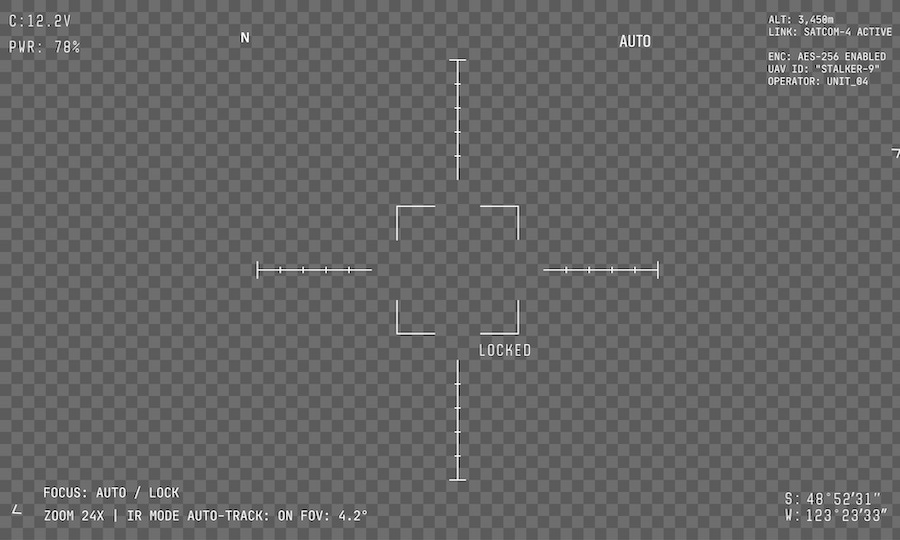
Targeted killing refers to the deliberate deployment of lethal force by a state, its employees or agents, against designated security threats – often outside of conventional battlefields and frequently beyond a state’s sovereign borders. The practice is commonly associated with drone strikes, special forces operations, and covert assassinations, particularly in the context of counterterrorism and military interventions. Targeted killing is often described as a very precise – ‘surgical’– form of military intervention useful for eliminating high-risk individuals, reducing a country’s military engagement, while eliminating collateral damage. For critics, these discursive constructions help to legitimise violations of sovereignty, the erosion of due process, and the extrajudicial killing of enemies. Targeted killings also have high potential for civilian casualties and can cause harm such as through post-traumatic disorder amongst the personnel responsible.
CTS scholars have denounced targeted killings as a form of state violence that reflects the expansion of state power – and violence – under the banner of the war on terror and the implementation of extrajudicial practices in counterterrorism policies. Critics also highlight the role of targeted killings in perpetuating rather than ending cycles of violence (Calhoun 2016). Such concerns speak to wider arguments around the value of non-violent or pacifist approaches to counterterrorism that have become increasingly prominent in recent critical debate.
Further Reading
Berger, Lars. 2024. “The State Terrorist as Terrorism Racketeer – the Case of Egypt”. Critical Studies on Terrorism 17 (3): 631–658.
Boys, James D. 2019. “The Clinton Administration’s Development and Implementation of Rendition (1993–2001)”. Studies in Conflict & Terrorism 42(12): 1090–1102.
Ganor, Boaz. 2021. “Targeted Killings: Ethical & Operational Dilemmas”. Terrorism and Political Violence 33 (2): 353–366.
Guittet, Emmanuel-Pierre. 2021. Counter-Terror by Proxy: The Spanish State’s Illicit War with ETA. Manchester: Manchester University Press.
Jackson, Richard, Eamon Murphy, and Scott Poynting, eds. 2011. Contemporary State Terrorism: Theory and Practice. Critical Terrorism Studies. London: Routledge.
Maryon, Rosa. 2024. “‘Securing the State’ in Post-2011 Tunisia: Performativity of the Authoritarian Neoliberal State”. Critical Studies on Terrorism 17 (2): 224–247.
McGovern, Mark. 2016. “Informers, Agents and the Liberal Ideology of Collusion in Northern Ireland”. Critical Studies on Terrorism 9 (2): 292–311.
Meisels, Tamar, and Jeremy Waldron. 2020. Debating Targeted Killing: Counter-Terrorism or Extrajudicial Execution? Debating Ethics. New York: Oxford University Press.
Raphael, Sam, Crofton Black, Ruth Blakeley, and Steve Kostas. 2016. “Tracking Rendition Aircraft as a Way to Understand CIA Secret Detention and Torture in Europe”. The International Journal of Human Rights 20 (1): 78– 103.
Sommer, Udi, and Victor Asal. 2019. “Examining Extrajudicial Killings: Discriminant Analyses of Human Rights’ Violations”. Dynamics of Asymmetric Conflict 12 (3): 185–207.
Lee Jarvis is a Professor of Security and Society at Adelaide University, and holds honorary professorships at the Loughborough University and the University of East Anglia. He is author or editor of 17 books and over 60 articles on the politics of terrorism and security. He is co-editor of Critical Studies on Terrorism, and his research has been funded by the ESRC, the AHRC, the Australian Research Council and NATO among others.
Alice Martini is a Lecturer of International Relations at the Complutense University of Madrid, Spain, and holds an honorary professorship at the Queen Mary, University of London. She is the author of The UN and Counter- Terrorism: Global Hegemonies, Power, and Identities (Routledge 2021), and co-editor of Encountering Extremism: Theoretical Issues and Local Challenges (Manchester University Press 2020) and Contemporary Reflections on Critical Terrorism Studies (Routledge 2023). Her work has been published in journals including Security Dialogue and Third World Quarterly.