

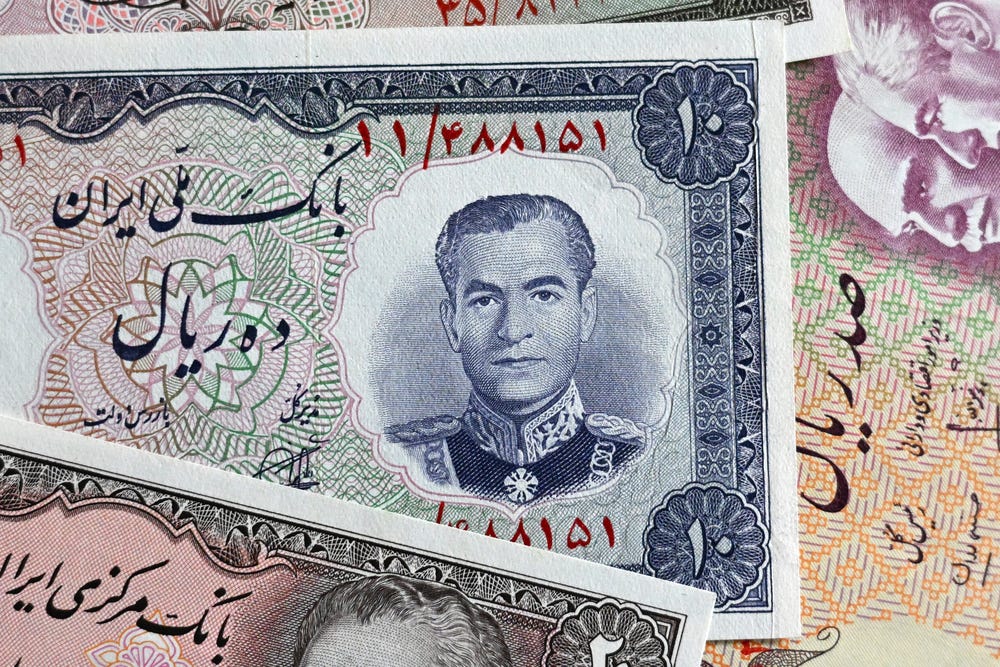
Seventy-three years ago this week, on August 19, 1953, the United States and Britain helped overthrow the democratically elected government of Iranian Prime Minister Mohammad Mosaddegh. His crime, from Washington’s perspective, was not that he rejected democracy or threatened the United States. It was that he sought to nationalize Iran’s oil industry and assert democratic sovereignty over Iran’s political and economic affairs. The coup restored the Shah to effective political power and inaugurated a new era of authoritarian rule. As I have argued elsewhere, the 1953 coup was a decisive turning point: it transformed the United States in the eyes of many Iranians from a relatively respected Western partner into an imperial power.
Get E-International Relations delivered to your inbox, free. As you sign up, consider becoming a paid subscriber, or make a donation, to support our work.
The significance of 1953 is not simply historical. It provides a lens through which to understand the tragic paradox of U.S.-Iran relations: American policy has repeatedly claimed to oppose authoritarianism while pursuing policies that have weakened the forces capable of democratizing Iran. This does not excuse the Iranian authorities, including the Islamic Republic, of their responsibility for authoritarianism. Iran’s democratic crisis is fundamentally an Iranian political problem, and the Islamic Republic has systematically restricted political competition, civil liberties, independent organization and popular sovereignty. But acknowledging this reality should not prevent us from asking another critical question: What has U.S. policy done to the prospects for Iranian democracy?
The answer is deeply uncomfortable. After the 1953 coup, Washington embraced the Shah as a reliable regional ally. During the Cold War, U.S. policy prioritized anti-communism, regional stability, oil and the security of Israel. Democratic accountability was repeatedly subordinated to the perceived need for a ‘friendly tyrant’ and strategically dependable regime. I have described this broader framework as the three pillars of U.S. Middle East policy: CIO, or containment, Israel’s regional security, and the free flow of oil. The contradiction was visible. The United States presented itself as the leader of the “free world,” while supporting an increasingly authoritarian monarchy in Iran. The 1979 Revolution changed the relationship but did not fundamentally change this contradiction. Washington moved from supporting an authoritarian ally to containing a revolutionary regime. During the Iran-Iraq War (1980–88), the United States supported Iraq with economic assistance, military training and dual-use technology, even after U.S. intelligence had evidence of Iraqi chemical-weapons use. In 1988, the U.S. Navy destroyed Iranian oil platforms and sank an Iranian warship; it also shot down Iran Air Flight 655, killing 290 civilians.
After the Cold War, containment increasingly took an economic form. Economic sanctions became a central instrument of American policy. Yet sanctions do not operate in a political vacuum. They rarely fall primarily on those who control the state. They fall disproportionately on ordinary citizens, particularly the middle and working classes – the very social agents that historically constitute the foundation of democratic movements. Moreover, economic sanctions did strengthen underground economies, systemic corruption and rent-seeking while weakening the social constituencies most capable of demanding democratic change.
The experience of the reform era under President Mohammad Khatami (1997–2005) illustrates the problem even more clearly. In the late 1990s, President Khatami advocated dialogue among civilizations, expanded cultural and academic exchanges, and sought improved relations with the West. Washington briefly moved toward engagement. Yet the George W. Bush administration—dominated by neoconservative elites who strongly supported Israel—soon returned to a policy of confrontation, famously placing Iran in the “axis of evil.” The U.S. invasions of Afghanistan in 2001 and Iraq in 2003—both of which bordered Iran to the east and west—followed by increasingly explicit talk of regime change in Tehran, strengthened Iranian hardliners and weakened those advocating reform and engagement. The combination of domestic political crisis and American regime-change policies contributed to Iran’s subsequent de-democratization and radicalization.
Then came the most promising diplomatic opening in decades: the 2015 nuclear agreement, known as the Joint Comprehensive Plan of Action. JCPOA was not a democratic treaty; it was a nuclear agreement. But it created something democracy requires, space. It reduced the immediate threat of war, opened Iran to greater international engagement, and created the possibility that economic normalization might strengthen the middle class and encourage a gradual internal opening. The United States destroyed that possibility in 2018 when President Donald Trump unilaterally withdrew from the agreement and imposed a policy of “maximum pressure.” The consequences were predictable. Economic hardship intensified; moderates and pragmatists were weakened; hardliners gained political ammunition; and Iranian distrust of diplomacy deepened. Economic sanctions and confrontation strengthened precisely the forces that democratic reformers needed to overcome.
And now history has entered a new and far more dangerous phase. The first of the two recent wars began in June 2025 – the twelve-day war – when Israel attacked Iran and the United States subsequently joined the military campaign by striking Iranian nuclear facilities. The twelve-day war killed hundreds of people and dramatically intensified the confrontation between Iran, Israel and the United States. As I have argued, the illegal war waged by Israel and the United States against Iran, under the false pretext of preventing an imminent nuclear threat, unfolded amid ongoing nuclear negotiations between Tehran and Washington. In this sense, they also bombed negotiation table, pre-empting diplomacy with destruction.
Less than a year later, on February 28, 2026, the United States and Israel launched another major and illegal military campaign against Iran – again in the midst of negotiation. As I have discussed, the aggression began with what amounts to a war crime: the killing of 168 elementary-school girls in Minab. It continued with the killing of thousands of civilians and the systematic destruction of extensive cultural and historical heritage sites, scientific and research centers, hundreds of schools and universities, and critical infrastructure in the oil, petrochemical, steel, pharmaceutical, urban and defence sectors, as well as residential areas. These actions constitute clear instances of war crimes under international law. To this must be added the catastrophic environmental consequences and the profound psychological traumas generated by the war. Furthermore, Israel and the United States targeted Iranian military and nuclear infrastructure, assassinated top ranking Iranian political and military leadership, and expanded the war into a much broader regional confrontation. A Memorandum of Understanding (MOU), ceasefire and later diplomatic arrangements have failed to bring peace, and as of August 2026 the confrontation remains dangerously unstable.
Whatever one’s judgment of the Islamic Republic, war – even in the name of so-called humanitarian intervention – cannot be a credible strategy for democratizing Iran. Indeed, the opposite is more likely. External military attack strengthens nationalism, securitizes political life and gives authoritarian governments an argument for suppressing dissent in the name of national survival. The democratic opposition is often placed in an impossible position: criticize the government and risk being accused of assisting the enemy; criticize the foreign attack and risk appearing to defend the authoritarian state!
This is precisely why the democratic question must be separated from the geopolitical question. Iranians do not need Washington or its regional allies and proxies to “liberate” them! They need the political space to liberate themselves. Iran’s democratic movement has deep historical roots, from the Constitutional Revolution (1906-11) and Mosaddegh’s democratic nationalism (1950-53), the reform movement (1997), the Green Movement (2009), and the many subsequent popular struggles for dignity, justice and political freedom in 2017-2019. This trajectory continued, in a new form, in the magnificent and progressive Zan, Zendegi-Azadi (Woman-Life-Freedom) movement of 2022 and the popular uprisings of January 2026. Together, these movements have repeatedly demonstrated that Iranian society possesses its own democratic agency.
Foreign intervention does not create that agency. It can destroy it. There is therefore a profound irony in the contemporary colonial discourse of regime change. Washington may declare that it wants a freer Iran, but if its policies produce war, sanctions, economic devastation and political securitization, the practical effect can be the opposite. Democracy requires an organized civil society, an independent middle class and empowered subaltern, functioning institutions, political pluralism and some degree of economic security. Iran’s century-long democratic struggle requires peace, engagement and global integration, not war, siege, and indiscriminate sanctions.
The lesson of 1953 is therefore not that the United States single-handedly created Iran’s authoritarianism, nor is it that Iranian leaders bear no responsibility for the country’s democratic failures. The lesson is more substantial: foreign powers cannot consistently undermine democratic possibilities and then claim that they are fighting for democracy.
Seventy-three years after Mosaddegh’s overthrow, the question is no longer whether Iran deserves democracy. It does. The question is whether the international environment will allow Iranians to pursue it. As argued recently, Iranian exceptionalism – in both negative and positive forms – is a dangerous and misleading discourse. Iran is neither uniquely destinated to live under religious autocracy or secular dictatorship, nor is it immune from the devastating consequences of war – even when such war is framed as humanitarian intervention. Iran is neither condemned to fail in its democratic struggle nor protected from collapse and devastation caused by foreign aggression. The condition for achieving freedom and democracy is the guarantee of Iran’s independence, sovereignty, and security.
The history of US-Iran relations suggests that Washington has too often prioritized strategic dominance over sovereignty, stability over democracy, and coercion over engagement. The two wars since June 2025 have brought this contradiction to its most dangerous point. The most democratic policy toward Iran may therefore be the simplest one: stop making war—economic, political, and military—and allow Iranian civil society the peace, engagement, and economic prosperity it needs to realize its century-long quest for democracy. Ultimately, as I have argued before, democracy in Iran must be homegrown, shaped and sustained by the country’s own social forces, which are best positioned to make it a reality.
References
Mahdavi, Mojtaba. “A Postcolonial Critique of Responsibility to Protect (R2P) in the Middle East.” Perceptions: Journal of International Affairs – Centre for Strategic Research, Vol. XX, No. 1, Spring 2015, pp. 7-36.
Mahdavi, Mojtaba. “Civil Society Approach to Democratization in Iran: The Case for Bring it Back in Carefully.” In R. Jahanbegloo, ed. Civil Society and Democracy in Iran. Lexington Books, 2012, pp. 79-93.
Mahdavi, Mojtaba. “The Myth of Iranian Exceptionalism: Rethinking Iran in the Shadow of Israel-US War on Iran.” Informed Comment. 28 July 2026.
Mahdavi, Mojtaba. “Yes to the People, No to Neofascism: How Should Iran Respond to the Israeli-U.S. Invasion?” Jadaliyya. July 2, 2025.
Mojtaba Mahdavi is Professor of Political Science and ECMC Chair in Islamic Studies at the University of Alberta, Canada.