

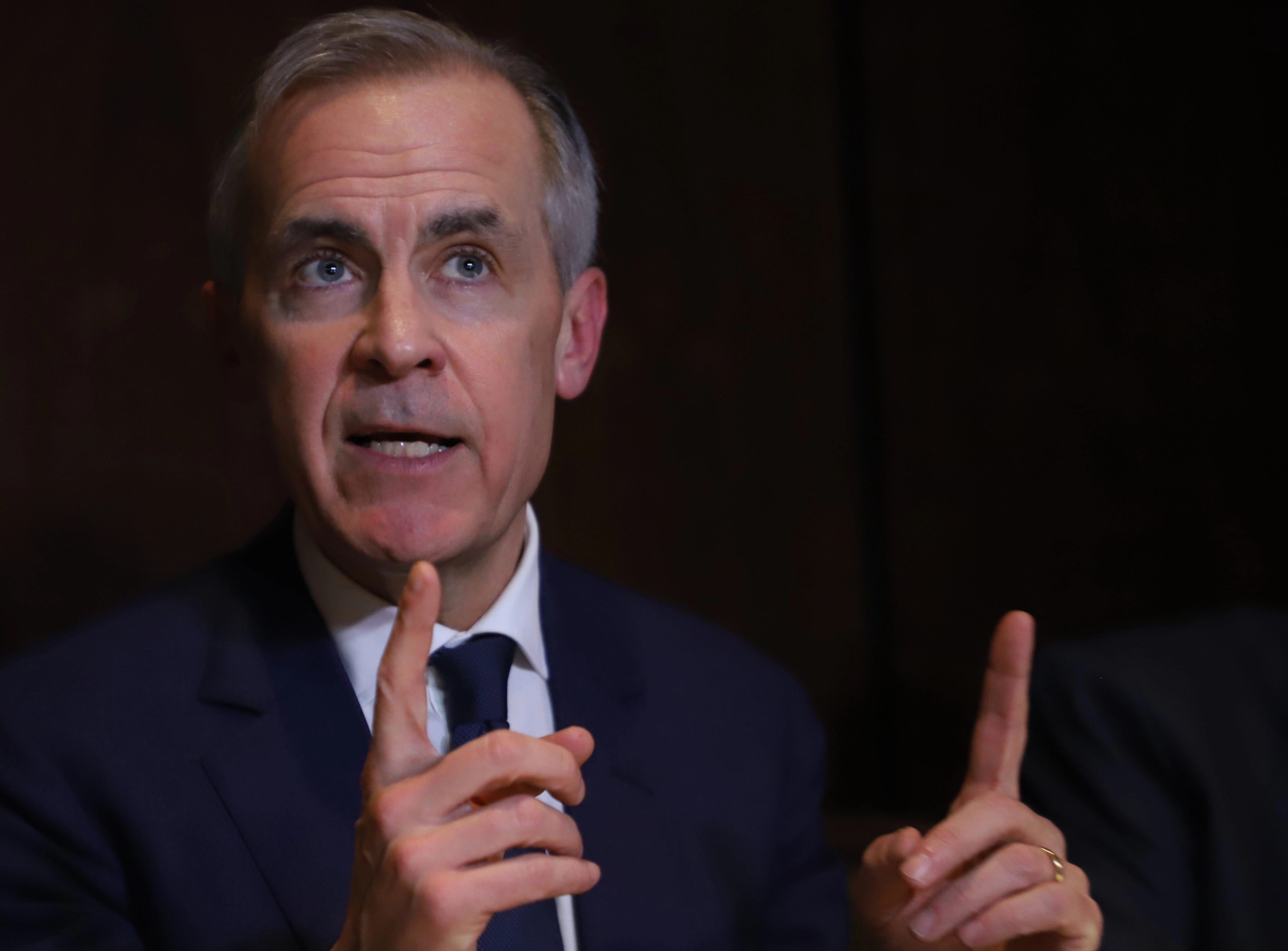
Ever Since Canadian Prime Minister Mark Carney outlined Canada’s role in a changing geopolitical order at the World Economic Forum earlier this year, it was clear more strategic moves from Ottawa were on the horizon. Now, amidst a trade war with Washington and continued threats to Canadian sovereignty, Canada is set to become the first associate member of the European Union, a position that still has to be fully defined but sends a clear message. The era of Canada and the United States being natural allies is over, the ideals of Europe and European geography are amenable to changes in the shifting order, and middle powers like Canada under Carney are making sure that their voices are heard loud and clear. This does not mean that a larger association grouping or even membership path for Turkey, Morocco, and other states on Europe’s periphery will form tomorrow or in the coming months. It does signal that the transatlantic bond between Washington and Brussels is seriously frayed, the EU is redefining its values in real time, and new forms of regional and global cooperation will continue to form in the absence of traditional American leadership.
Get E-International Relations delivered to your inbox, free. As you sign up, consider becoming a paid subscriber, or make a donation, to support our work.
For Brussels, Carney speaks the language of Europe and its values of an ever-closer union, both within and beyond its member states. Deeply knowledgeable of the European policymaking process from his time as an investment banker and central banker leading the Bank of England during Brexit, he has witnessed firsthand the declining influence of states and the reassessment of national priorities. Carney’s mission is not to challenge the immovable laws of geography and make Canada a European state. Carney’s mission is to entrench and institutionalise Canada’s alliance with Europe, recognising shared security threats from trade and climate change to the status of Canada’s other large neighbour and target of threats from Trump, Greenland.
For Carney, exploring alternate trading arrangements is a natural product of Canadians now viewing Washington as a greater threat than Moscow, according to one poll. Moscow may hint at subverting Canada’s sovereignty and security, but Trump outright claims that that is his goal. Canada is used to being the junior partner to Washington on the North American continent and has no allusions as to the size imbalance between the two nations. However, that imbalance has always had mutual benefits from energy to automotive production and cultural or soft power exchanges. For the politics of grievance spearheaded by Trump and some of the Brexit leaders Carney navigated while working in London, there has to be a clear winner, and one side inevitably has to play the victim. There isn’t a place for the calm and steady hand that reasons with statistics while others reason with scapegoating.
Despite the early rhetorical win for Carney after his speech to the European Parliament in Strasbourg, the path ahead is not guaranteed to be smooth sailing. A Canada-EU trade deal has been languishing for over a decade due to concerns from French and Italian farmers over foreign competition. Those concerns are likely to be heightened in 2027 with multiple elections occurring in Europe from France to Poland in which far-right parties are currently leading in the polls, resulting in policy stagnation amongst EU member states on issues including trade deals. Should Marine Le Pen replace Emmanuel Macron in France, and the Alternative for Germany make further gains, Carney’s vision of a values-based alliance with Europe could be severely disrupted as new leaders emerge with a more protectionist and nationalist agenda. Thus, the Europe of today is unlikely to be the same Europe that exists tomorrow, and much will remain outside of Carney’s control despite his best efforts.
In addition, there is domestic fragmentation and regionalism at play within Canada that could stymie Carney’s efforts to present a united front with Brussels. The Alberta separatism referendum on 19 October presents a risk to the Canadian economy and Canada’s competitiveness abroad, regardless of whether the push to secede is successful or not. It raises the spectre of any deals struck between the EU and Canada as being susceptible to the changing winds of nationalism and democratic turnover. Earlier this year, Carney warned Alberta not to pull a move similar to Brexit in what he called a ‘dangerous bluff’ that could undermine Canada’s stability. As an institutionalist cognisant of the present rupture in global politics, Carney is keen for Canada to project unity and not to repeat some of the mistakes that the UK made in its fateful referendum over a decade ago. While Brussels is no stranger to the dynamic of separatism amongst its own member states, it presents an element of uncertainty in negotiations that risks emboldening and legitimising those on the political margins on both sides of the Atlantic.
Another test for Carney in October will be the Canada-EU summit in Montreal which could see large scale investments from the European Investment Bank into Canada’s large resource sector. A draft joint statement envisions new agreements between Ottawa and Brussels on critical minerals, digital trade, energy cooperation, and AI, ‘creating a tech alliance’ and ‘integrating defence industrial bases’ according to European Commission President Von der Leyen. However, on all of these issues, both Canada and the EU will continue to find themselves wedged between Washington and Beijing. Carney’s bet is that the growing coalition of middle powers will create a single voice that is too hard for the great powers to ignore. If he can also expand his coalition to include states that have historically been close to both Russia and the US in the Global South, that would be a major victory as well.
As Americans head to the polls in just over a month and the Trump administration remains focused on vanity projects over sustained socioeconomic issues, Canada is clearly having a moment. Whether Canada can extend this moment into a movement that forces other states to reevaluate their place in a changing geopolitical order remains to be seen. For all of the bluster and hard power that great powers may have, this moment is a reminder that small states and middle powers can still play a significant role in international relations.
In Europe, Estonia and Lithuania can shape cyber preparedness, societal resilience and perceptions of Moscow’s intentions. In North America, Canada can leverage its immense natural resources, and links to the greater Commonwealth, while in the Middle East, Qatar or Oman can leverage their roles as mediators with large sovereign wealth funds in a volatile neighbourhood. Political leadership can matter just as much as a state’s physical size, and Carney’s strength is in recognising the power of the politics of partnership over the politics of force. Carney may coerce but he is unlikely to bully or intimidate other nations to follow Canada’s reasoning. This is the greatest strength of Canada and one that applies to other small states and middle powers: a quiet confidence that announces itself when under threat and which holds alliances together that often begin to fragment not from states on the periphery but from the core.
Alexander Brotman is a political risk and intelligence analyst with a focus on EU politics and security developments. He has written for several political risk publications, including Global Risk Insights, Foreign Brief, and Geopolitical Monitor, and has provided direct research support to a leading scholar of Russia and Eurasia in Washington. Alexander received his MSc. in International Relations from The University of Edinburgh. He is currently based in Washington DC.
He writes in a personal capacity and not with any professional affiliation.